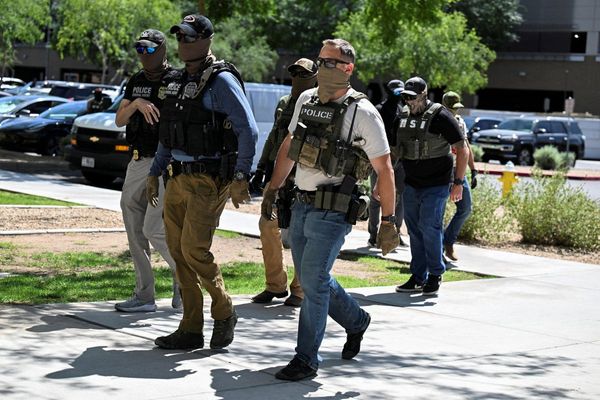
The Trump administration will withdraw 700 federal immigration agents from Minnesota "effective immediately," border czar Tom Homan announced Wednesday.
Why it matters: It's a major de-escalation from an immigration enforcement operation that killed two Americans, hollowed out the local U.S. Attorney's Office and proved to be deeply unpopular.
- The drawdown would leave "around 2,000" immigration agents in a state that normally has closer to 150, Homan said.
What they're saying: Homan said talks with state and local officials had yielded "unprecedented" levels of cooperation from Minnesota county jails to hand over immigration suspects to ICE before they're released from custody.
- "We're not surrendering our mission. We're not walking away from our mission," Homan told reporters. "We're just making this more effective and more smart."
Between the lines: Under Minnesota law, jails can't hold a person longer than they otherwise would solely because of an ICE detainer — an administrative request that doesn't have the force of a judicial warrant or a court order.
- However, Homan said counties were not being asked to hold suspects for longer periods than required, but to notify ICE of their release.
Catch up quick: Several Minnesota county jails have been successfully sued over delaying suspects' release because of an ICE hold — a practice state Attorney General Keith Ellison says violates the Fourth Amendment.
Friction point: How Minnesota county jails can increase their cooperation without opening themselves up to further risks of lawsuits isn't immediately clear.
- Also unclear is whether all county jails would participate. Hennepin County's jail — the state's largest — has a policy against any cooperation with ICE.
What we're watching: The Star Tribune reported Tuesday that federal officials had proposed agreements with counties that would provide ICE with "reasonable access to all detainees or inmates" for immigration-related interviews.
- The agreements "could potentially include a clause" that would require the federal government to pay any damages or legal fees sheriffs incur for breaking state law, the newspaper reported.
The other side: Eight rural and exurban Minnesota counties previously signed formal agreements to cooperate with ICE. But ACLU attorney Ian Bratlie tells Axios these agreements likely won't shield counties from legal liability.
- "The smart jails are throwing away all the requests from ICE," Bratlie said in an interview before Homan's announcement. "As soon as they start listening to ICE, they're going to make themselves a target for litigation."
Editor's note: This is a developing story. Check back for updates.

.png?w=600)