In the 1920s and 1930s, Art Deco permeated architecture, interior design, furniture, fashion, jewellery and other realms.
Its quintessence in watchmaking, the Reverso debuted in 1931, in a flippable rectangular case with sleek clean lines.
Jaeger-LeCoultre embodies the design codes in the Reverso Tribute collection while enriching the heritage with reinterpretations. Last year saw the premiere of its Or Deco style in a pink gold Reverso Tribute Monoface Small Seconds.
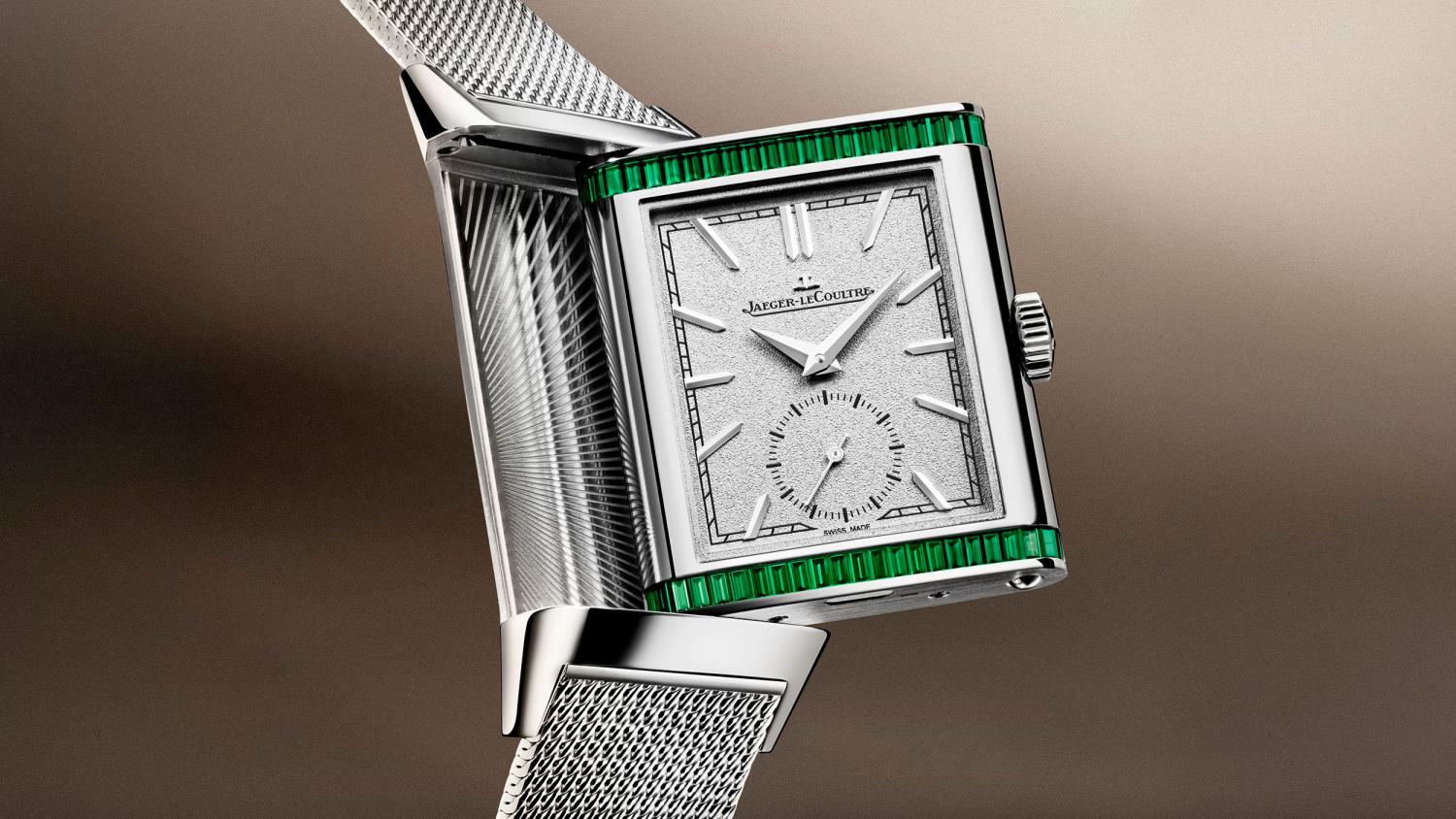
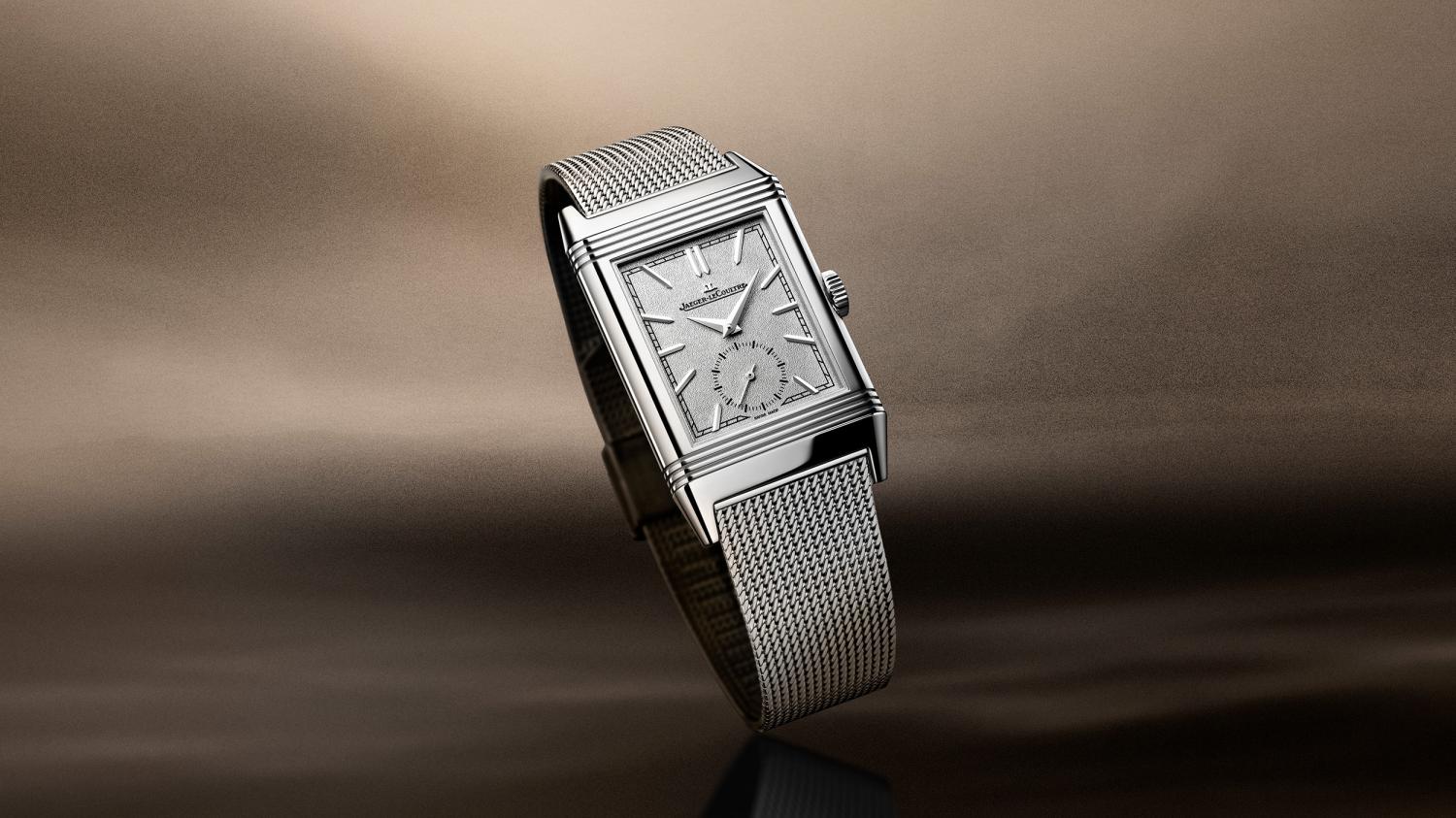
The 2026 sequels include a white gold version and a two-hand model -- both with a monochromatic all-gold aesthetic, a matte-grained dial and a Milanese mesh bracelet.
In addition, three novelties recall classic gem-set cocktail timepieces, created during the Art Deco movement.
The Or Deco series reinforces how the double-sided Reverso has transcended from its original purpose in being a robust watch with an ingenious swivelling mechanism for players on the polo field.
The blank metal flip side, which prevented the dial from damage during the equestrian game, became a canvas for creative expressions such as engraving, enamelling or gemsetting.
The artistic crafts are cultivated at the Métiers Rares atelier within the Manufacture Jaeger-LeCoultre, located in Le Sentier.
From its humble beginning in 1833, the Swiss company became known as La Grande Maison in the Vallée de Joux.
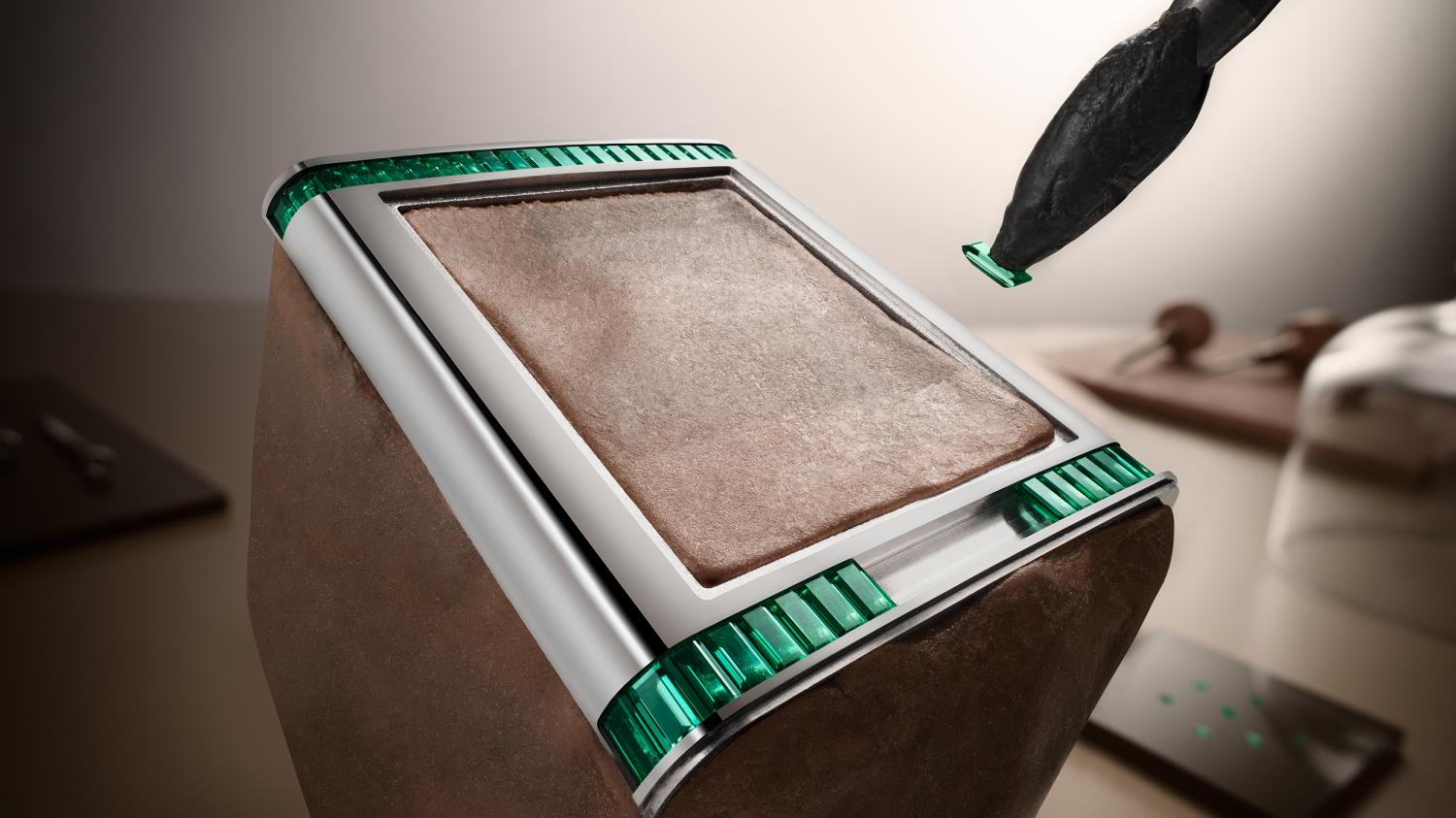
The storied maison showcases invisible rail setting of baguette-cut stones on the new Reverso Tribute Monoface Small Seconds Or Deco Cocktail.
Setting the gems between the gadroons above and below the dial amplifies the Reverso's rectilinear geometry while contrasting with the polished gold case.
The technique involves constructing a framework of tracks, a fraction of a millimetre wide, in the gold beneath. The gem-setter then slides the stone onto the track and folds a minute amount of gold over its edge to secure it before sliding the next stone into place.
Lending a continuous line of colour and light, the rail setting of 46 emeralds or blue sapphires is executed on the white-gold models while rubies adorn the pink-gold version -- each of them available in 30 pieces.
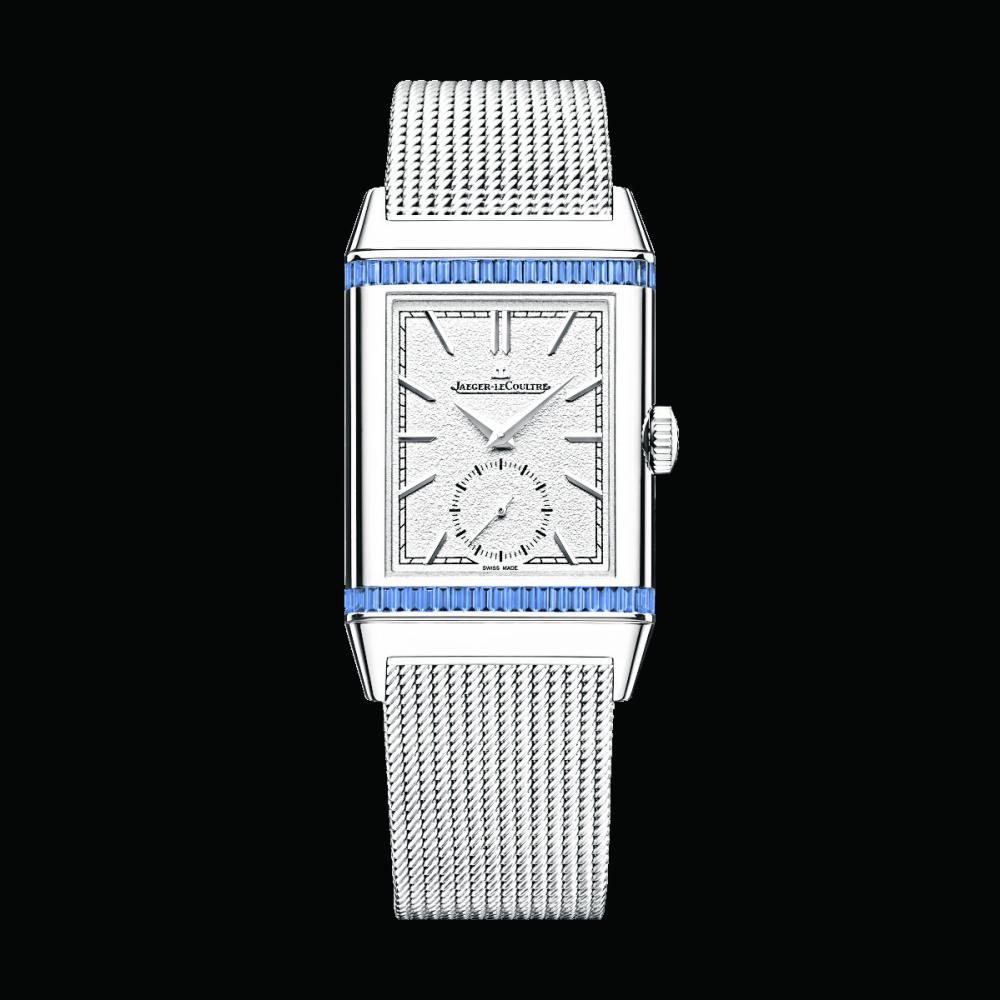
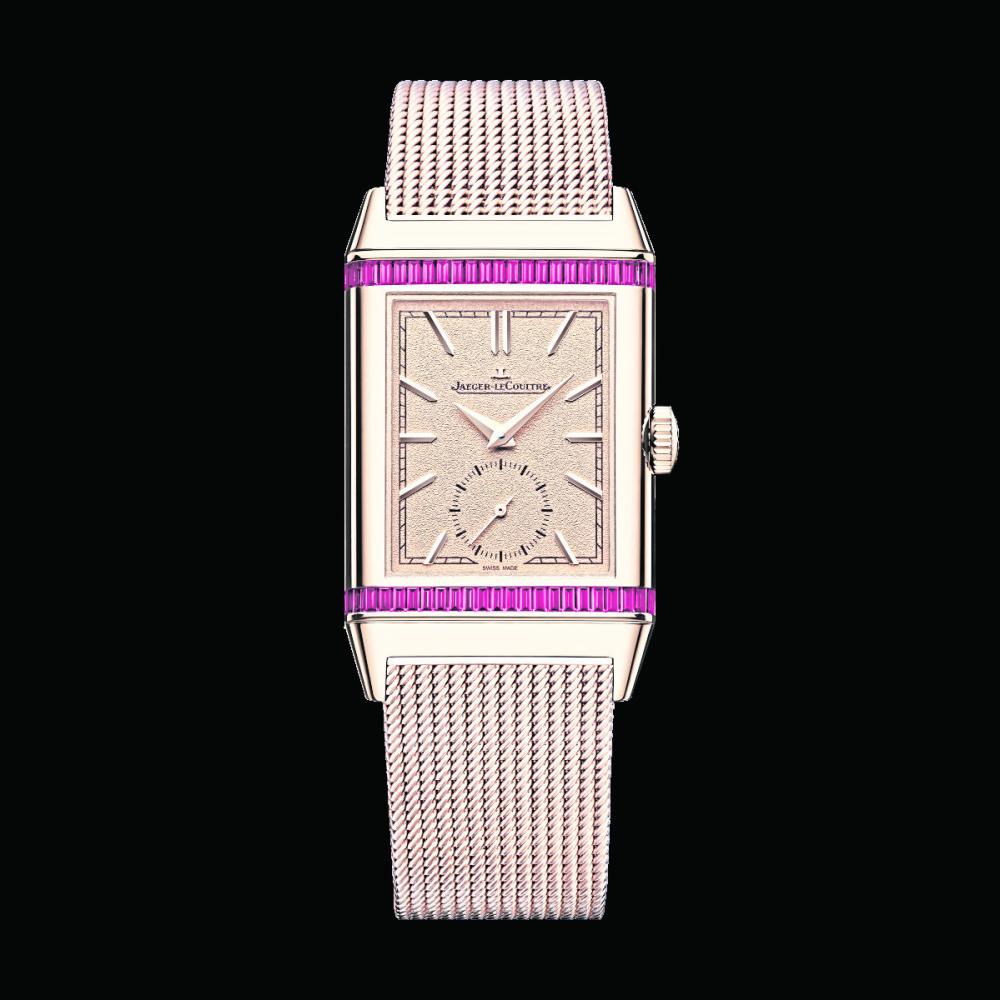
The gem-set limited editions and the white-gold Reverso Tribute Monoface Small Seconds Or Deco share the same dimensions with a 7.56mm-thick case, complemented by the slim Milanese mesh bracelet.
A smaller pink gold case but with the same thickness houses the two-hand Reverso Tribute Monoface Or Deco Solo Tempo indicating the hours and minutes on a minimalist dial, with the monochromatic aesthetic achieved through a mix of shades and textures, enhanced by the Milanese mesh bracelet.
Dating back to the 13th century, the mesh originated as a type of chain mail armour in Milan.
Renaissance goldsmiths then developed precious metal versions for jewellery.
With a flat and silky-smooth finish, the Milanese mesh is made by twisting fine threads of metal together in a particular way to form a double layer of densely interlocking small links.
Without pins joining any sections, it is as flexible as a ribbon and sinuous as a second skin.
More than 10m of gold thread is required to craft the Milanese mesh bracelet, and Jaeger-LeCoultre had to redesign lug holes and develop a sliding buckle and an attachment link to achieve its seamless integration to the gold case.
Based on the Reverso Tribute Monoface, the Or Deco models can be personalised with engraving or other artistic crafts on the blank side of the case.
Echoing its rectangular shape, the manually-wound Calibre 822 was developed in-house to ensure precision and a 42-hour power reserve.