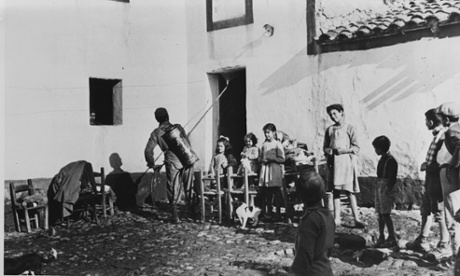
Malaria has been around since the dawn of time and shrouded in myth and mystery across history. This second part of a two-part photo series looks at the 20th century and more recent advances in malaria prevention, eradication and treatment. Humans have repeatedly attempted to treat and eradicate the disease, using numerous less-than-effective means – a far cry from the treatment options of today.
1898
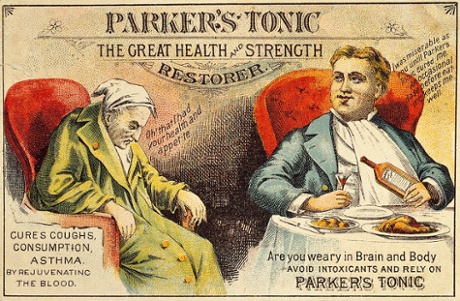
Malaria is conclusively linked (in apparent co-discoveries in both India and Italy) to protozoan parasites of the Plasmodium species transmitted by mosquitoes. But a largely decentralized and unregulated medical community won’t coalesce in its opinion about treatment of malaria for decades. Home cures and tonics remain popular options.
1904
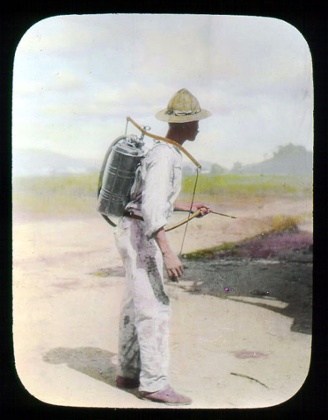
During the construction of the Panama Canal, President Roosevelt is convinced to back a $20m plan to eradicate mosquitoes in the canal zone – where the disease is causing massive casualties – by draining wetlands and covering all standing water with kerosene. This effort greatly reduces infections, but doctors still struggled over how best to treat patients, utilizing mustard baths, kerosene massages, and lots of whiskey.
1917
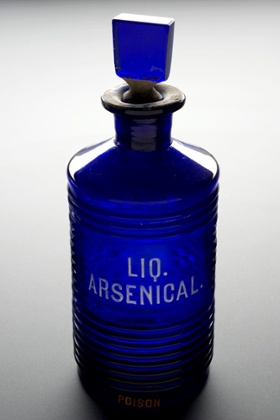
Wagner von Jauregg begins curing syphilis patients by intentionally infecting them with weak malaria stains, for which he would win the Nobel Prize in medicine in 1927. Though an estimated 15% of patients subsequently died from malaria, the advance represented a significant improvement over results gained by the then-popular use of arsenic and mercury.
1939-1945
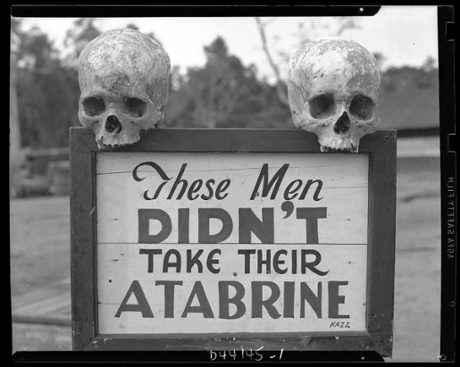
The synthetic compound Atabrine was developed as an anti-malarial drug in 1932 and used extensively by US troops during the second world war. Common side effects included turning the skin bright yellow; others involved headaches and vomiting. The Japanese, which controlled most of the easily accessible cinchona bark used to make quinine, exploited a popular rumor that the pills caused sterility in their propaganda efforts. The US war department countered with propaganda of their own, including the evocative example below.
1955-1978
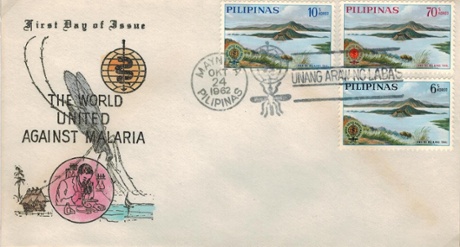
A World Health Organization (WHO) effort to stamp out malaria globally expands services into many remote locations but quickly runs into issues. Mosquitoes develop resistance to preferred insecticide, DDT, and public support for the expensive initiative wavers. In some parts of the world, taking the most popular drug, a synthesized quinine known as chloroquine, becomes no more effective than drinking water. The search for chemical substitutes gets underway.
Seeking alternatives

Some modern alternative treatments are still far from perfect. The US army turned out a couple drugs after the Vietnam War that brought a range of unwelcome side effects, discovered only after they had been turned out on an unsuspecting public. One, mefloquine hydrochloride, began to be marketed as Larium in 1989. Only two years ago it was the third-most-prescribed anti-malarial in the US. Then stories of psychotic violent reactions and intense hallucinations tied to the drug began to surface. It was soon made known that in some cases side effects, including depression, ringing in the ears, and death were, well, permanent. A “black box” warning similar to those on cigarettes packs, was placed on the drug by the US Food and Drug Administration in 2013.
Robot assistance
While the highest hurdles to eradicating malaria, which infected an estimated 200 million people last year, involve international investment to distribute medicine and preventatives to widely dispersed populations, malaria-fighting robots were only a matter of time. One such robot that would drown the mosquitoes with a pump system was proposed last year by a 12-year-old Texan competing in the 3M Young Scientist Challenge. He was beat out by a 14-year-old that came up with a battery that runs on carbon dioxide.
Modern advances
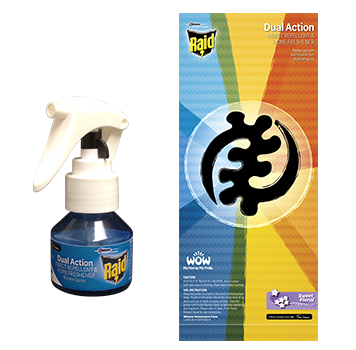
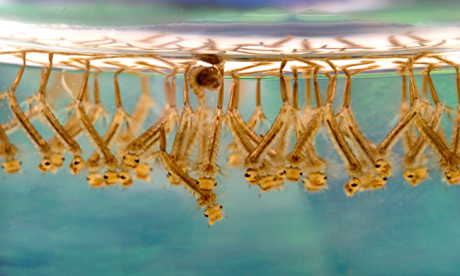
New products and prevention methods are in the works. SC Johnson and the Bill and Melinda Gates Foundation have partnered to sponsor mosquito-borne disease prevention projects including research in Myanmar, Thailand, Cambodia and Ghana on the use of mosquito repellents to prevent malaria. Also in Ghana, SC Johnson launched WOW, a business concept that creates access to pest control products and aims to help prevent malaria in at-risk poor populations at the base of the pyramid, as well as home-cleaning and personal care products valued by rural consumers. The program offers a financially sustainable distribution channel and provides Ghanaians with tools needed to avoid mosquito bites and clean their homes.
The future
Climate change is expected to spread malaria into new areas in the coming decades as a warming planet expands the tropical zone. Increases in average temperatures are also expected to severely reduce water supplies in some areas.
“On the one hand, it could dry up all the water,” said Dr Howard Markel, director of the Center for the History of Medicine at University of Michigan’s School of Public Health. That’s great news as far as malaria is concerned. “On the other hand,” he adds, “it could dry up all the water.”
Copy on this page is brought to you by SC Johnson, sponsor of An apple a day series and the values-led business hub.