Anthony C Ferrante
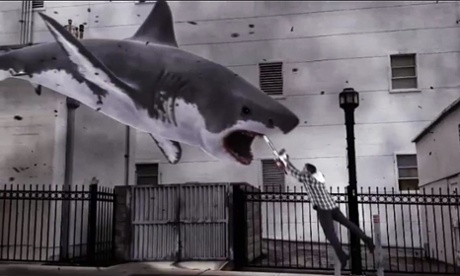
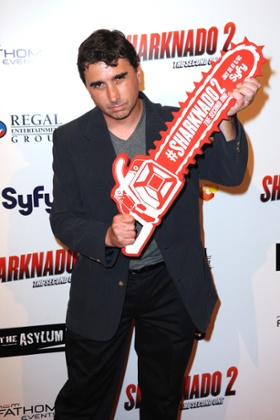
In August last year, the outgoing chairman of the White House’s Council of Economic Advisers, Alan Krueger, compared America’s debt ceiling to a sharknado. “You have this tornado which brings sharks and they land on people’s heads,” Krueger intoned. “I think if we cross the debt limit, it would be worse for the financial sector than a sharknado.” Respect then to Anthony C Ferrante, the Hollywood dogsbody who made the film that became a sensation that became a financial simile, all for just over $1m. “There’s a flood. And a storm. Don’t worry about it,” was how he explained Sharknado’s narrative structure before it debuted on cable channel Syfy. It got 1.4 million viewers and more than 5,000 tweets per second that evening, rivalling Game Of Thrones’ Red Wedding episode. A few weeks later, Sharknado was opening midnight screenings and drive-ins across America, slots usually reserved for decades-old cult classics. When the sequel, Sharknado 2, hit the same channel, it broke the record for a TV movie. Sharknado 3: Oh Hell No! is out this summer.

Yoshihiro Nishimura
Takashi Miike’s perverted torch of Japanese excess has been passed to Yoshihiro Nishimura, the Tokyo-born director who delights in blending extreme “splattergore”, sadomasochism and gleefully anything-goes political incorrectness with cute bubblegum aesthetics. A former law student who established himself as a special effects artist, his films, he says, are meticulously storyboarded while binge-drinking in Tokyo’s seedy standing bars. His films include the self-explanatory Tokyo Gore Police, Vampire Girl Vs Frankenstein Girl, Helldriver and Machine Girl. Typical storyline? A cute and innocent schoolgirl mutating into a cyborg assassin before exacting very bloody revenge on the Yakuza gangsters who mercilessly stole her life. Nishimura’s films are actively superficial, postmodern and self-aware. No social point is being made here. Yet he never fails to get international distribution, for his films are more popular in the west than his native Japan.

Lars von Trier
On a summer’s day in Copenhagen, Stellan Skarsgård got a call from Lars von Trier, offering him the lead role in Nymphomaniac. “Stellan,” the Danish director croaked down the line. “My next film is a porn film and you will play the lead in it. But you will not get to fuck. But you will show your dick at the end and it will be very floppy.” Von Trier remains one of the most revered arthouse directors in the world, but you wouldn’t bet against him making The Human Centipede 4. From early film The Idiots, in which a community of young Nords pretend to have learning disabilities while enjoying orgies, to Antichrist, in which a talking fox declares that “chaos reigns” after Charlotte Gainsbourg has removed her clitoris with a rusty pair of scissors, Von Trier remains intent on poking the crinkle-nosed assumptions of cinema.
Hélène Cattet & Bruno Forzani
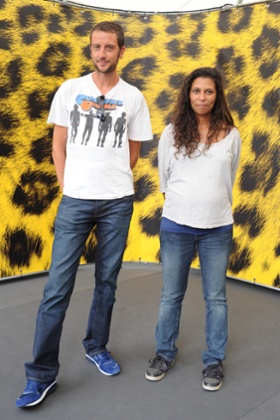
Mario Bava, Dario Argento and Sergio Martino were the driving forces behind giallo, Italy’s audacious horror-thriller movement of the 1970s. They made murder-mysteries The Bird With The Crystal Plumage, Torso, and Lizard In A Woman’s Skin, each fraught with operatic eroticism and startling, stylised violence – a glamorous, woozy arthouse precursor to the staple US slasher genre. With a knife slowly grazing a woman’s nipple, Giallo’s tropes are visible in the opening scene of 2013’s The Strange Colour Of Your Body’s Tears, by the French husband-and-wife directing duo Hélène Cattet and Bruno Forzani. Loosely based around a menacing husband’s forlorn search for his missing wife, Cattet and Forzani pull off a series of brilliantly pretentious dream sequences, each as hyper-stylised and self-conscious as the gorgeous art nouveau apartment in which the film is set. Pastiche does not get more naked than this, and yet more neo-giallo is needed, for the good of us all.
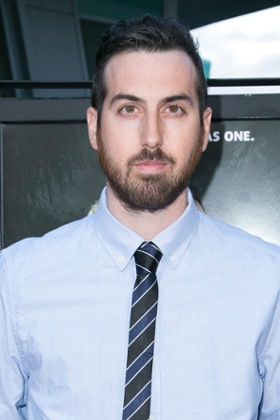
Ti West
“It’s like porn,” is how West described the modern horror genre to Lena Dunham. “It becomes just one kill or cum shot after another. Mainstream horror is only about titillation. That, to me, is the same as pornography.” A specialist in slow, suspenseful single-location haunted-house horrors, West, 34, likes to depict himself as an old-school genre purist. But, in truth, he’s not averse to a spot of the ol’ ultraviolence. One of indie film ingénue Greta Gerwig’s earliest parts was in West’s The House Of The Devil, but just as we relax into her effortless company, she’s shot and her head explodes in front of us. He followed it up with The Innkeepers, a classic ghost story, before partnering with Eli Roth – smirking godfather of torture-porn such as Hostel – for The Sacrament, a loosely-based-on-true-events telling of a Vice journalist’s attempts to embed with a South African death cult. West is slowly moving up Hollywood’s food chain: his new film, In The Valley Of Violence, stars John Travolta and Ethan Hawke.
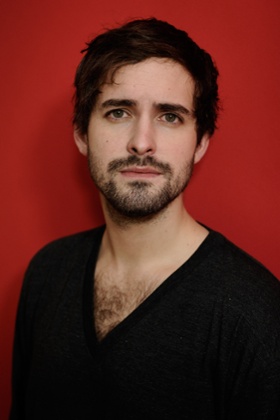
Richard Bates Jr
In 2012 Bates Jr released his debut film, Excision, a character study of a teenage girl obsessed with carrying out the most unprofessional forms of surgery. Actually one of the most darkly humorous depictions of teen rebellion this decade, critics still called him a John Waters wannabe. Bates Jr followed up Excision with Suburban Gothic, a droll, flat-faced satirical comedy about twentysomething ennui, and the sheer hell of living at home again with one’s parents. Again it was savaged by the critical classes, but no matter. Bates Jr was achieving his own goals, one of which was giving trash hero Waters a cameo in each of his films. (In Excision, he plays a priest who dabbles in psychiatry.) Bates has just turned 30 and with Waters still acting as a mentor, the bottom-feeders of the horror world are salivating for more.
The Human Centipede 3 (Final Sequence) is in cinemas from 10 July, if you really want to