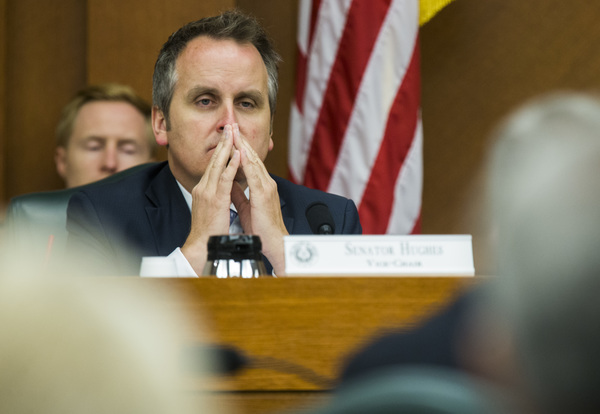
AUSTIN, Texas _ Sen. Jose Menendez didn't know he was looking at a transgender man.
Ethan Avanzino had been given two minutes to voice his opposition to the so-called "bathroom bills" to the senators sitting before him. The legislation being debated by the committee, which would restrict the bathrooms available for use to transgender people, is discriminatory, Avanzino said, and put the trans community in danger.
He believes that, he ended, because he's "a transgender man of faith who transitioned on the job while living in corporate America."
"What questions do you have for me?" he asked. Menendez paused.
"So if any law were passed that would force you to comply with law would mean that you would have to walk into a women's bathroom," said Menendez, D-San Antonio. "Just from looking at you, it seems like that might cause a problem, don't you think?"
Avanzino laughed, and said, "Yes, my hairy chest and legs would cause quite a stir."
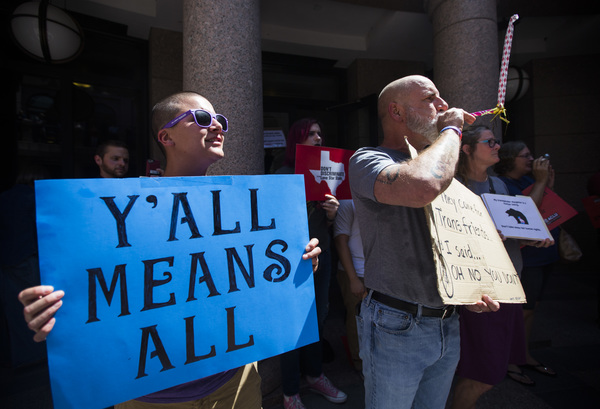
The crowd tittered. Avanzino smirked; it was not the first time he'd surprised someone.
An employee of Southwest Airlines and a Dallas resident, Avanzino has a low voice and full, cleanly trimmed beard. In the lingo of the LGBT community, he easily "passes" as male. But his birth certificate still says "female."
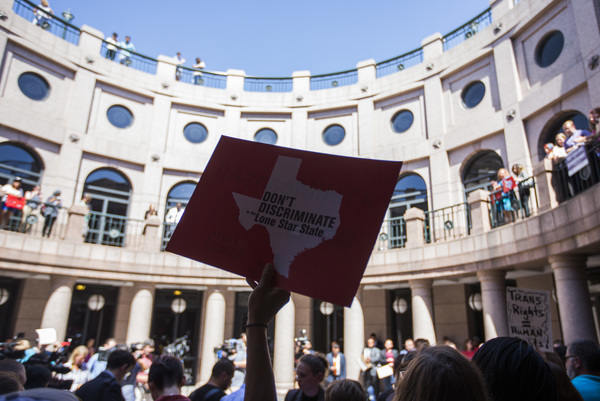
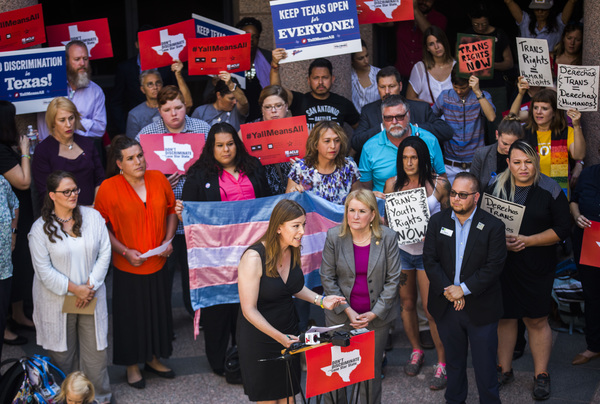
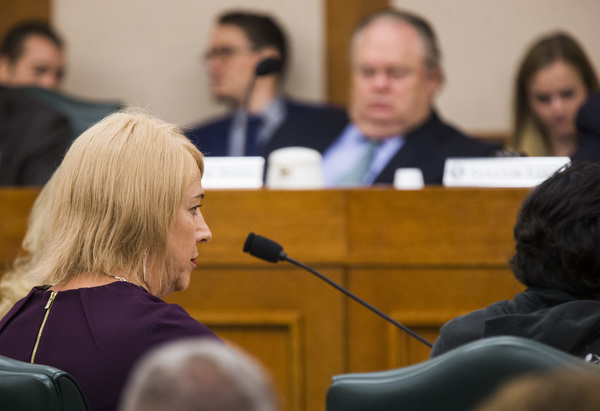
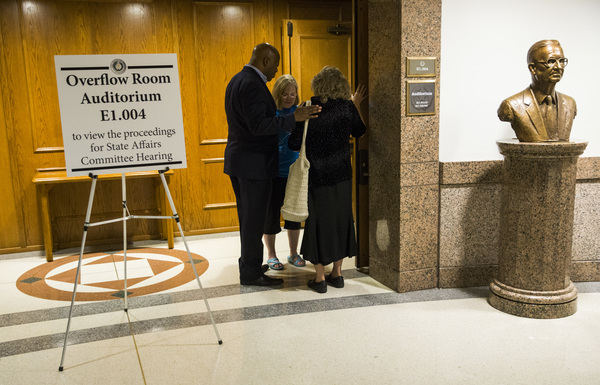
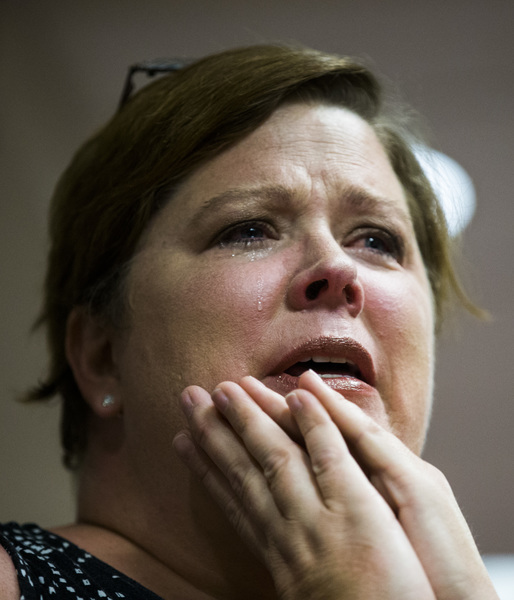
Under these bathroom bills, he'd have to use the ladies' room. He, and the dozens of other transgender Texans who showed up to testify before the Senate State Affairs Committee on Friday, urged him not to force him to make that choice. It was just the fourth day of a special session, legislative overtime called by Gov. Greg Abbott, and the bathroom bill was already drawing a crowd.
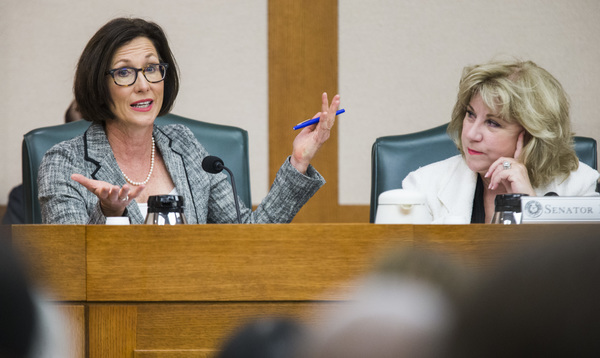
Sen. Lois Kolkhorst, R-Brenham, said she authored the bill because she wants to protect the privacy and dignity of Texas women and girls. Men should not be able to compete in women's sports, said Kolkhorst, a former NCAA golfer, and they should stay out of the ladies' room.
"We're here today because Texas has a tradition of taking care of these issues and not being dictated to by the federal government," Kolkhorst said in her opening statement. "We must look at, for all people, the safety, privacy and dignity of our students."
Ask a girl "if it's fair that a boy decides to play in her sport," she added. "Ask a woman how safe she feels when a man appears in a restroom."
Because he is transgender, Avanzino would be one of those men.
It's unclear how the committee will vote on these two bills. It's members could wait until Saturday to do so, when they meet to take up pending business. The last time this committee considered similar legislation back in March, more than 1,800 people came to the Capitol to make their position known, More than 86 percent of those who showed opposed the legislation.
The committee voted 8-1 in favor of the bill.

The legislation died after failing to receive a hearing in the House. Abbott then added it to a list of 20 issues he expected lawmakers to consider during the special session that kicked off Tuesday.
On Friday, the committee heard testimony from parents of transgender children who worried the bill would expose their children to discrimination in school and transgender veterans like Sierra Davis, who lives in Austin.
"When I left the Marine Corps, I didn't think I'd have to fight for my right to pee in safety," said Davis, tattoos of the American and Texas flags peaking out from the sleeve of her black dress.
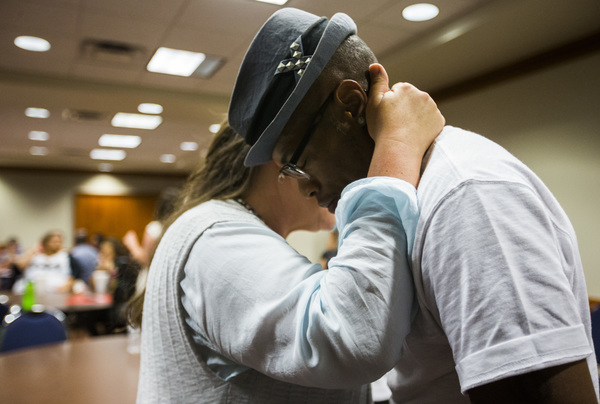
Amy Litzinger addressed the senators from her wheelchair, speaking against the bathroom bill because it doesn't exempt caregivers who may need to enter an opposite-sex restrooms to assist their clients.
"Not only do you have to be willing to do this job," said Litzinger, whose caregiver is transgender. "Not only do you have to be willing to take the pay, but you have to be the gender of the person you're working for.
"I'm just really worried."
The committee also heard from a comparatively small number of supporters, including representatives from the Texas Pastors Council. Jennifer Delgado, a mother of three, said she believed "therapy could resolve" or cure being transgender.
"Safety in bathrooms is a real issue," Delgado said. "Allowing biological males in women's restrooms is tantamount to abuse."