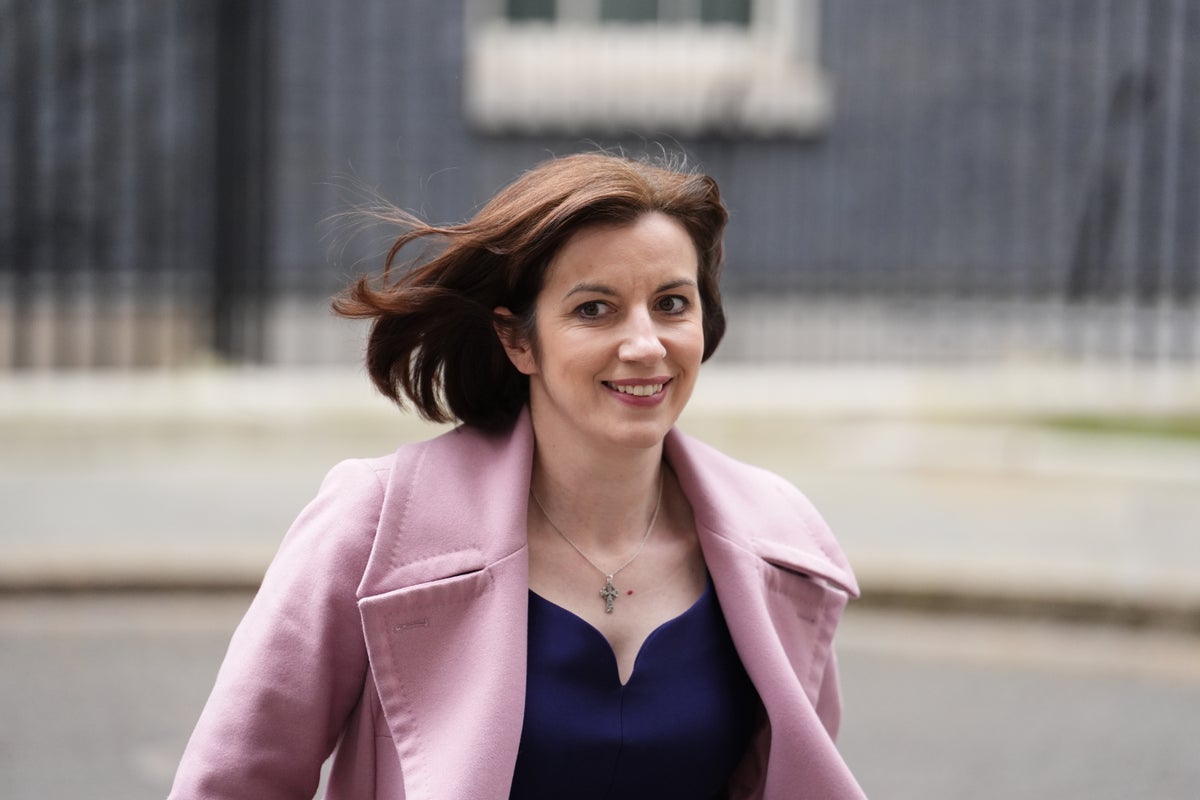
New guidance on single-sex spaces has been introduced to Parliament, with the equalities minister claiming it will uphold "people’s rights across our country".
The updated code arrives over a year after a pivotal Supreme Court ruling in April 2025, which clarified that "woman" and "sex" in the Equality Act 2010 refer to biological women and biological sex.
Women and Equalities Minister Bridget Phillipson reiterated the ruling "made it clear that sex means biological sex" under the Act, while confirming "trans people are still protected by the Act".
The government states the new code offers "clear, workable guidance" for organisations to adopt a "pragmatic approach" in meeting societal needs. It aims to assist service providers, from hospitals to cafes and leisure centres, in making "practical, and ultimately sensible decisions for every day scenarios, such as toilet provision".
While women’s rights campaigners said the publication of the code on Thursday must mark “an important turning point” in a long-running debate about sex and gender identity, trans rights activists have insisted trans people’s “participation in public life” must be protected.
The code of practice for services, public functions and associations, which runs to more than 300 pages, covers nine protected characteristics including age, sex, disability, race and gender reassignment, and has been updated in full for the first time since 2011.
It is aimed at guiding businesses and other organisations such as leisure centres and hospitals on how they can follow equality law, including in provision of single and separate-sex services such as toilets and changing rooms.
A draft code was handed to ministers by the Equality and Human Rights Commission (EHRC) last September and the Government has faced criticism for the delay in publishing it.
In the intervening period, Ms Phillipson had argued the Government was “taking the time to get this right” and said it was both important that “women have access to a single-sex provision” and that trans people “should be treated with dignity and respect”.
The Prime Minister’s spokeswoman reiterated this on Thursday, rejecting a suggestion it was choosing to publish on the last day before Parliament breaks up for recess in an attempt to bury bad news.
In response, the Downing Street spokeswoman said: “No, as I said, we’ve been focused on getting it right and ensuring duty bearers are able to uphold the law.”
Ms Phillipson, in a written statement to Parliament, said: “The current Code was produced in 2011 and there have been significant developments since then, including the Supreme Court ruling in For Women Scotland, resulting in the EHRC wanting to update the Code.
“Following last year’s Supreme Court ruling, the draft Code’s content on sex and gender reassignment has changed substantially from the 2011 version.
“The ruling made it clear that sex means biological sex for the purposes of the Equality Act 2010 and that trans people are still protected by the Act under the protected characteristic of ‘gender reassignment’.”
She added: “This government is proud of the Equality Act 2010 and will protect and uphold it; this Code is an important step in ensuring that organisations across Great Britain have clear guidance regarding its implementation, protecting people’s rights across our country.”
The code of practice, which would apply across England, Scotland and Wales has now been laid before Parliament for scrutiny from both MPs in the Commons and peers in the Lords.
It will not be enacted for 40 days.
While a vote would not be required to enact the code and make it statutory, either House could pass a motion to reject it within that period.
EHRC chairwoman Mary-Ann Stephenson previously said no-one is expecting there to be “toilet police” and suggested organisations with self-contained male and female toilets could make them unisex.