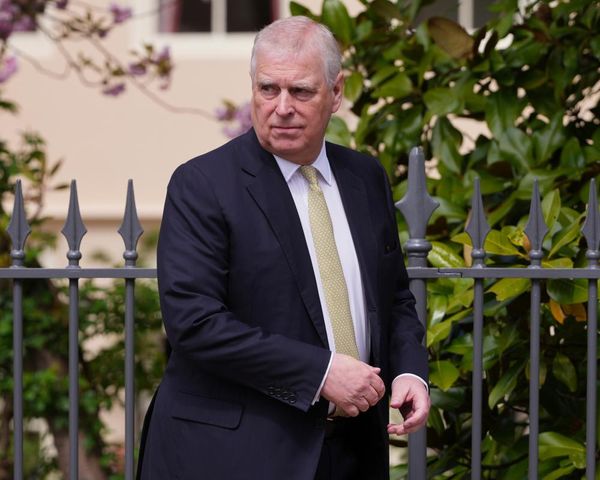
BALTIMORE _ Prosecutors in the upcoming trial of the next Baltimore police officer charged in the arrest and death of Freddie Gray were dealt a blow Tuesday when a judge ruled they would not be able to present evidence of his training since becoming an officer.
During a pretrial hearing in a downtown courtroom, Circuit Judge Barry G. Williams ruled that prosecutors committed another discovery violation when, just days before trial, they turned over 4,000 pages of documents related to the training of Lt. Brian Rice, the highest-ranking of the six officers charged in the Gray case.
The trial of Rice, 42, will begin Thursday morning. Like two co-defendants before him, he has selected a bench trial, leaving his fate in the hands of Williams instead of a 12-person jury of city residents.
Officers' training has been a key component of the State's Attorney's Office's case against the officers, alleging that they knowingly acted against Police Department guidelines in their arrest and transport of Gray, who suffered a severe injury in the back of a police van in April 2015 and died a week later. Prosecutors, however, can still cite the agency's general orders and Rice's police academy training.
Chief Deputy State's Attorney Michael Schatzow said the documents had only been obtained last Tuesday after "months and months and months" of seeking them from the city.
"The reality we have here _ you, your office, whoever, didn't do what you're supposed to," Williams said.
City Solicitor George Nilson told The Baltimore Sun after the hearing, however, that prosecutors made an expanded request for Rice's training documents only on June 18. Before that, Nilson said, items had been subpoenaed for the grand jury in May 2015.
Prosecutors were unable to respond to the claim due to a gag order prohibiting commenting on the case.
Rice has pleaded not guilty to involuntary manslaughter, second-degree assault, two counts of misconduct in office and reckless endangerment. He is free on $350,000 bail.
The most serious charges against him stem from failing to secure Gray with a seat belt when he helped load the shackled 25-year-old into an arrest van.
Other charges relate to his role in Gray's initial arrest. Rice was on bike patrol at the Gilmor Homes complex in West Baltimore when Gray fled police, and Rice called out for other officers to pursue him.
In two previous trials, Williams cleared officers Edward Nero and Caesar Goodson, who faced similar or more serious accusations.
Rice called out the initial chase of Gray, which prosecutors at Nero's trial said was "probably" justified under a Supreme Court ruling that allows police to chase people who flee unprovoked in "high crime" areas. Rice did not place Gray under arrest; Nero, who was present for the arrest, was acquitted in May.
Rice also helped Nero load Gray into the arrest van. Nero was acquitted of reckless endangerment related to that interaction, in part because Williams said it was reasonable for him to defer to Rice as a supervising officer, but also because it was reasonable to expect the van driver, Goodson, would ensure the arrestee was safely secured.
But Williams also found that Goodson was not criminally responsible for failing to seat belt Gray and said there was "insufficient" evidence to determine that the failure to secure Gray with a seat belt caused his death.
On Thursday, Williams denied defense motions to dismiss the indictment and to dismiss the counts of reckless endangerment and assault. Williams said the prosecutors' allegations were "legally" sufficient at this stage, and that he was not making a "factual" finding.
In asking for the indictment to be dismissed, the defense cited notes from the lead police investigator in the case, which they said raised questions about the grand jury process. The Baltimore Sun previously reported that Detective Dawnyell Taylor said she felt prosecutors presented misleading evidence to grand jurors.
The discovery violation related to the training materials was the latest for prosecutors, who have been admonished by Williams in past cases. Prosecutors have said in some cases police didn't give them the documents in question. In another, an attorney alerted the officers' defense attorneys to a meeting with a witness that had not been disclosed.
David Jaros, a University of Baltimore law professor who attended Tuesday's hearing, said the ruling on the training evidence was significant in the sense that it could have helped prosecutors argue that Rice's academy training was reinforced through his career.
But, "it doesn't mean that was the slam dunk evidence that would be sufficient to prove the evidence beyond a reasonable doubt," said Jaros. He is skeptical that the state can prove its case barring a revelation in Rice's statement to investigators, which has not been publicly shared.
Prosecutors have cited training to back its claim that the officers involved in Gray's arrest acted against what they were taught, and are expected to argue that Rice is more culpable as a high-ranking supervisor.
"We believe that a combination of training and (general) orders would've alerted the defendant that the conduct he engaged in was not within the scope" of how an officer should act, Schatzow said.
Prosecutors said they expected to receive the training documents from the city 30 days ahead of trial, but did not receive them until last Tuesday, and provided them to the defense the next day.
Williams said prosecutors should have pushed city officials or sought intervention from the courts.
Schatzow shrugged, and said prosecutors weren't sure if they could even prove that Rice attended the training or that it was conducted according to the curriculum. He cited the testimony of a police trainer and defense witness in the Goodson trial, whose testimony prosecutors successfully had stricken because she couldn't say for sure whether she had trained Goodson.
Nilson, the city solicitor, said Rice's training materials had been sought by the state in 2015 during the grand jury process. He said the fewer items were turned over in Rice's case than were provided for other officers. Nilson said the state made no additional request for Rice's documents until June 18, and said the city provided those documents on June 27 and June 28.
"They got more information when they particularized the request in a way that reached the specific additional documents," Nilson said. Asked why prosecutors said they had been asking for the documents for months, Nilson said: "Maybe things got conflated and confused."
Defense attorneys for Rice had said that the late nature of the disclosure prevented them from looking into the documents or interviewing witnesses about them. They asked Williams to preclude the state from discussing training from the case or to prevent discussion of the specific documents.
Attorney Michael Belsky indicated that the defense believed some of the training materials could be helpful to Rice's case, but was asked by Williams to take a position on whether they should available to both sides, or neither.