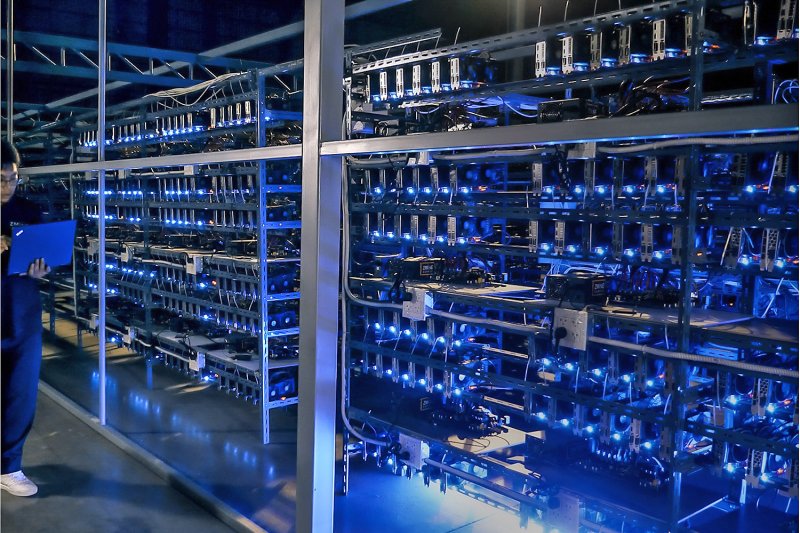
The Federation of Thai Industries (FTI) is calling on the government to set stricter investment conditions for the rapidly growing data centre sector, ensuring local communities and businesses benefit from the influx of foreign capital.
The relocation and expansion of power- and water-intensive data centres into Thailand must generate tangible value for domestic suppliers and contractors, said Nopadej Karnasuta, chairman of the FTI's Power Producer Industry Club and president of B.Grimm Power for Thailand, Malaysia and energy and industrial solutions.
"Investors should be required to engage local businesses, from construction firms to subcontractors, so that the benefits of this industry ripple through the economy," he said.
Mr Nopadej also urged the Board of Investment (BoI) to introduce measures that promote digital workforce development.
Since January, the BoI has approved seven large data centre projects worth more than 96 billion baht. In 2025, 36 projects valued at 728 billion baht were submitted to the BoI for approval, mostly from global hyperscale operators and major cloud providers.
Mr Nopadej proposed data centres be allowed to own dedicated power plants, particularly natural gas facilities, to meet their massive electricity demand.
While such a shift would take time, he argued it is necessary to ensure long-term energy security.
Narin Phoawanich, governor of the Electricity Generating Authority of Thailand (Egat), told the audience at the Earth Jump seminar Thailand's power infrastructure is among the most reliable in Southeast Asia.
Egat is expanding grid capacity in the Eastern Economic Corridor, where most data centres are clustered, with plans to add at least 4,000 megawatts.
Egat maintains one of the region's most reliable power systems, even with renewables now accounting for 20% of supply.
The authority uses advanced forecasting to anticipate drops in solar and wind output when sunlight or wind weakens, and sudden surges when conditions improve.
By predicting these swings, Egat smooths out the variability of renewable generation, ensuring a stable electricity flow across the grid.
Bordin Udol, president and chief executive of Eastern Water Resources Development and Management Plc, said water supply for data centre cooling is secure, with a 553-kilometre pipeline network delivering an average of 600 million cubic metres annually.