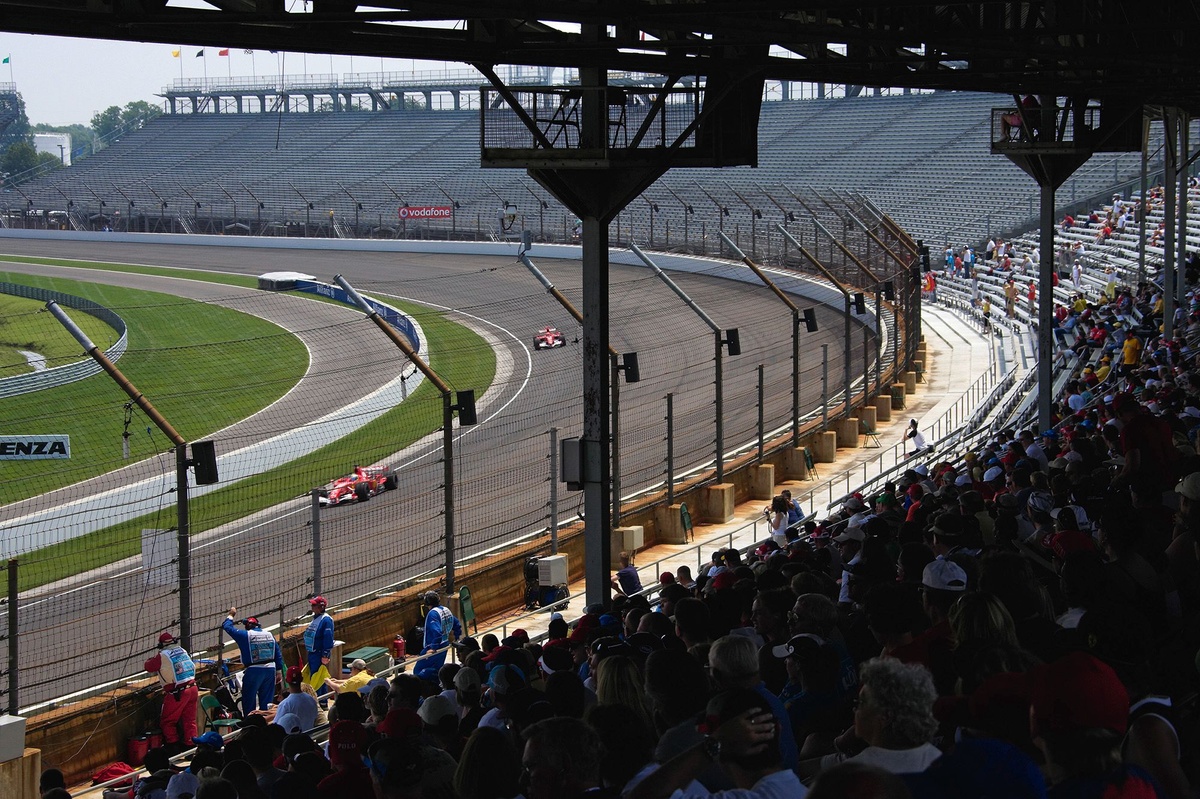
Hard though it might be to believe today, when we have three rounds in the United States, for many years Formula 1 struggled to make an impact in North America. Some of the circuits used for the US GP have not been good, but others have been well-received.
Excluding the anomalous Indianapolis 500s that counted for the world championship across 1950-60, there have been 78 points-paying grands prix in the United States across a dozen venues. But which are the best?
Given they are still building their histories in the championship, Austin’s Circuit of The Americas, Miami and Las Vegas have been excluded from this list.
So, based on their longevity, driver challenge and popularity, here are the top five American F1 circuits.
5. Detroit
Races: 7 (1982-88)
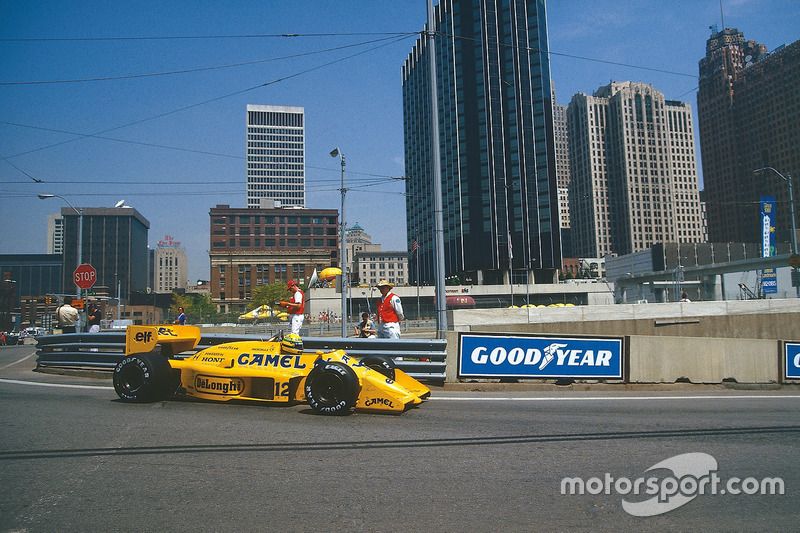
Sebring, Phoenix or Detroit? Arguably not great circuits but each has its merits for our fifth spot. Sebring’s one appearance in the championship provided a dramatic title decider and Phoenix will forever be remembered for the scintillating dice between Ayrton Senna and Jean Alesi in 1990. But Detroit narrowly edges it thanks to hosting seven races.
A tight street track with lots of 90-degree corners, Detroit nevertheless managed to host some good races. John Watson pulled off great overtaking moves to win from 17th on the grid in the inaugural 1982 race, while Michele Alboreto scored Tyrrell’s 23rd and final GP win the following year.
The 1984 GP provided a dramatic finish. Charging rookie Martin Brundle, up from 11th in his Tyrrell, failed to catch Nelson Piquet’s Brabham-BMW by just 0.8 seconds after a gruelling contest that lasted nearly two hours. It was a second place Brundle would lose when Tyrrell was thrown out of the entire 1984 season…
Senna completed a hat-trick of Detroit victories in 1988, when some of the track surface deteriorated. That was Detroit’s last GP. It was replaced by Phoenix, which lasted just three years as F1 lost momentum in America.
4. Riverside
Races: 1 (1960)
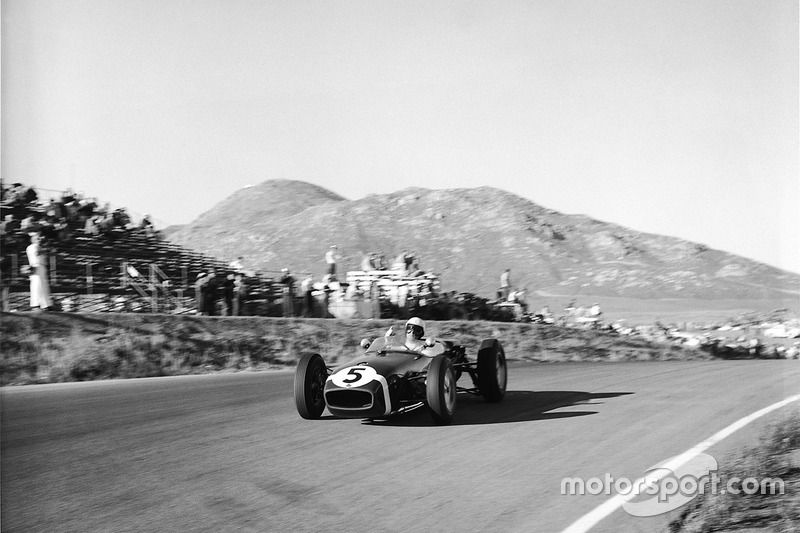
It only hosted one world championship race, but Riverside was rightly regarded as one of North America’s finest and most challenging circuits. It also hosted the 1960 finale, which Ferrari skipped!
Cooper’s Jack Brabham arrived as recently crowned double world champion but was beaten to pole position by Stirling Moss, with Riverside expert Dan Gurney third for BRM. Brabham and Gurney jumped Moss at the start, though the Rob Walker-run Lotus was into second before the end of the first lap.
On lap five of 75 Brabham pulled into the pits, his car alight due to an overfilled fuel tank. That left Moss out front and he extended his lead over a fine early dice between Gurney and team-mate Jo Bonnier before both BRMs hit trouble.
Moss eased off towards the end and still beat works Lotus driver Innes Ireland by 38s, while a charging Brabham recorded the fastest lap on his way to fourth.
Despite the quality of the circuit and good weather, only 20,000 spectators turned out and it was clear F1 had still not cracked the US.
3. Indianapolis
Races: 8 (2000-07)
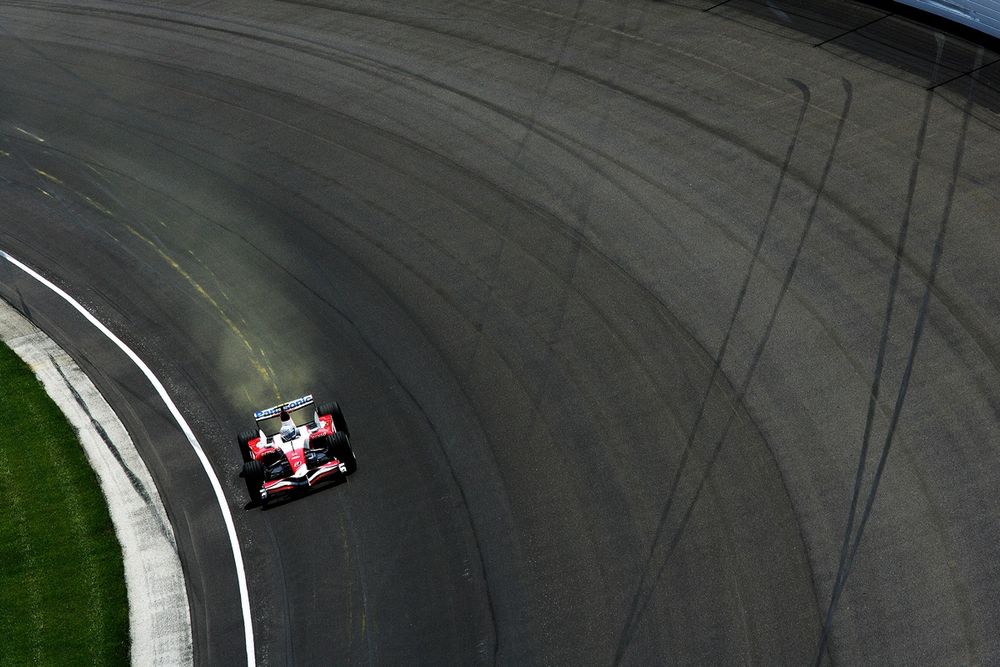
We’re excluding the 11 Indy 500s that formed part of the championship in its early days, but the Indianapolis Motor Speedway still earns its place on this list thanks to its role early this century.
There hadn’t been a US GP since 1991 when the F1 paddock arrived at Indy in 2000. An estimated crowd of around 250,000 indicated it was the right place to be, and Michael Schumacher took victory for Ferrari after challenger Mika Hakkinen’s McLaren suffered engine failure.
Hakkinen took a brilliant win the following year, when F1 gained more kudos for coming to America less than three weeks after the 9/11 attacks.
Races after that were hit and miss. Ferrari’s ham-fisted ‘photo finish’ in 2002 did not demonstrate F1 at its best and the 2005 debacle, in which 14 of the 20 cars pulled in at the end of the formation lap due to Michelin tyre problems on the banking, risked losing American fans altogether.
But that didn’t kill the race and the 2007 event featured a tense lead duel between double world champion Fernando Alonso and his rookie McLaren team-mate Lewis Hamilton, which the Briton won by 1.5s. Sadly, that was F1’s last visit to America’s most-famous motorsport venue as financial terms could not be agreed for future races.
The infield section was nothing special, but the use of the banking (Turn 1 of the oval run in the opposite direction) provided something different on the F1 calendar and overtaking was possible.
2. Long Beach
Races: 8 (1976-83)

The one that got away? After hosting F5000 for the inaugural event in 1975, the Long Beach GP (or ‘US GP West’) joined the F1 calendar the following year. One of the best street circuits in a fine setting, Long Beach soon proved a hit.
There was a thrilling finish in 1977 when long-time leader Jody Scheckter’s Wolf picked up a late puncture and was overtaken by Mario Andretti’s Lotus, the home hero beating the Ferrari of Niki Lauda by just 0.8s.
Nelson Piquet scored his first F1 victory there in 1980, dominating from pole for Brabham, while Lauda won in 1982, in just his third race following his return to F1.
The 1983 edition remains in the history books because nobody has won a world championship GP from further back on the grid than Watson started. Thanks to struggling to get heat into their Michelin tyres, Watson and McLaren team-mate Lauda qualified 22nd and 23rd respectively but charged through the field to take a famous 1-2.
Political shenanigans (or misunderstandings?) between promoter Chris Pook and F1 tsar Bernie Ecclestone meant that the race became an Indycar event from 1984. It remains one of the best events on the leading American single-seater series’ schedule, underlining what F1 let slip from its grasp.
1. Watkins Glen
Races: 20 (1961-80)
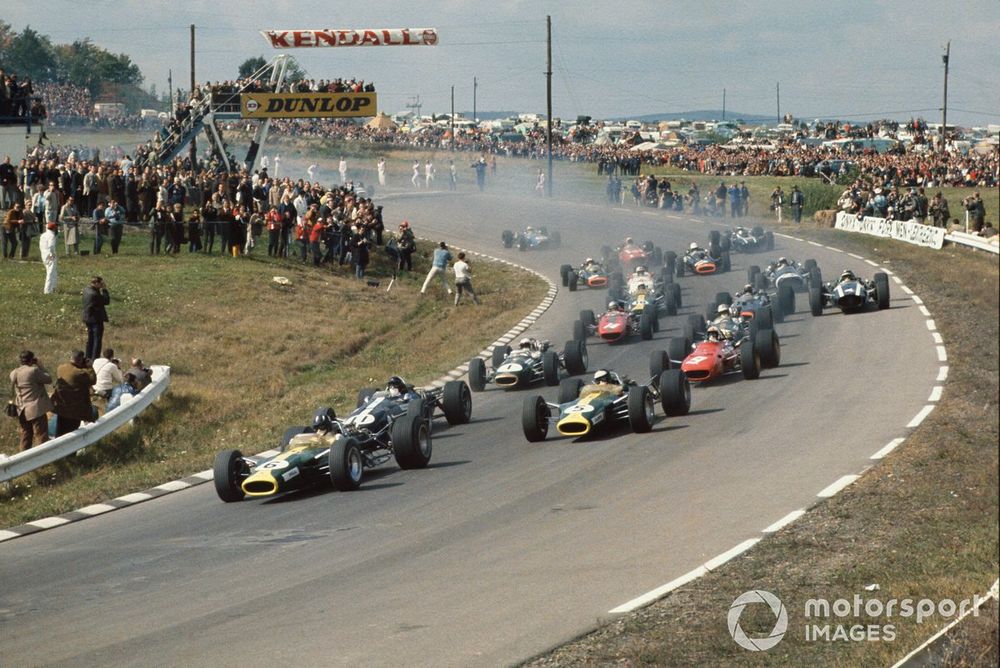
The Glen narrowly beats Long Beach on this list thanks to its longevity on the calendar – it held more US GPs than any other circuit.
Watkins Glen replaced Riverside for 1961, when Innes Ireland took the first points-paying win for Lotus in the absence (again) of Ferrari, and became a fixture on the calendar until 1980.
Graham Hill was a star at Watkins Glen, winning a hat-trick with BRM in 1963-65, while Jim Clark gave BRM’s infamous H16 engine its only success there in 1966. Jochen Rindt (1969) and Emerson Fittipaldi (1970) scored their first world championship GP wins at Watkins Glen, and Gilles Villeneuve starred in the wet on his way to victory in 1979.
Ronnie Peterson also beat rising star James Hunt by just 0.7s to win in 1973, but that weekend was overshadowed by the death of Tyrrell ace Francois Cevert in practice. Watkins Glen was also the scene of Helmut Koinigg’s similarly horrific death the following year.
While it would be great to see The Glen back on the calendar, it would surely need too many changes to be deemed safe for modern F1. Nevertheless, the flowing circuit with its elevation changes remains one of the best to have graced the championship, and it had real character and atmosphere. One of the great tracks F1 has visited.