
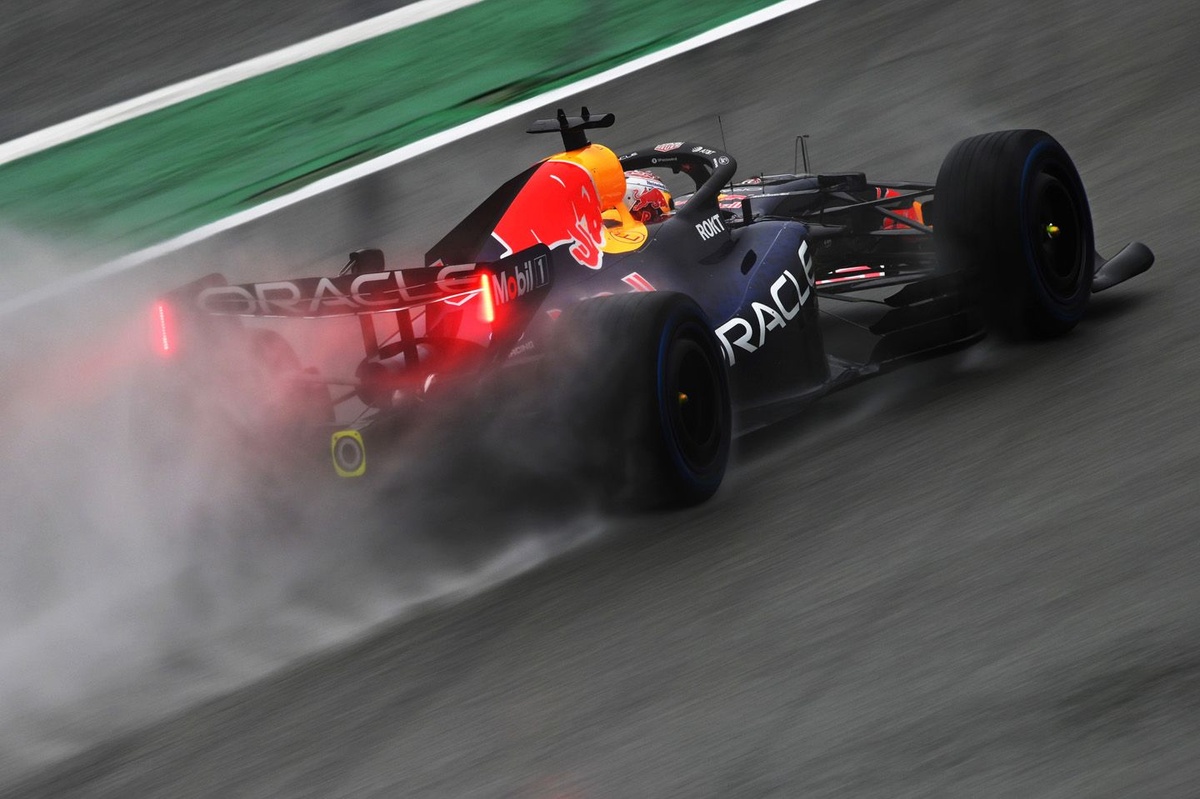
Formula 1 arrives in Miami with revised regulations aimed at addressing issues that emerged in the opening rounds of the season. The FIA has repeatedly stressed that the changes are an evolution of the 2026 rules, not a revolution, and target what it sees as the main priorities: qualifying, the closing speed between two cars in wheel-to-wheel battles, race starts, and, as a fourth point, wet-weather driving.
Although there have not yet been any truly wet sessions in F1 2026 – aside from one day of testing in Barcelona, with only Ferrari and Red Bull on track – drivers have unanimously pointed out that taming this new generation of cars in the rain could be extremely difficult due to some of their inherent characteristics.
First of all, the new power units, with nearly instantaneous torque provided by a 350 kW electric motor, make it much harder to control the rear end on corner exit, where the surge of power is much greater than in the past. These cars therefore tend to oversteer more naturally.
On top of that, there are two more factors: the tires are now narrower to reduce weight and aerodynamic drag, providing less mechanical grip, and aerodynamic downforce has been reduced. This combination makes the rear of the car more nervous, especially in wet conditions – something that could become relevant during the Miami weekend, as there is a high chance of rain on Sunday.
For this reason, the FIA took on board driver feedback and, together with the teams, decided to introduce common wet-track power unit changes designed to modulate both acceleration curves and power delivery. Drivers feared that maintaining the full 350 kW as in dry conditions could create safety risks, an area where the FIA is always ready to intervene with specific rules.
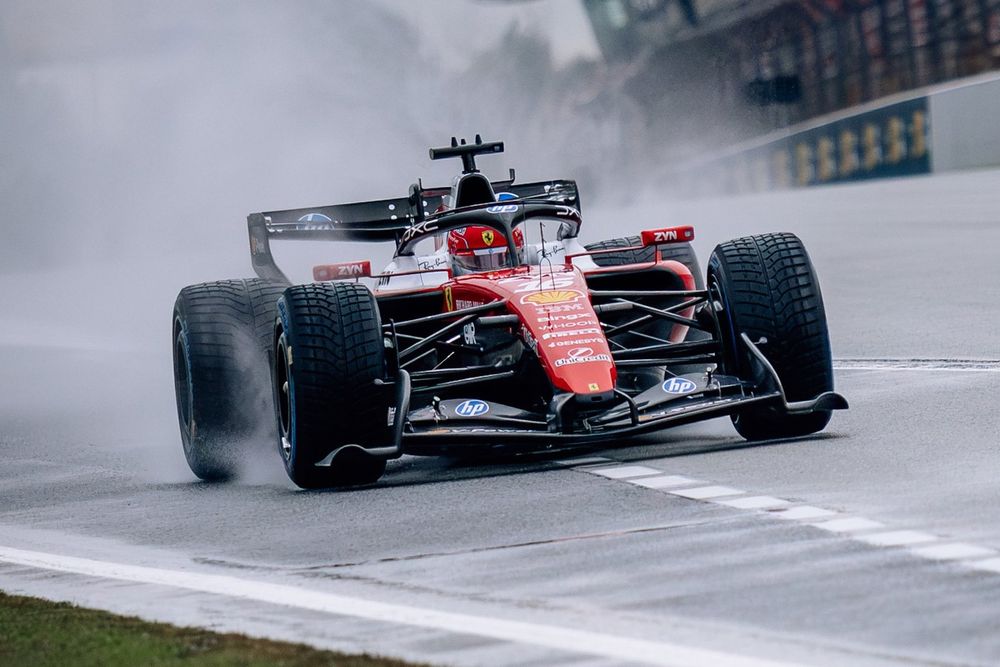
“From a safety perspective, one area of intervention concerns the performance of the cars in the wet. We haven’t had a real wet situation yet, but some drivers have already expressed concerns about wet races we may eventually face – that having so much power could be problematic, as could having full boost in the rain,” explained FIA single-seater director Nikolas Tombazis, underlining the role drivers played in these changes.
Wet conditions were not the only cause for concern for the FIA as, even in the dry at Japan, it was clear the use of boost could create safety issues. The risk of generating large speed differences between two cars brings with it an increased chance of contact.
For this reason, in dry conditions, the FIA and teams have decided to reduce the effectiveness of the boost: when the electric motor is delivering less than 150 kW, the extra push can now only bring it up to that level, while if the value is already above 150 kW it will no longer jump back to 350 kW as it previously did.
Wet conditions, however, will be treated differently, as drivers had voiced stronger concerns and requested targeted measures.
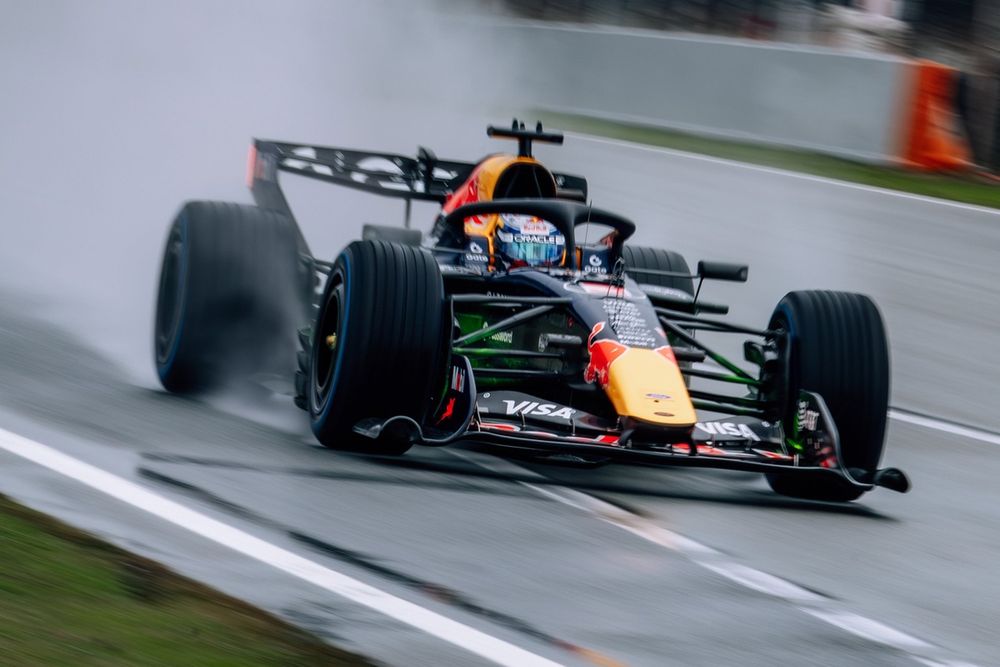
In the rain, the cars will still throw up large amounts of spray, reducing visibility, while some movable aerodynamics will remain partially active: the front wing can still be adjusted to reduce drag and downforce – helping reduce the risk of the floor hitting the track and wearing the skid block – while the rear wing will remain closed.
While overtaking mode will remain active in low-grip conditions, within the limits imposed by the new wet power curves, starting from Miami it will no longer be possible to use boost in the rain for safety reasons.
In the latest draft regulations issued before the US round, the FIA added Article B7.2.1g in the section on energy deployment limits, which states:
“In Low Grip Conditions the use of Boost mode, as defined in in the document FIA-F1-DOC-058, will be inhibited and is not allowed.”
The decision to ban boost – much like how DRS was previously not allowed in wet conditions – aims to improve safety by reducing speed differences between cars, which in the rain could otherwise create potentially critical situations.