Welcome to this week’s blog. Here’s a roundup of your comments and photos from last week.
EnidColeslaw_ shared this reflection on how difficult it is for many of us to get rid of material posessions – and linked it to her recent read:
For a few years now I have been trying to let go of my material possessions. I give away clothes and every paper book I’ve read goes to a neighbourhood association that collects books. My tiny bedroom is still stuffed to the gills with books, vinyls, comics, clothes, but at the end of the day, I wonder how I would react if all of this disappeared, for example if my apartment burned down. Would I be hysterically crying? I hope not, yet I don’t think I am ready to, one day, leave all of that behind me. I care a little bit too much, for the time being. Heidi Julavits does a whole lot. She has an attachment to certain objects that often verges on obsession. It’s one of the main themes of her recent memoir The Folded Clock, in which every entry begins like a diary: “Today, I”. She lives in Maine part of the year and a previous tenant of her house left a tap handle inside the wall. Out of superstition she carries it in her handbag every day, and draws it every day before beginning to work. It’s hers now, but she feels it never really belongs to her.
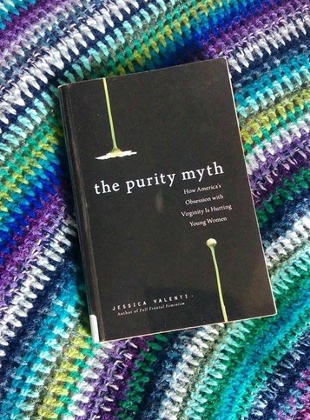
Grace Carman is reading The Purity Myth by Jessica Valenti, as a well-deserved break from course reading:
I’m an English Literature student and I enjoy my course reading, don’t get me wrong, but it’s nice when term is over and I can finally read what I want. I need to finish this wonderful feminist examination of the concept of virginity, and our obsession with it, in the next three days while I still have access to my uni library! Alongside this, I’m reading some Angela Carter and finishing off Austerity by Kerry-Anne Mendoza. My summer reading list keeps growing and growing, but luckily my reading speed is at a good pace after my first year at university.
koochacoo has been reading “a book that is about India”, The Gypsy Goddess by Meera Kandasamy.
It is quite unusual and remarkable in that the first half of the book addresses the author’s struggle with how a novel about a massacre should be written. [...] I found this part in equal parts compelling and frustrating. How wonderful to get into the mind of the author on something so profound, but the way that the writing obscured the actual plot made it a little confusing. However, when she starts writing the story itself, from the different perspectives of the villagers, from opposing sides, in the format of letters and speeches and catalogues of dismembered bodies, the experiment starts to pay off. I guess it’s true, when your novel is about an atrocity, half of the struggle is how you will write about it, so I understand its significance here. However, as an overall piece of work, it resonated less with me for that precise reason. Sometimes we don’t need to know about the author’s mechanics.
sbmfc is reading The Sound and the Fury and shared their experience of discovering Faulkner, which resonated with many other readers:
I’m about two thirds through and had the strange experience of going from being completely confused to utterly captivated without realising when the change happened.
I find myself rereading back up the pages as the non linear impressionist narrative means I’m not always appreciating the incredible sentences for their phrasing. I’ve never read Joyce but I don’t think i’ve ever read a better prose stylist in English than William Faulkner.
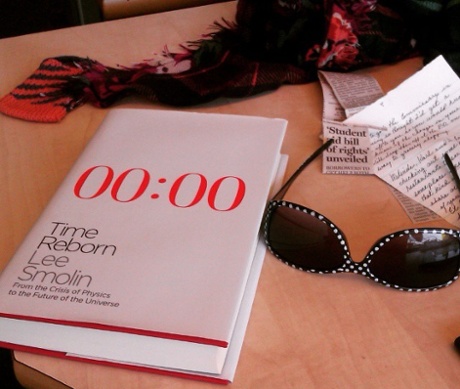
guardianUser12723315 shared this about Time Reborn:
As part of a reading challenge that I set myself, I read Time Reborn by Lee Smolin. I think I will need to re-read it several times to really get it, but I liked it. Smolin writes well, makes very interesting arguments, and explains several concepts in a new way. He also seems to have some ideas and doubts that I have had, so I am quite sympathetic to his view.
However, as much as I liked his arguments I did not find them entirely convincing, mostly because he appears to dismiss the idea of an observer-dependent reality which seems a shame. He also doesn’t make much case for how the viewpoint he proposes makes a blind bit of difference to anyone who is not a cosmologist. This also seems a shame because I think that what people believe about time has some very subtle but pervasive effects on their lives, from their anxiety levels to how they justify their behaviour toward others.
julian6 has finished Ngugi wa Thiong’o’s Weep Not, Child:
Very fine and economical use of language and evoked the central character’s turmoil superbly – his hesitant steps towards understanding the African predicament during the colonial period, his sense of family and his place within that unit versus his growing need for love and new experiences beyond his very enclosed world. There are odd moments when the authorial presence is almost too imposing and overwhelms the characters – but the expression is so thoughtful and insightful that my connection with them remains right up to the sombre conclusion.
If you’ve ever wondered how some TLS regulars see themselves, or if you just fancy looking at some gorgeous paintings of readers, your fellow commenters are here to help.
Interesting links about books and reading
- The Greatest Books of All Time, As Voted by 125 Famous Authors: Brain Pickings has compiled the top 10 works of the 19th and 20th centuries, as well as the most voted-for authors, from a book that has surveyed 125 of modernity’s greatest British and American writers.
-
The Great Gay Novel Might Be Here: a piece on The Atlantic about why A Little Life by Hanya Yanagihara might be the Great American Gay Novel everyone has been waiting for.
- Let Me Think About It: On Recommending Books: on how to overcome the stress of being asked to recommend books, especially if one has a “lifelong phobia of forcing books on people.” In The Millions.
- Why Cultural Significance Is The Best Job I Ever Had: In case you missed it, Nell Zink is the revelation of the moment. The author herself writes on Buzzfeed about the astonishment and the problems of going “from zero to hero”. Speaking of Zink, we loved this New York Public Library blog about other “Experimental but Approachable” works for you to tackle.
- Does the Size of a Book Suggest Significance? An interesting debate on The New York Times, recommended by EnidColeslaw. James Parker writes:
Life is short, “The Recognitions” is long. (And difficult, I’m told.) I’ve read “Moby-Dick.” I’ve read Carlyle’s “The French Revolution.” I might even read that again, at some point. But I’ll be dead one day, and you can bounce copies of “Infinite Jest” off my sinking coffin. Nobody reads everything.
- “Let’s talk about genre”: Neil Gaiman and Kazuo Ishiguro in conversation in the New Statesman. Jenny Bhatt recommends it: “They covered genre vs literary fiction, certain perceptions around reading for improvement, their books, movies, and much more.”
- And, if all these links weren’t enough, for the last two weeks we’ve been knee-deep in fiction specials – The New Yorker’s fiction editor Deborah Treisman explains their issue here (it includes work by Zadie Smith and Jonathan Franzen); Vice magazine’s blow-out includes a conversation on poverty, happiness and publishing between Akhil Sharma and Aleksander Hemon and David Sedaris on surviving the suicide of a sibling.
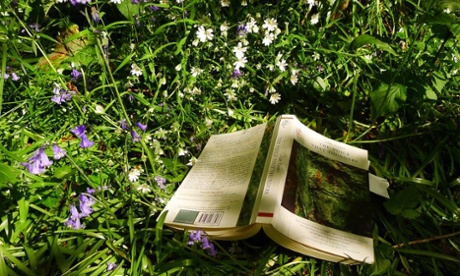
If you would like to share a photo of the book you are reading, or film your own book review, please do. Click the blue button on this page to share your video or image. I’ll include some of your posts in next week’s blog.
And, as always, if you have any suggestions for topics you’d like to see us covering beyond TLS, do let us know.