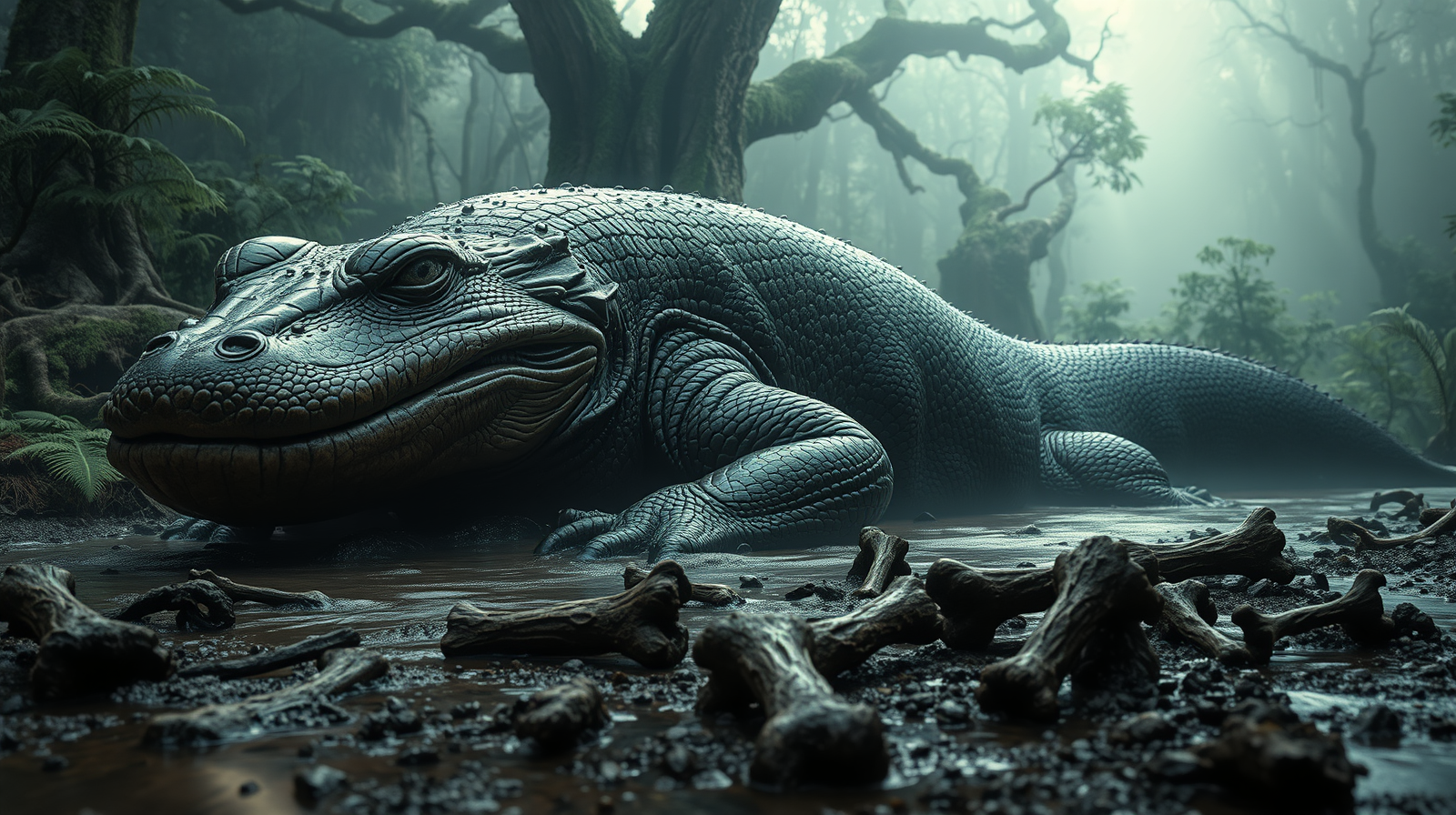
Three fossilised bones dug up in Japan nearly thirty years ago have finally revealed their true identity, and it turns out to be something scientists had never formally recognised before. The remains belong to a giant salamander that lived around 3.5 million years ago in the lakes and wetlands of what is now northern Kyushu, and researchers have now given it a brand new name, Limnospondylus ajimuensis. The animal may have grown to about 1.1 metres in length, making it roughly comparable in size to some of the largest amphibians alive today, and estimates suggest it could have reached that length at around eighteen years old. This discovery highlights how paleontology often advances not through new digs but through revisiting old collections, since improved comparative methods can reveal distinctions earlier researchers simply lacked the reference material to detect.
Get breaking news anytime, anywhere. Download the TOI app now!
How old bones from Oita Prefecture led to a new discovery
The three fossilised vertebrae were originally found between 1995 and 1997 in the Ajimu region of Oita Prefecture, inside a layer of ancient lake sediment known as the Tsubusugawa Formation. This same rock layer has also preserved remains of elephants, crocodiles and other animals that no longer live in Japan, painting a picture of a Kyushu that was once far warmer and wetter than it is today, with wide freshwater lakes and marshes capable of supporting large amphibians and reptiles. The bones were first studied in 2001 and loosely placed within Andrias, the genus that includes today's Japanese and Chinese giant salamanders, since researchers at the time simply did not have enough material to classify them any further.
Why researchers created an entirely new genus
A team from Kyoto University recently reexamined the same fossils using a much wider set of modern and extinct giant salamander specimens for comparison. The bones were identified as an anterior trunk vertebra, a mid trunk vertebra and a sacro caudal vertebra, and since they differ in size and came from separate locations, researchers believe they belonged to different individual animals rather than one skeleton. The clearest evidence came from the mid trunk vertebra, which showed a combination of anatomical features never seen before in any known member of the giant salamander family Cryptobranchidae. These differences were significant enough for the team to place the fossils in a completely new species and genus rather than simply expanding an existing one, according to the study published in PeerJ .
Filling a major gap in salamander history
Giant salamanders are an ancient amphibian lineage stretching back roughly 60 million years, and although they once lived across much of the Northern Hemisphere, their fossil record in Asia has long carried a gap of more than 20 million years between older extinct species and their living relatives today. Only five extinct and living genera within the family had been formally described before this study. Lead author Masahiro Noda noted that Ajimu is the only known site in the world where fossils of the giant salamander family and its living relatives have both been found, calling it an important region for understanding the group's evolutionary history. The addition of Limnospondylus suggests that giant salamanders were once far more diverse across Asia, occupying a wider range of freshwater habitats than their few surviving descendants do now.
What this means for fossils already sitting in museums
The discovery may also prompt scientists to take a second look at other fragmentary giant salamander fossils already stored in museum collections. Many such specimens have traditionally been grouped under Andrias simply because researchers lacked enough evidence to tell them apart, meaning some could turn out to represent additional hidden genera or species once studied more closely. Limnospondylus ajimuensis appears to have been suited to slow-moving lakes and wetlands rather than the fast-flowing rivers favoured by many giant salamanders today, and its disappearance is thought to be linked to global cooling near the end of the Pliocene, a shift that reshaped freshwater habitats across the region.
A prehistoric link that still survives today
Despite the extinction of this newly identified species, one branch of the same family has managed to survive into the present. Andrias japonicus, the Japanese giant salamander, still lives in rivers across the Ajimu region and other parts of Japan, forming a rare and direct link between the area's ancient ecosystem and its modern wildlife. Noda pointed out that Japan's native giant salamanders currently face serious challenges, including hybridisation with introduced foreign species and the loss of natural habitat, and said the discovery had deepened his own appreciation for protecting the living species that remain. Researchers say the find is a reminder that even bones that have sat unexamined for decades can quietly hold information capable of reshaping how an entire evolutionary lineage is understood.