
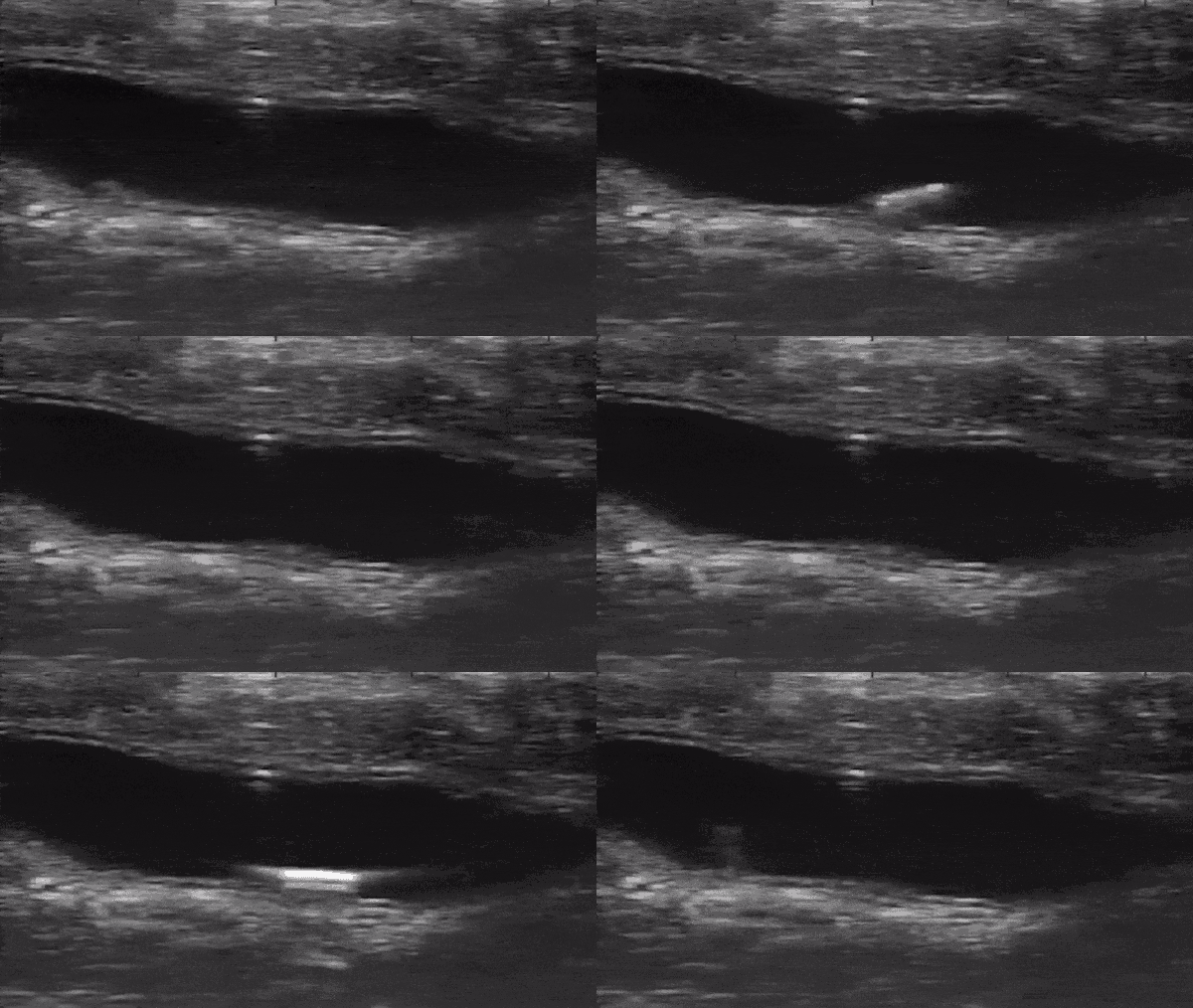
A team of researchers from Purdue University wants to play games with your drugs. The group published a study in September about its microrobots, providing the first demonstration of such devices moving through a living body. The little robots are controlled externally through a magnetic field and backflip their way through the gastrointestinal tract to deliver medicine.
Lil’ cuties —
These agile robots have nothing to do with Boston Dynamics’ terrifying Spot (though there are smaller versions) and are more aligned with a wave of advancements in micro-robotics. Unlike the RoBeetle, which is powered by alcohol, these robots are way too tiny to have their own power source. Just to really drive this home, these microrobots from Harvard University, are the size of a penny while Purdue’s microrobots are barely visible on the surface of a penny:
Entrance through the exit —
The non-toxic microrobots are not coming in from the entrance, by the way, so they have to fight against waste currents along the unpredictable terrain of the colon. To help them literally up shit’s creek, researchers use a magnetic field to direct them.
“When we apply a rotating external magnetic field to these robots, they rotate just like a car tire would to go over rough terrain,” David Cappelleri, a Purdue associate professor of mechanical engineering, said in a statement. “The magnetic field also safely penetrates different types of mediums, which is important for using these robots in the human body.”
These biocompatible little gymnasts were tested in live mice under anesthesia, and they were also effective in pigs — which have a similar GI tract to humans. The scientists also studied drug payload delivery in a saline vial. The microrobots were covered in a fluorescent, fake drug and proceeded to tumble around in their vial rave until it was time to slowly release the payload. Though it would take more than one, these tiny tools could prove to be very effective, location-specific delivery methods for medicine. At the very least, it’s a far more exciting prospect than an IV drip.