Eighty million Americans from the central Plains to New England are under some form of heat advisory or excessive heat warning as of June 18–19, 2026, as a dangerous and widespread heat event stretches across the country — hitting during the Juneteenth holiday weekend and drawing emergency declarations from governors and mayors across the affected region.
New York Governor Kathy Hochul activated the state's Emergency Operations Center on June 18, putting the entire statewide heat response apparatus on active deployment. In language that reflects the scale of the public health risk, she was direct: "This is a deadly event. We have seen blizzards, we have seen flooding, we had hurricanes, we had tornadoes. But this heat event is most likely to cause more deaths."
As reported by Malay Mail citing wire services, the day before the Hochul declaration, the city of Syracuse, New York, hit 94°F — topping a temperature record from 1994. "Feels-like" temperatures — incorporating heat index values that account for humidity — are forecast to reach 100°F across New York's Finger Lakes, Capital Region, and Hudson Valley, and to exceed 110°F in parts of Texas. The National Weather Service has characterized conditions as "dangerous."
Who Is at Highest Risk — and What Is Happening in Specific Cities
The heat risk is not uniform. It is concentrated most severely in populations without reliable access to air conditioning, those working outdoors, elderly adults, infants, and people with chronic cardiovascular or respiratory conditions. In every major city under the alert corridor, local public health officials have opened cooling centers and activated emergency response protocols.
New York City's Health Department released its 2026 Heat-Related Mortality Report the same week, documenting that approximately 500 New Yorkers die from heat-related causes each year — making heat one of the deadliest weather-related hazards in the city. The report specifically found that approximately 80% of heat-related deaths occur on hot but non-extreme days (temperatures between 82 and 94°F) — meaning the threshold for health risk is lower than most people assume, and that "extreme" heat advisories represent a more dangerous subset of an already-dangerous summer temperature range.
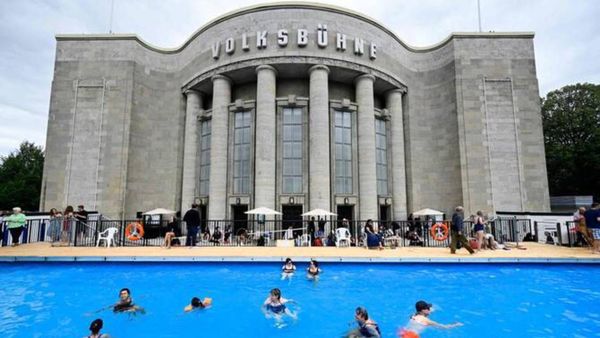
Governor Hochul's response includes opening beaches and public pools early for the Juneteenth holiday, deploying 5,500 utility workers to respond to power demands and outages caused by air conditioning load, coordinating cooling centers statewide, and direct outreach to vulnerable communities. She activated the state's Emergency Operations Center — a designation typically reserved for natural disasters and public health crises — to coordinate the whole-of-government response.
Newark, New Jersey, declared a "code red" — its highest heat emergency classification. Philadelphia issued a heat health emergency advisory. Across Texas, Missouri, Kansas, Iowa, Arkansas, and Tennessee, temperatures with heat index values in triple digits are forecast across multiple consecutive days.
| Juneteenth 2026 Heat Wave — Key Data | Detail |
| Total Americans under heat advisories or excessive heat warnings | ~80 million |
| Dates of peak heat event | June 18–19, 2026 (Juneteenth holiday weekend) |
| Geographic scope | Central Plains to New England — Texas, Midwest, Northeast |
| Peak heat index forecast | 110°F+ in parts of Texas; 100°F+ across Midwest and Northeast |
| New York EOC activation | June 18, 2026 — Governor Hochul |
| Hochul quote | "This is a deadly event" |
| Newark, NJ declaration | Code red |
| Philadelphia | Heat health emergency advisory |
| NYC annual heat deaths | ~500/year (NYC Health Dept. 2026 report) |
| NYC 2025 severe heat wave deaths | 19 heat stress deaths (June 2025 event) |
| CDC ER visit levels | "Extremely high" in Midwest — 542 per 100,000 in some areas, up from 167/100,000 week prior |
| Populations at highest risk | Elderly adults; infants; people without AC; outdoor workers; those with CV or respiratory disease |
What Heat Does to the Body — and How Quickly It Kills
Heat illness progresses along a spectrum that can move from inconvenient to life-threatening in hours. Understanding the stages is the difference between seeking timely help and a preventable death.
Heat cramps are the mildest manifestation — painful muscle spasms caused by salt and water depletion during sweating. They typically resolve with rest and electrolyte replenishment.
Heat exhaustion is more serious: heavy sweating, cold and pale skin, weakness, dizziness, headache, nausea, and fainting. The body is struggling to cool itself, but has not yet lost the ability to regulate temperature. Moving to a cool environment, drinking cold fluids, and applying cool water to the skin are the key interventions.
Heat stroke is an emergency. It occurs when the body's temperature-regulation system fails, core temperature rises above 104°F (40°C), and organ damage begins. Recognizing signs of heat stroke is critical because only emergency medical intervention can prevent death:
- High body temperature (103°F or higher)
- Hot, red, dry, or damp skin
- Rapid, strong pulse
- Confusion, disorientation, slurred speech, or loss of consciousness
- No longer sweating (classic heat stroke) or profuse sweating (exertional heat stroke)
Heat stroke is a medical emergency. Call 911 immediately. While waiting for emergency services, move the person to a cool environment and apply ice packs or cold, wet towels to the neck, armpits, and groin. Do not give the person anything to drink if they are confused or unconscious.
What Residents Must Do During the Next 48–72 Hours
Based on the official guidance issued by Governor Hochul, the NYC Department of Health, and the CDC's heat illness prevention guidance:
- Stay inside with air conditioning during the hottest hours (11 a.m. to 6 p.m.) — if you don't have air conditioning, go to a public cooling center, library, mall, or other air-conditioned public space
- Drink water continuously — even if you don't feel thirsty; do not wait for thirst to signal dehydration
- Avoid alcohol and caffeine — both accelerate fluid loss and impair the body's heat dissipation
- Check on elderly neighbors, family members, and anyone who lives alone — heat deaths disproportionately affect older adults living alone without air conditioning
- Never leave children or pets in parked cars — temperatures inside a parked car can exceed 150°F within minutes, even with windows cracked
- Text 333111 (New York) to sign up for weather and emergency alerts if you have not already done so
- Know your nearest cooling center — call 311 in New York City to find the nearest location; other cities have similar hotlines
Frequently Asked Questions
How widespread is the June 2026 heat wave?
As of June 18–19, 2026, approximately 80 million Americans from the central Plains to New England are under some form of heat advisory or excessive heat warning. The event spans Texas, Missouri, Kansas, Iowa, Arkansas, Tennessee, and major northeastern cities.
What did Governor Hochul say about the heat event?
Governor Hochul activated New York State's Emergency Operations Center on June 18, 2026, declaring: "This is a deadly event. We have seen blizzards, we have seen flooding, we had hurricanes, we had tornadoes. But this heat event is most likely to cause more deaths."
What is the difference between heat exhaustion and heat stroke?
Heat exhaustion includes heavy sweating, weakness, cool pale skin, dizziness, headache, and nausea — the body is struggling but still regulating temperature. Heat stroke is a medical emergency: core temperature above 104°F, hot dry skin, confusion, loss of consciousness, rapid strong pulse. Heat stroke requires immediate 911 call and cooling measures while waiting for emergency services.
Who is most at risk during this heat wave?
Elderly adults (especially those living alone without air conditioning), infants, people working outdoors, those with cardiovascular or respiratory disease, and people without access to cooling are at the highest risk. Approximately 80% of heat-related deaths in NYC occur on hot but not extreme-heat days (82–94°F) — meaning even temperatures below heat emergency thresholds are dangerous for vulnerable populations.
What should I do if I see someone showing signs of heat stroke?
Call 911 immediately. Move the person to a cool environment. Apply ice packs or cold, wet towels to the neck, armpits, and groin. Do not give fluids to someone who is confused or unconscious. Heat stroke can be fatal within minutes without emergency treatment.