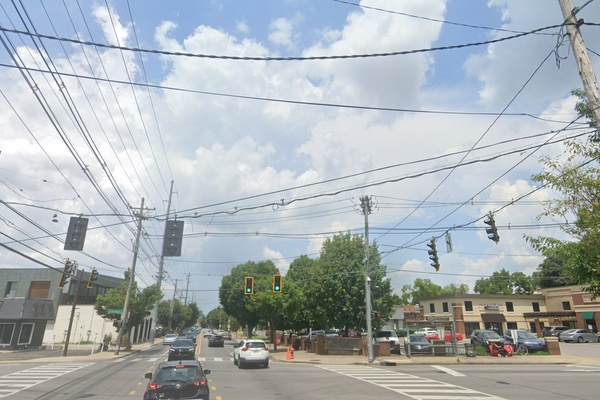
MUD CREEK, Calif. _ On a sunbaked, dust-scoured road overlooking the Big Sur coast, four men in hard hats and fluorescent vests huddle against the stiffening wind. Worry isn't in their nature, but that doesn't mean they aren't concerned.
This Wednesday morning, with the summer nearly over, portents of fall _ like the wind _ bring uncertainty, and uncertainty can mean trouble when you're standing on top of the largest landslide to bury Highway 1.
"Come the middle of November, we're going to start seeing big surf coming in from Hawaii, and it's going to just clobber the toe."
John Duffy is speaking. He is an engineering geologist, 63 years old, and often cited as an expert in landslide management. He is also an avid surfer.
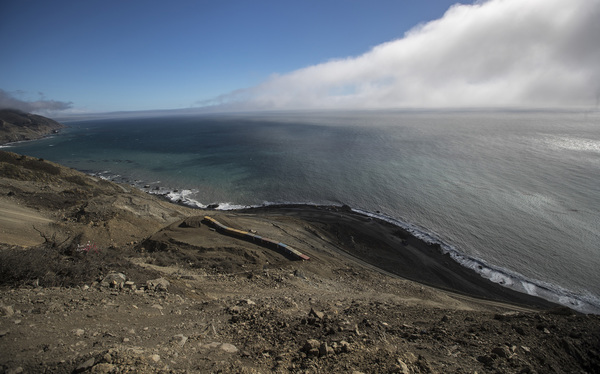
Duffy is concerned about erosion. Loss of the toe _ the 15 acres of land that the slide pushed out to sea _ would compromise what they've accomplished in the last four months.
"We've already lost 100 feet of shoreline," says Lance Gorman, a major damage restoration engineer.
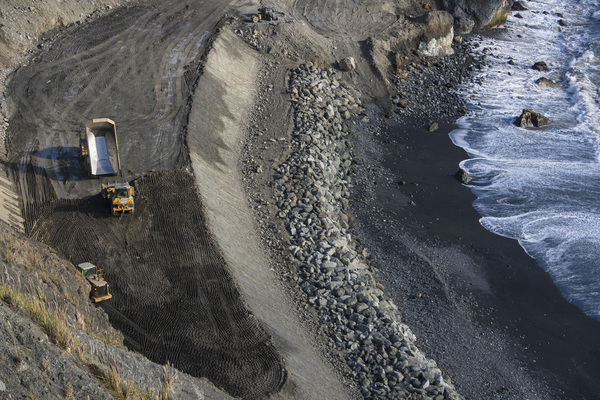
The men look down at the excavators and dozers maneuvering massive chunks of granite on the south flank of the toe into what looks like a breakwater just above the wrack line. A similar barrier was recently completed on the north flank.
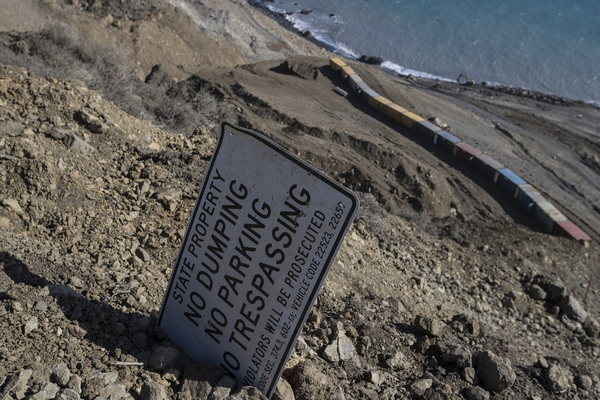
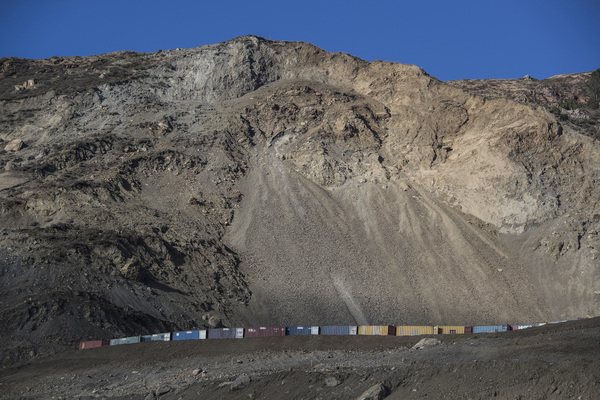
Ever since May, when a near-vertical slope of mountain collapsed at a place called Mud Creek, teams of geologists and engineers have clawed over rocks and boulders, through brush and chaparral, to come up with a plan for reconnecting this severed artery.
The rebuilt highway, they decided, would lie on top of the slide, and the California Department of Transportation, manager of the $40 million project, hopes to see traffic flowing by the end of next summer.
Up the coast, the Pfeiffer Canyon Bridge _ brought down by a landslide in February _ has reopened, a Herculean demolition and construction project completed in just eight months, but Mud Creek, says Duffy, is more complicated.
Estimated to be 5 million cubic yards, the rock and mud sloughed off this mountain would by one estimate fill the Rose Bowl seven times, and while the worst seems over, Mud Creek could surprise them.
"The earth," says Duffy, "is still adjusting and trying to find a state of equilibrium."
Driven by the urgency to open the highway _ visitors hoping to drive the coast, businesses and residents dependent on access _ Duffy and his colleagues are practicing engineering on the fly, trying to move ahead with a long-term plan while adapting to sudden exigencies such as erosion and imminent rock falls.
Gorman pulls out a piece of slightly crumpled graph paper detailing his solution: to connect the two breakwaters, creating a solid line of rock across the width of the slide.
They pause. His plan _ an additional 1,410 feet of boulders stretching nearly four football fields _ means more material, more money, more time. The scale of the slide never fails to impress them.
"If you lived 1,000 years," says Augie Wilhite with John Madonna Construction, "you'd probably never see anything like this."