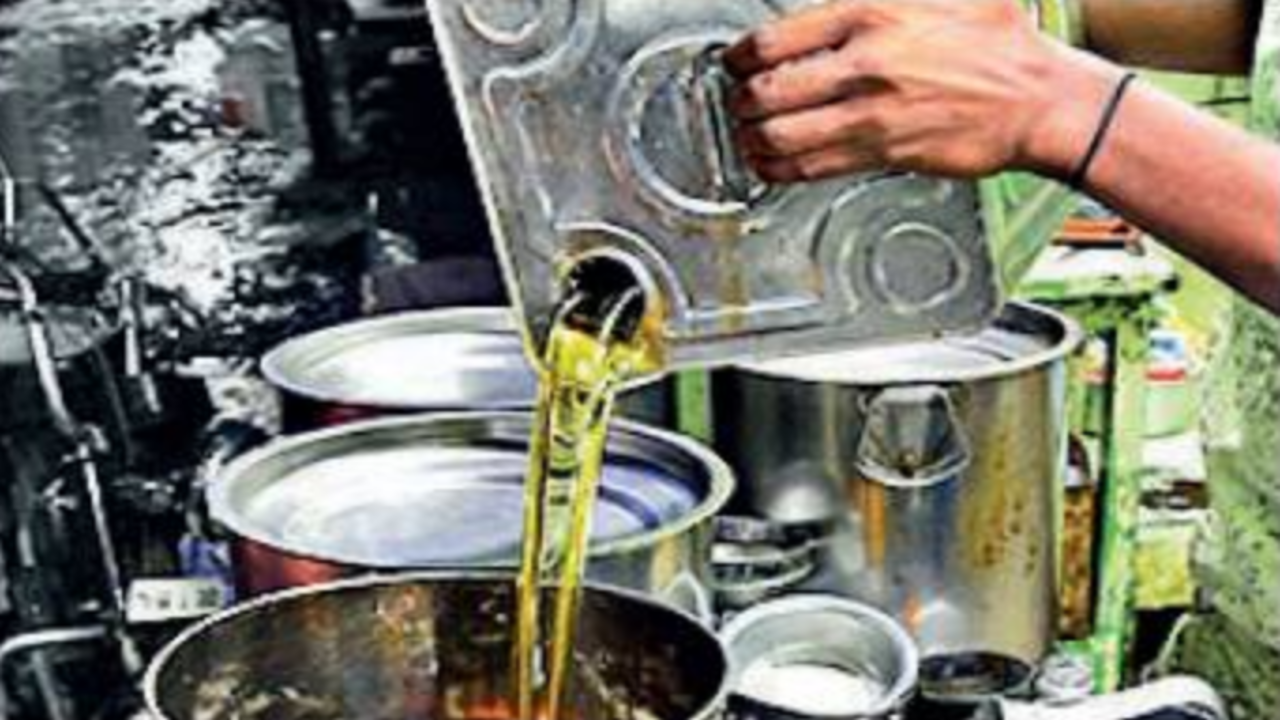
BHOPAL: The price of edible oils spiked by almost 50% in the last oneyear. Mustard oil price has gone up to Rs 190 per litre making it costliest among the common cooking oils. Market experts also blame one of the three controversial farm laws for the “ higher price movement” .
Experts said that price movement has become steeper after the government in September last year passed a bill to remove cereals, pulses, oilseeds, edible oils, onion and potatoes from the list of essential commodities. If you monitor the price movement of these commodities, you would find a pattern, a senior bureaucrat said adding while this is the most business friendly of all controversial farm laws, there is always a danger of monopoly in the business. “We have record mustard seed production yet the benefit is hardly reaching the consumers,” he underlined.
A miller in Morena, known for mustard farming said, the prices may continue to be the same or may even go up a little further till the new mustard crop is harvested next year .“ For the past few months, about a year or so, prices of all types of cooking oils have gone up. Mustard oil has touched Rs 190 a liter ark. Soyabean and groundnut oils vary from Rs 140 a liter to Rs 170”, said Meenakshi Singh a homemaker.
Renu Tiwari, a senior executive with a business firm said, “ Eating food has become a costly affair. Vegetables to cooking oil to LPG cylinder, every commodity. We belong to the segment of people who earn comparatively well, but are still feeling the pinch.”
Other sources blamed it on costly imports as almost 60 % of edible oil consumption is met through imports.
Since 2011, there has been a ban on the sale of loose edible in the country to check the adulteration in the cooking medium. Food and civil supplies officials said that the ban was relaxed for about a year in 2013 as the food safety act has provisions for the state governments to do so. He said that since 2014, the ban is continuing. The officials said that adulteration was very easy in edible oil and spices which is why the ban was enforced strictly.
“Around 60% of the edible oils consumed in the country are met through imports... palm oil constitutes around 54% of the total edible oil imported mainly from Indonesia and Malaysia, while Soyabean oil constitutes around 25% and is imported from Argentina and Brazil and Sunflower oil constitutes 19% and is imported mainly from Ukraine,” the ministry added.