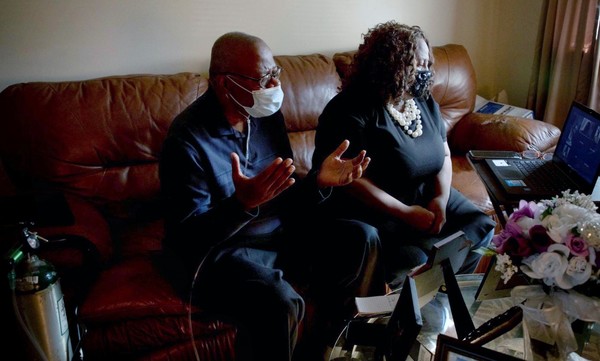
OXFORD, N.C. — Pastor David McShaw lay in his hospital bed at UNC, tired, so tired, from weeks of being beaten up by COVID-19. It hurt to breathe. It hurt not to.
"I can't take it anymore," he thought.
Feeling like someone was standing on his chest in leather work boots, he called his wife, whom he had not seen since she dropped him off at the hospital in mid-September and went home to Oxford to deal with her own case of the novel coronavirus.
"I can't do this," he told her, his voice weak from exhaustion and the effects of the virus on his lungs. "Call the funeral home. Tell the kids I love them."
Jackie McShaw was having none of it. It had taken her more than 50 years to find the love of her life and she wasn't going to lose him now, after just three years of marriage.
She had been praying for David night and day, even during those two weeks when she couldn't get out of bed herself. She had given daily updates on his condition to members of the True Deliverance Worship Center, a small holiness church in Bahama where she's an elder and he is an associate pastor. She was in touch with his friends across the country from the days when he sang with a traveling gospel group.
He was being covered in prayer.
"You can't give up," Jackie told David. "There is too much for you to do. I need you to fight."
David had known since the outbreak of the virus that he was among the vulnerable: Over age 60, African American, with anemia and severe kidney disease.
When the virus hit North Carolina in March, David had been on a list for nearly seven years to receive a new kidney. A couple of times, he had been notified of a match only to later be disappointed at finding that it wouldn't work.
Then, in April, with much of the state and the nation locked down to try to slow the spread of illness, a call came that there was another kidney match. It seemed a terrible time to embark on a major medical journey, and David debated whether to risk it. He decided to have the surgery. There were some complications, including an infection that landed David in the hospital for more than a week. But the transplant was a success.
Afterward, he said, he and Jackie were extra careful. The church, like most others, had moved to all-online services and the couple, who were always together, avoided crowds. They never went anywhere without masks.
Then, in early September, Jackie said, "We let our guard down."
A longtime friend of David's was holding a two-night convocation at a church in Yanceyville, in Caswell County. The McShaws went, to support the friend's ministry.
The service was indoors, despite Gov. Roy Cooper's request that people not gather indoors in large numbers. The McShaws got there early and took their seats up front.
It was hot, and as the room filled with people the couple considered leaving, but they were sitting where everyone could see them and they didn't want to be rude, David said.
Soon after they got home, "We thought we had colds. Sneezing, muscle aches, a fever," Jackie said. Five days after the service, the coughing started, and David developed gastrointestinal problems.
To get tested for COVID-19, they went to Chapel Hill, where David had had his transplant surgery and other medical care. At the drive-through testing facility, Jackie got swabbed, but the nurse took a look at David and said he needed to go straight to the emergency room.
"That was one of the worst days of my life," Jackie said, having to drop him off the hospital and go home to wait for her own results. Until then, they hadn't been apart for a night since their wedding.
At first, they talked daily on the phone. When breathing difficulties made it too hard to talk, they texted. Jackie could tell he was getting worse.
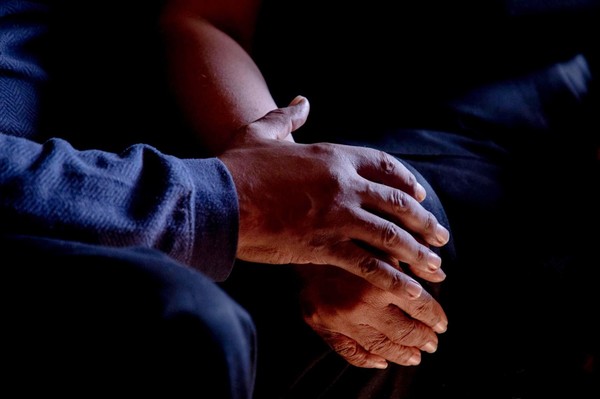
David was moved into intensive care. Doctors there updated Jackie every day, and it didn't look good. For nearly a month, he couldn't talk at all. His kids would call him and say, "Dad, remember where you're from. Brooklyn. You're a fighter. Don't give up."
Still, he was having more bad days than good. Jackie got a call from the hospital saying David's oxygen levels had bottomed out and he had "coded," but had been revived. The next step was intubation and a ventilator.
In the early days of the pandemic, going on a ventilator seemed a harbinger of death. But by summer, health care workers had developed treatment protocols to improve patient outcomes, including those who required ventilators. When asked if he wanted to be intubated, David said, he told them, "You do what you need to do. I'm gonna do what I need to do."
For him, that meant relying on God.
"I had people praying," David said. "People who know the power of prayer."
After a few days, Jackie said, doctors tried taking David off the ventilator, but he couldn't breathe on his own.
Jackie would get up in the night and pray for him. She would call his name, as if he were in the apartment with her, saying, "Breathe, David. I need you to breathe."
At the hospital, they took him off the ventilator again a few days later. His lungs started pulling in air.
The first time Jackie was allowed to visit David in the hospital, she didn't tell him she was coming. She just drove to Chapel Hill and walked into his room.
When he opened his eyes and saw her, he remembers, "I thought I was dreaming."
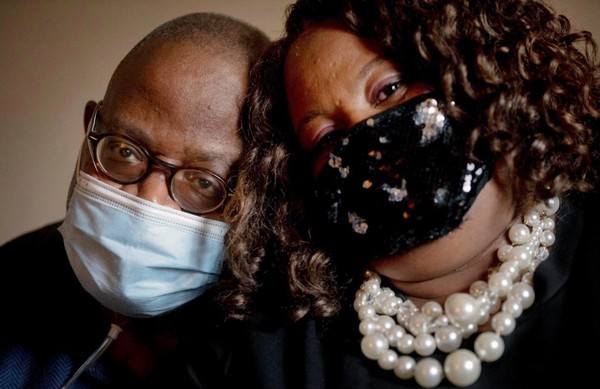
The first words he said to her were, "Everything is different."
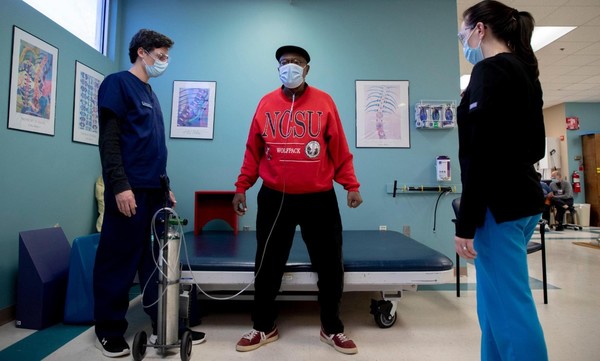
He would have to learn to walk again, and how to do certain things for himself. There would be physical and occupational therapy. He would have to wean himself off supplemental oxygen and rebuild his strength just to be able to walk around his apartment.
When he left UNC, the staff who had cared for him cheered and celebrated, a ritual borrowed from cancer treatment and now used with recovered COVID patients. In the face of months of death and misery, the cheery sendoffs may mean as much to hospital workers as they do to patients and families.
David and Jackie's recovery has meant a lot to their church family. As soon as he was home, David rejoined the online worship services that run an hour and a half on Sunday mornings, during which different members offer testimony and mini-sermons, followed by the week's message from lead Pastor Gwendolyn Moore.
Last Sunday, looking toward Thanksgiving, church members were mindful of the many things for which they are grateful, including the fact that David McShaw is not one of the more than 5,000 North Carolina deaths that have so far been attributed to COVID-19.
David and Jackie won't celebrate the holiday as originally planned with a gathering at the home of one of David's sons. They'll be together, by themselves, in Oxford.
David said he appreciates the chance to remind people that COVID is real, that it's possible to survive it with God's grace, and that good things can come from bad. He's grateful for the fellowship of his church, whose members drove to Oxford to parade by his apartment honking car horns and waving when he got home from the hospital. He's glad he'll be able to sing again, using his tenor gift.
He told congregants during Sunday's online service that, "No matter what we go through (God) lets us know that he is with us. And there is more healing to go around."
His attendance at the services has been encouraging to other church members, some of whom are dealing with their own illnesses and other troubles, Moore said.
While David was hospitalized, Moore said, she wrote his name in a journal along with the names of other members of the congregation or their friends and family who were struggling. Each day, she would pray for them and breathe onto the pages where their names were written, the way the Bible says God breathed life into his people.
David's recovery, Moore said, "has increased the faith" in the congregation.
"I do believe that folk will be able to know that, 'OK. My prayers were not in vain.'"