Some of your favorite summer fruits may come with hidden dangers this season, according to a new report from the health advocacy organization Environmental Working Group.
Many are coated in harmful pesticides, including forever chemicals tied to cancer risks, a new “dirty dozen” list of fruits and vegetables shows.
Every type of fruit included on the list - potatoes aside - had an average of four or more pesticides detected on individual samples.
“This doesn’t mean Americans should avoid eating produce to reduce PFAS pesticide exposure, because the health benefits of consuming fruits and vegetables outweigh the exposure risk,” EWG said. “But it does mean there’s much more work to be done to tackle potential risks.”
To compile the report, the EWG examined the most recent pesticide residue tests conducted by the US Department of Agriculture, which included 54,344 samples of 47 fruits. Below is a breakdown of the top 12 ‘dirtiest’ fruits in the study.
Strawberries
This year, strawberries were the dirtiest fruit. That’s concerning because the average American eats about eight pounds of fresh strawberries each year.
Up to 23 different pesticides were detected on a single sample of the fruit, the EWG said, and 99 percent tested positive for pesticide residues.
Bifenthrin, a possible carcinogen, was on 29 percent of samples, and the hormone disruptor carbendazim - which controls fungus on cereal - was on 16 percent of strawberry samples.
“The European Union has banned its use because of safety concerns,” EWG noted in 2019.
Some 84 percent of strawberries had at least one forever chemical, the EWG’s previous report said.
Grapes
Grapes were the second-dirtiest fruit, according to EWG.
At least 80 percent of grape samples the group tested had the residue of at least one forever chemical, the EWG’s past report found.
“Strawberries, kale, collards and mustard greens, bell and hot peppers, grapes, cherry tomatoes, peaches and tomatoes all have five or more PFAS pesticides on at least five percent of samples for each produce type,” EWG said.
Nectarines and peaches
Nectarines came in third and peaches were fourth.
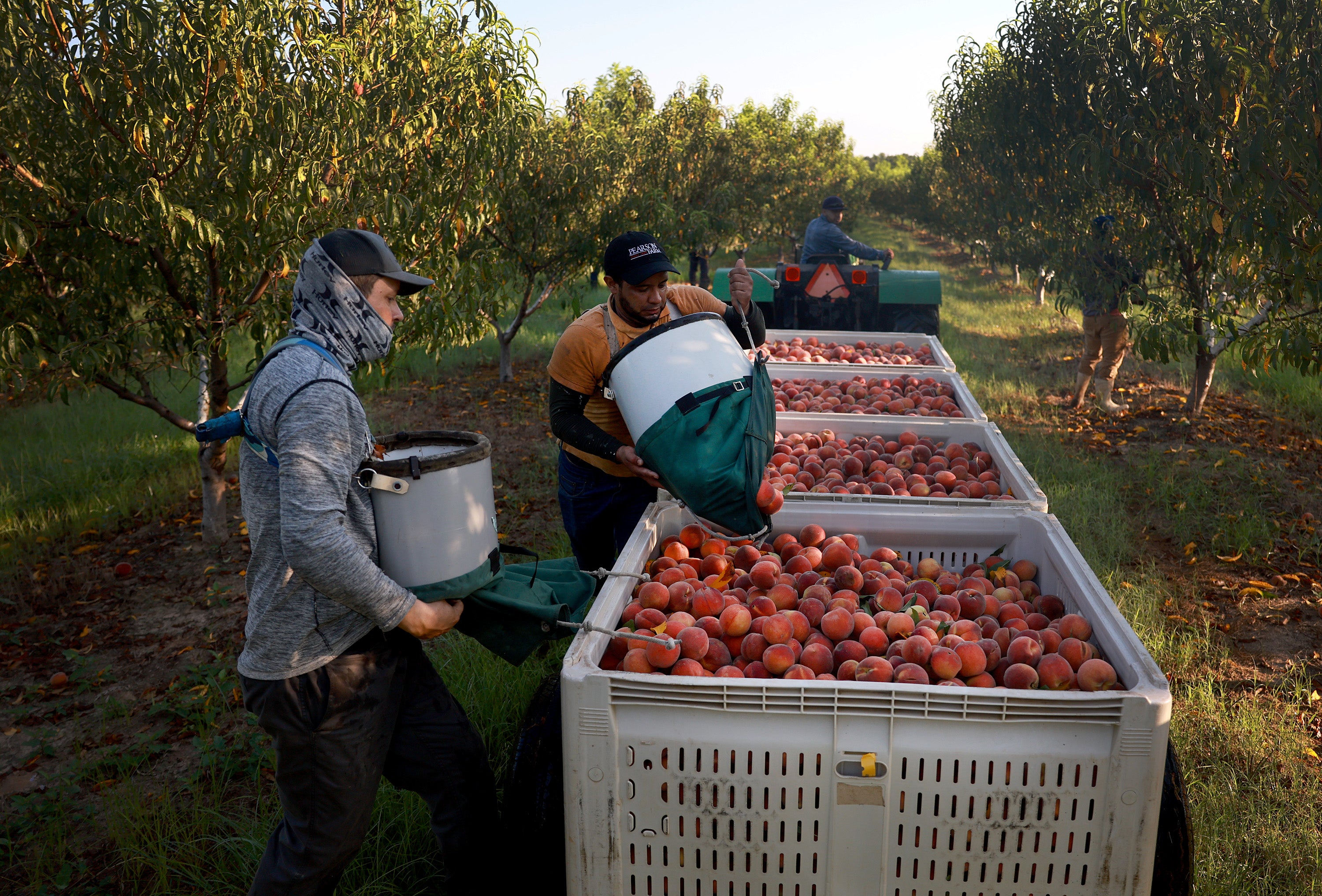
A single peach sample could have up to 19 different pesticides, while 59 different pesticides were found across the samples.
Nearly all peach samples - 90 percent - had the fungicide and forever chemical fludioxonil, EWG said, and 99 percent are contaminated with pesticide residues.
“Recent laboratory research suggests this chemical may harm fetal development, cause changes in the cells of the immune system and disrupt hormone activity.,” EWG said in March.
Propiconazole, a fungicide that’s been reported to be toxic to the liver and harmful to the male reproductive system, was found on over 40 percent of samples.
Cherries
Lastly, cherries rounded out the top five.
Americans consume about a quarter of the amount of cherries as they do strawberries or peaches, but they are another summer staple.
An average of five pesticide residues have been found on cherry samples in the past. That includes iprodione, a fungicide that has also been classified as a likely carcinogen.
The ‘Dirty Dozen’
There were 47 items included in EWG’s assessment and eight others on its “Dirty Dozen” list of the most contaminated fruits and vegetables. Spinach, kale, collard and mustards greens took the top two spots, with more than half of kale samples “tainted by possibly cancer-causing pesticide.”
Strawberries were third, followed by the rest of the fruits listed above. Apples, blackberries, pears potatoes and blueberries rounded out the dozen.
“Consumers have a right to know what’s on their food,” EWG Science Analyst Varun Subramaniam said in a statement. “This year’s findings underscore the presence of PFAS pesticides in the food supply.”
Forever chemicals are highly persistent in the environment. Scientists are still learning about their impacts, but exposure has been linked to developing several types of cancer and an increased risk of cardiovascular disease.