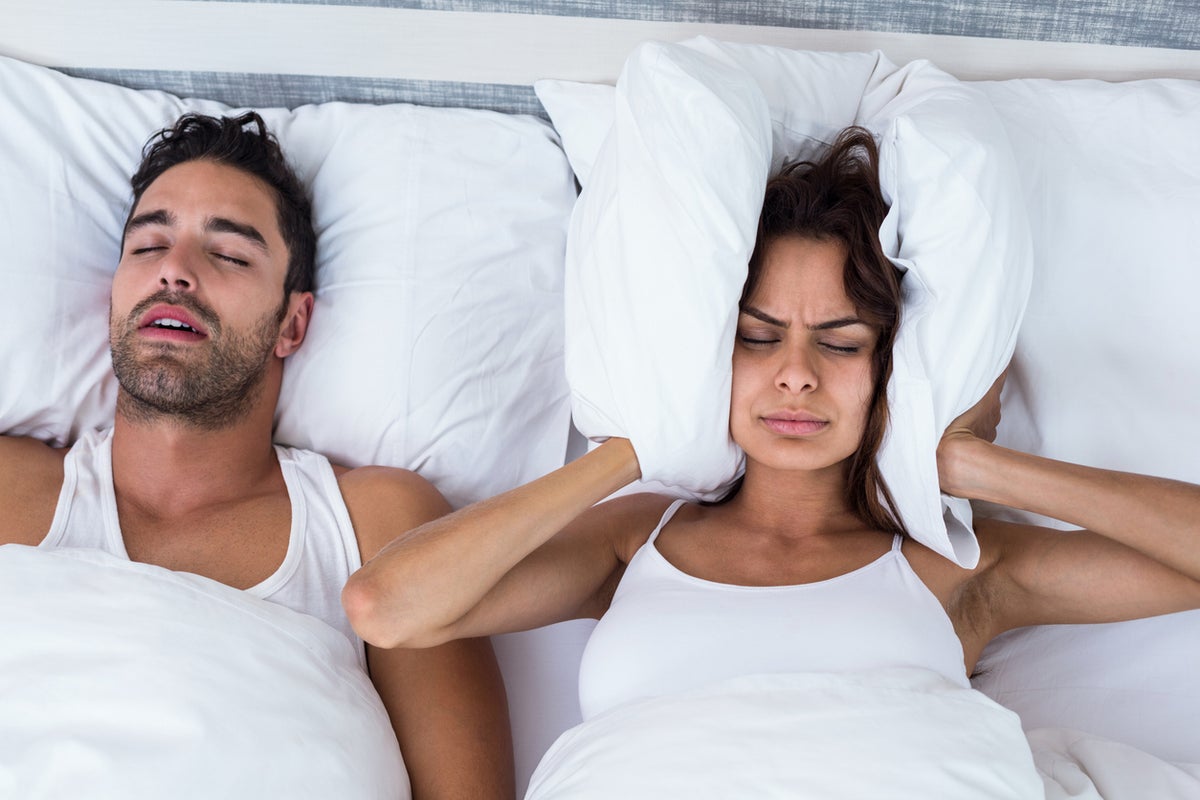
If you’re a snorer (or share a room with someone who is), you’ve likely tried a myriad of remedies to reduce the noise you’re making through the night. There are things like anti-snore pillows and nose strips, but sometimes it can be resolved with something pretty basic: how you sleep.
Dr Hana Patel, NHS GP and resident sleep expert at Time4Sleep, explains how snoring can affect us. “Snoring can be detrimental to those we share a space with, and they can sometimes become damaging to our relationships due to a build up of frustration and accumulated lack of sleep, as well as impacting on the physical and mental health of the person experiencing a sleep shortage,” she says.
For more expert-backed advice on how to combat snoring from Dr Patel – plus our top picks of the best anti-snoring pillows to help you sleep more soundly – keep reading.
Read more: Best summer duvets for staying cool at night, tried and tested
What causes snoring?
According to Dr Patel, snoring can be triggered by your tongue, mouth, throat or airways in your nose vibrating as you breathe. “It can happen because these parts of your body relax and narrow when you are asleep. Not everyone experiences snoring, and multiple factors including your age, physical health and sleeping position can contribute,” she explains, adding that you’re also more likely to snore if you have been drinking alcohol, smoke or are overweight.
Does changing your sleep position stop snoring?
Dr Patel says that there is in fact evidence to suggest that your sleeping position can have a positive (or negative) impact on those who snore. Sleeping on your back, for example, can make snoring worse because gravity causes the tongue and soft tissues in the throat to fall backwards, narrowing the airway.
What are the best sleep positions to stop snoring?
So, what are the best sleeping positions to reduce snoring? Dr Patel says side sleeping is generally the best position. “Side sleeping stops the tongue being pulled down the throat, keeping the airway open,” she says. “When you sleep on your back, your tongue and soft palate tend to relax and can obstruct your airway, which leads to snoring.”
Sleeping on your front can also help to keep your airway open, however the NHS generally recommends avoiding this position as you are more likely to move out of the midline position and strain your neck.
“In addition to switching up your sleeping position, using a supportive pillow to keep your head elevated at night can also help to prevent snoring,” Dr Patel adds. “You can also try using a body pillow to encourage you to stay on your side throughout the night.”
Read more: How to clean a mattress topper at home, according to an expert
Best anti-snore pillows
Levitex pillow
Rating: 5/5
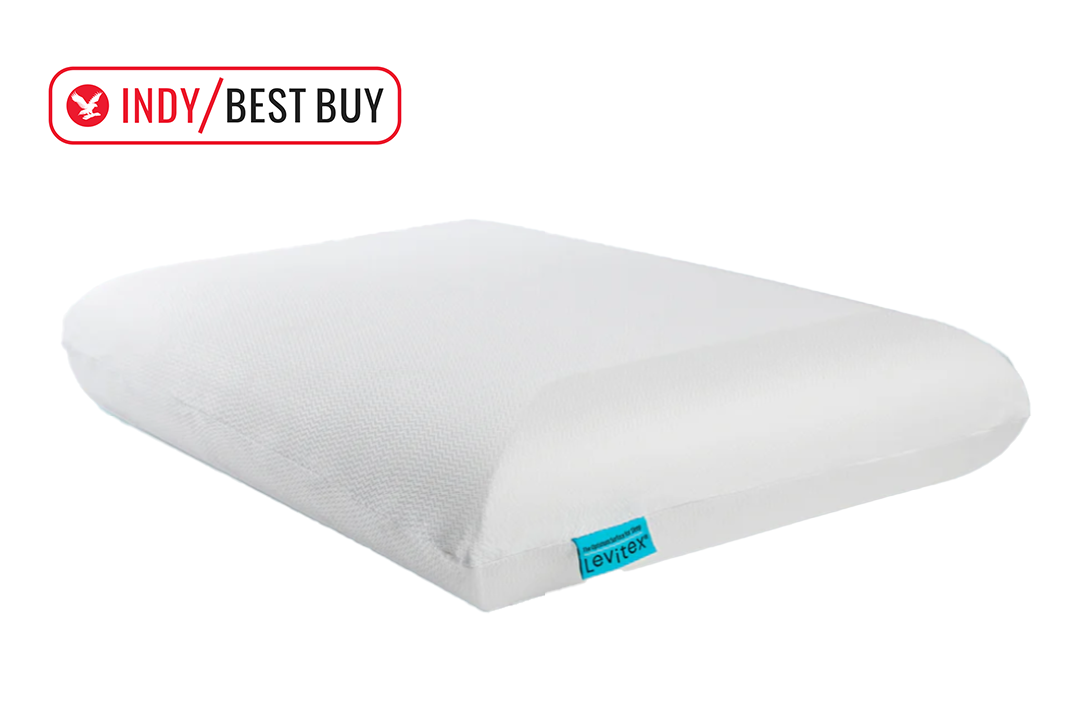
Dimensions: Small: 60cm x 40cm x 8cm, medium: 60cm x 40cm x 10cm, large: 60cm x 40cm x 12cm, extra large: 60cm x 40cm x 14cm
Filling: Levitex foam
Cover: Nylon
Firmness: Medium-firm
Guarantee: Three years
SnoreLab score: 7 (very good)
Why we love it
- Dramatically improved snoring
- Helped spine alignment
- Suits side sleepers and front sleepers
Our best overall pick for an anti-snore pillow is the Levitex pillow, scoring top points in our review. Writer Zoe Griffin wrote it felt “luxurious”, explaining that the foam technology helps to support you sleep by “allow[ing] your spine to feel neutral and weightless and, crucially, keep[ing] your airways open.”
“Snoring was definitely reduced, neck and tension pain were relieved, and using the pillow even made an old hip injury feel less painful.”
Buy now £80, Levitex.co.uk
Silentnight anti-snore pillow
Rating: 3.5/5
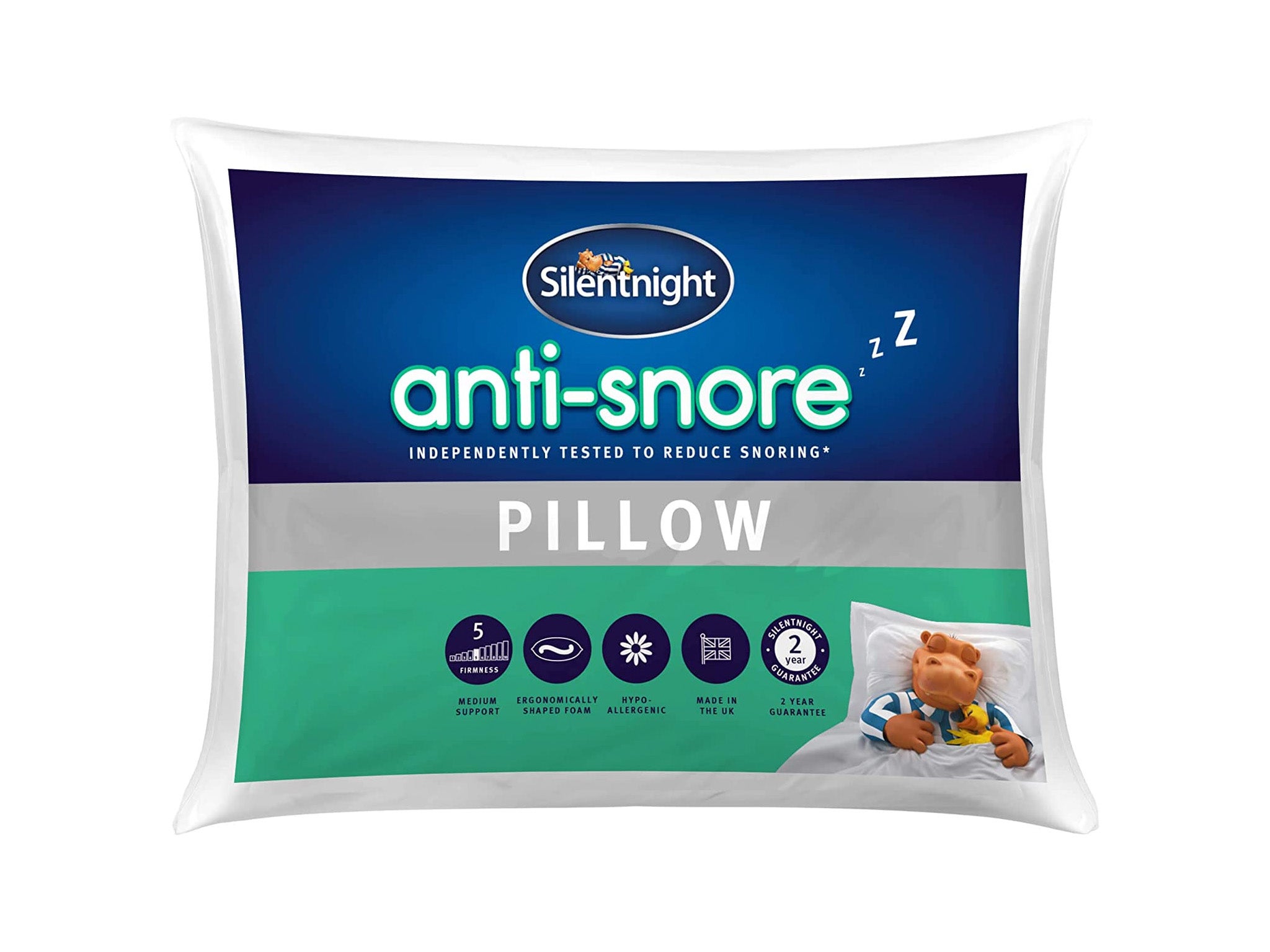
Dimensions: 74cm x 48cm x 10cm
Filling: Hollowfibre polyester
Cover: Microfibre
Firmness: Soft to medium
Guarantee: Two years
SnoreLab score: 16 (room for improvement)
Why we love it
- Anti-microbial coating
As a budget option, the Silentnight anti-snore pillow seriously impressed. Reviewer Zoe Griffin wrote in her review: “When sleeping on the pillow, my SnoreLab score was 16, so there’s room for improvement. But, this pillow is not claiming to cure your snoring completely, instead, it can help reduce levels.”
It’s also hypoallergenic, so it doesn’t contain any materials that are likely to cause allergies, another bonus.
Buy now £14.99, Amazon.co.uk
Meet the expert
- Dr Hana Patel: NHS GP and resident sleep expert at Time4Sleep
Looking for more recommendations? Find out when you should buy a new mattress or use a mattress topper