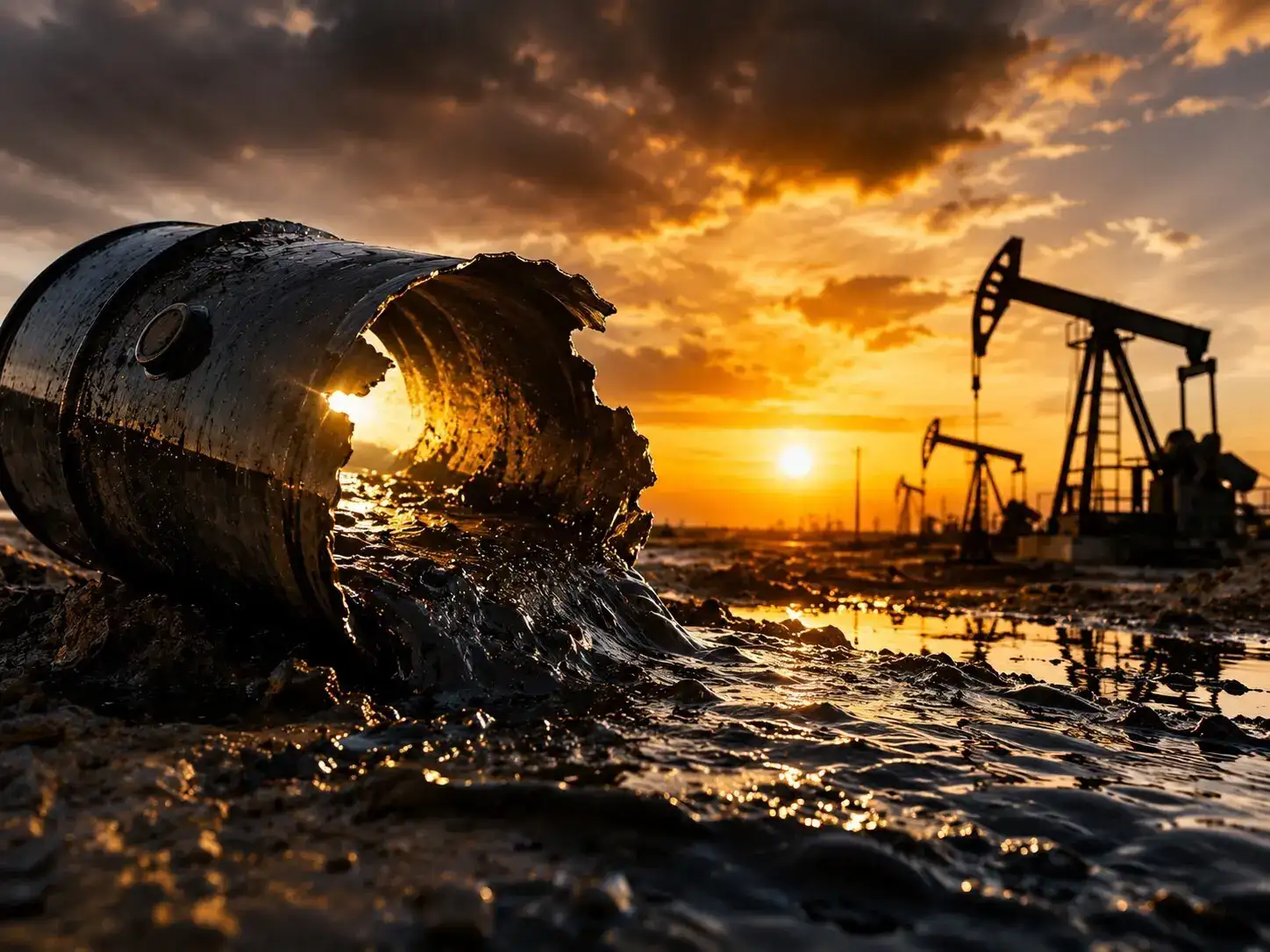
The world may be moving toward a new oil shock, one driven not only by Iran war but also by the rapid depletion of emergency and commercial petroleum reserves that have long served as a buffer against supply disruptions.
A stark warning from the US Energy Information Administration (EIA) suggests that oil inventories across the world's largest economies are heading toward their lowest levels in more than two decades as lost Middle Eastern production drains stockpiles at a record pace.
At the same time, the Iran conflict is showing signs of widening rather than easing. The latest escalation came after US President Donald Trump told Fox News on Wednesday that he was close to ordering additional strikes on Iran and could target power plants and bridges following Iranian attacks on American bases in Kuwait, Bahrain and Jordan. Against this backdrop, shrinking reserves and mounting geopolitical risks are converging into a potentially dangerous mix for global energy markets.
Also Read | From trickle to torrent: Hormuz reopening may trigger a global oil flood
A world burning through its oil buffers
The most immediate concern is the speed at which oil inventories are being depleted. According to EIA's latest Short-Term Energy Outlook, total oil inventories across OECD countries are projected to fall to just under 2.3 billion barrels by December. The agency said that would mark the lowest level since it began keeping records in 2003.
The decline reflects the enormous strain placed on the global energy system by the disruption of Middle Eastern supply. Reuters reported that the EIA estimates inventories are being drawn down to compensate for roughly 11 million barrels a day of lost output from the region. The agency warned that such a rapid depletion of stockpiles creates the conditions for a sharp increase in oil prices in the months ahead.
The warning is significant because inventories represent the market's shock absorbers. When supply disruptions occur, countries and companies can rely on stored oil to smooth shortages and stabilize prices. But when those inventories fall to unusually low levels, markets become increasingly vulnerable to further disruptions.
The EIA's assessment is that oil prices are likely to remain elevated until normal oil flows resume and inventories are rebuilt. In other words, even if fighting subsides, the consequences of today's disruptions may linger well into next year.
Also Read | India has 76 days of fuel reserves, oil supplies secure: Hardeep Singh Puri
America's emergency reserve is running low
The pressure is not confined to commercial inventories. The United States is also drawing heavily on its emergency reserves.
The Strategic Petroleum Reserve, America's emergency oil stockpile, is approaching its lowest level since 1983. The reserve, created after the Arab oil embargo and stored in vast salt caverns across Texas and Louisiana, has been tapped aggressively since the Iran conflict began. According a report in Fortune, the Trump administration had released 66 million barrels from the reserve as of June 5 and authorized the release of 172 million barrels over several months. The SPR stood at 349.2 million barrels on June 5 and has been shrinking by nearly 9 million barrels a week.
The significance of these numbers extends beyond the United States. The SPR has historically been viewed as one of the world's most important emergency energy buffers. A reserve at its lowest level in more than four decades means policymakers have less flexibility if another major supply disruption occurs.
Patrick De Haan, head of petroleum analysis at GasBuddy, told Fortune that reaching such multidecade lows is "a pretty monumental number to hear." He warned that the longer the current situation continues, the fewer tools governments have available and the greater the risk of a sharp surge in costs.
That warning resonates because emergency reserves are intended for precisely the kind of geopolitical crisis the world is now facing. If those reserves continue to shrink while conflict intensifies, markets could begin questioning how much spare protection remains.
Hormuz won't flow as usual anytime soon
At the center of the crisis lies the Strait of Hormuz, the narrow waterway through which roughly one-fifth of global oil shipments normally pass. The EIA's inventory projections assume marine traffic through the strait is unlikely to return to pre-conflict levels until early 2027. That is a remarkable assumption because it implies that energy markets may have to operate under constrained conditions for many more months.
The Wall Street Journal highlighted how difficult it may be to normalise traffic even if a political settlement eventually emerges. According to a WSJ report, there is already a backlog of around 100 million barrels of oil aboard tankers waiting to move through the region. Beyond physical bottlenecks, insurers and shipping companies may remain cautious about returning to normal operations. WSJ also cited estimates from S&P Global Energy showing that nearly 500 million barrels of crude and refined products will be needed to replenish inventories depleted outside the Persian Gulf. Every additional day of disruption adds another 5.8 million barrels to that requirement.
These figures underline an uncomfortable reality. Reopening shipping lanes would be only the first step. Rebuilding inventories would take much longer.
Stockpiling too will stoke oil prices
Another factor that could keep oil markets tight is the growing determination among governments to build larger reserves once the immediate crisis passes. The WSJ article argues that countries are increasingly adopting a stockpile mentality after experiencing a second major global energy crisis in just four years. Governments are no longer asking only how to restore normal supply. They are asking how to ensure they are never caught so exposed again.
Pakistan plans to establish its first strategic oil reserve, while the Philippines too is creating its own petroleum reserve programme. Indonesia is expanding storage capacity and India plans to increase its reserves massively with the help of UAE. Japan has pledged billions of dollars to help Asian countries build storage infrastructure.
This trend could fundamentally reshape oil demand. Historically, falling prices after a crisis helped replenish inventories. This time, governments may seek to build reserves beyond prewar levels, creating sustained demand long after supply disruptions ease. As Kevin Book, co-founder of ClearView Energy Partners, told WSJ that importing governments are focused on ensuring such a crisis never happens again. That effort to rebuild and expand stockpiles could keep markets tighter and prices higher for longer.
China, the wild card
China's position adds another layer of uncertainty. Fortune reported that China currently holds an estimated 1.4 billion barrels of strategic and commercial oil inventories, making it the largest holder of oil reserves in the world. The country's substantial stockpile has enabled it to reduce imports significantly in recent months. For now, China's reduced buying has helped offset some of the pressure created by supply disruptions. However, analysts cited by Fortune note that eventually China will need to return to the market to replenish and maintain inventories.
The timing of that return could be crucial. If Chinese demand accelerates while other countries are simultaneously rebuilding stockpiles, the competition for available barrels could intensify dramatically.
Although China's rapid adoption of electric vehicles may moderate future oil demand growth, the country remains a major consumer of petroleum products. Even a modest increase in Chinese imports could have an outsized impact on already strained markets.
New escalation raises the stakes
All of these structural pressures would be concerning even in a stable geopolitical environment. But the geopolitical picture is becoming more dangerous.
Trump's latest comments to Fox News indicate that Washington may be preparing for another round of military action against Iran. His warning that power plants and bridges could be targeted follows Iranian attacks on US bases in Kuwait, Bahrain and Jordan.
Such an escalation carries risks far beyond the immediate military confrontation. Any widening of hostilities increases the possibility of additional disruptions to regional production, transportation infrastructure and shipping routes. If the US hits power plants in Iran, Iran can target power and water infrastructure in Gulf countries, triggering a major regional crisis.
Markets have so far focused heavily on physical supply losses and inventory drawdowns. But if the conflict expands geographically or draws in additional regional actors, the consequences could be substantially larger. The current crisis is already testing the resilience of the global energy system. A broader confrontation could push that system closer to its limits.
The next oil shock
It appears the ingredients of a classic oil shock are gradually falling into place. Global inventories are heading toward multi-decade lows. Strategic reserves are being depleted. The world's most important oil transit route remains constrained. Governments are preparing to stockpile more oil in the future. And geopolitical risks in the Middle East continue to intensify.
Unlike previous crises, this challenge is not simply about lost production. It is also about diminished buffers. The world is consuming the reserves that normally protect it from severe disruptions. Even if supply conditions improve, rebuilding inventories could take many months and perhaps years. That means the energy market's vulnerability may persist long after the headlines move on. And if the conflict between the US and Iran worsens before inventories are replenished, the world could find itself confronting a full-fledged oil shock at a moment when its safety cushions have rarely been thinner.