Welcome back to another edition of My Take 5, your weekly round-up of top international news. In this edition we are covering the US-Iran search for a deal to end their war, the Russian drone attack in Romania, growing India-Cyprus strategic ties, Armenia’s upcoming parliamentary elections, and Morocco emerging as the top industrialised economy in Africa. So, let’s get to it.
US, Iran close in on deal:
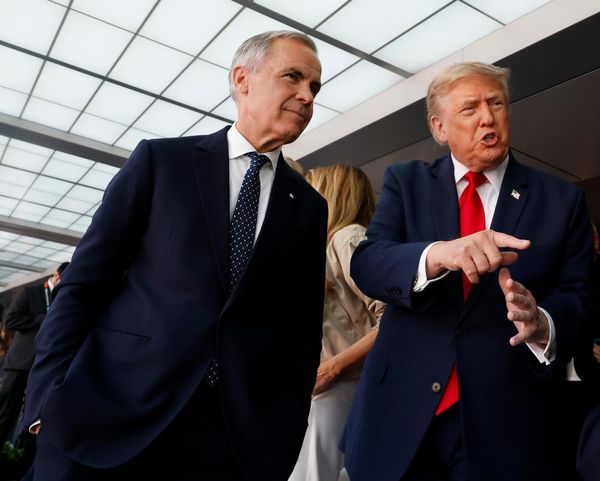
Over the past week US and Iran agreed to a tentative framework agreement to end their war. However, Trump is yet to sign off on the deal, and the technicalities and wordings of the agreement are still being reviewed. On the surface, the reported deal seems sensible – it closely tracks what Times of India’s editorial (written by me) had suggested – and essentially will see Iran unblock Strait of Hormuz in exchange for US lifting sanctions and unfreezing assets related to Iran. Then there will be a 60-day period where both sides will negotiate Iran’s nuclear issue.
But the devil is in the detail. Iran wants to retain some form of permanent control over Hormuz shipping, possibly in conjunction with Oman. This, of course, is totally unacceptable to US and Gulf Arab states. But from Tehran’s perspective, having lost so much in the war, including its top leadership, both civilian and military, it sees control over Hormuz shipping as fair compensation. But if Iran is allowed this, what prevents other countries from imposing tolling mechanisms in international waterways? China could try to replicate this in South China Sea. Russia would also get bad ideas.
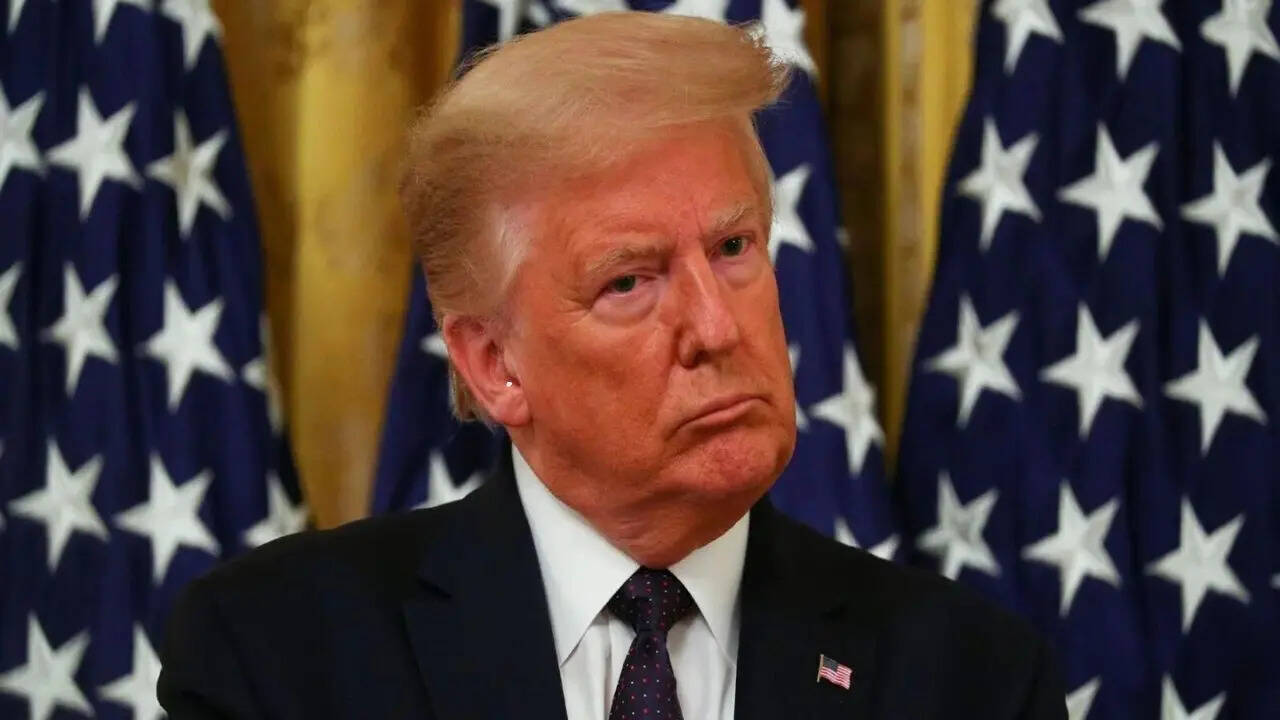
Meanwhile, Trump is clear that Iran can no longer have a nuclear bomb. Iran’s fatwas on this matter are obviously not enough. Plus, Trump has a point to prove. Having trashed Obama’s 2015 Iran nuclear agreement, he wants to show he can get a better deal. So, he is demanding that Iran hand over 440 kg of its enriched uranium. Only then will Iranian assets be unfrozen and sanctions removed.
But Iran is in no mood to hand over its enriched uranium. On its part, it wants US to lift its blockade of Iranian ports and shipping first, remove American military assets from the region (a non-starter), lift sanctions and pay damages.
So, taken together, despite a deal being on the anvil the two sides are still far apart on the technicalities. This is primarily because neither Trump nor Iran got what they wanted in this war. The Iranian regime didn’t collapse, and Iran’s axis of resistance couldn’t really stand up to Israeli-US assaults. Trump, if he was really after concessions from Iran, should have imposed his naval blockade on Iranian ports from the start, instead of starting a full-scale war. The Iranian regime would have been much more open to negotiations then.
With both sides now trying to project a victory, the world economy suffers with each passing day. Hopefully, a deal will be inked soon.
Russian drone attack in Romania:
A Russian attack drone carrying 30kg of TNT crossed into Romania and hit a residential building in Galati last week, injuring two people. Bucharest has lodged strong protests over the incident. EU too has condemned Russia for the incident. The drone, apparently, crossed over into Romania from Ukraine and was likely part of the almost daily salvos of Russian drones that target Ukrainian cities. And since Romania’s Galati is close to Ukraine’s Odesa oblast, the drone didn’t have to travel far.
True, this isn’t the first such Russian drone incursion in a European country other than Ukraine. In fact, such incidents are only growing. But nobody can say for sure whether these Russian drones are being sent intentionally to countries like Romania to test Nato response and resolve, or they are accidentally drifting into their airspace. Given that Russia by now has an unstated policy of continually testing Nato, and slowly eroding the grouping’s resolve to invoke Articles 4 and 5 related to collective defence, Moscow could be using deniability as a strategic cover.
After all, Russia’s aim is to impose a new normal on Europe’s eastern flank, continuously disrupt these countries, stealthily creep into their strategic and political discourse, and then manipulate them. And it is betting Nato will do nothing.
This is why Nato must take a stand, and build an anti-drone defensive wall across eastern Europe. And this wall has to include Ukraine because Ukraine is not only the best at drone tech and knowhow today, it is the shield that guards entire Europe from Russian aggression and military creep. It’s time European members of Nato stop dragging their feet on building that anti-drone wall, and keep Russia away from European skies. Otherwise, European lives will continue to be at risk.
Cyprus eyes potential Indian defence deals:
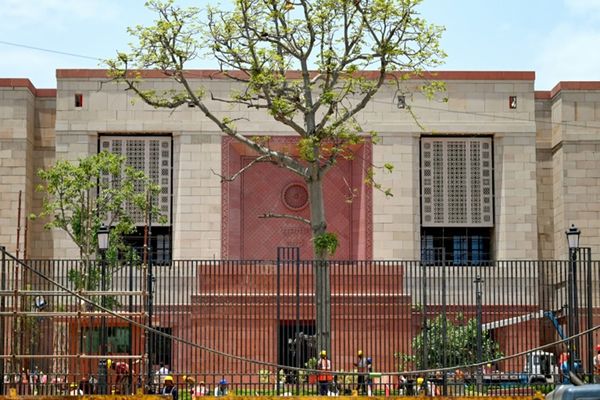
In a significant strategic dynamic, Cyprus is said to be eyeing defence acquisitions from India. This comes after Cypriot President Nikos Christodoulides’ recent visit to India where both sides agreed to upgrade their ties to a strategic partnership, and concluded a bilateral defence cooperation roadmap for their defence ministries. As part of this momentum, Cyprus is reportedly eyeing Indian BrahMos cruise missiles and UAVs for defence acquisition.
As I had reported last week Cyprus is strategically located at the edge of West Asia and the Eastern Mediterranean, placing it in close proximity to two ongoing theatres of conflict – Russia-Ukraine war and the Iran war. And Nicosia wants to shore up its own defences as part of strengthening regional security architecture. Add to this Cyprus’s issues with Turkey, which illegally occupies north Cyprus.
So, all the stars are aligning here between India and Cyprus. Both want regional stability, and secure trade and energy routes. Both are suspicious of Turkey’s moves – India, after Ankara’s support to Pakistan during Operation Sindoor last year. Plus, Cyprus is really stepping it up as an important geopolitical hub. It recently hosted the Gymnich format informal summit of EU foreign ministers in the role of its presidency of the Council of the European Union. India too attended this summit.
So, it makes eminent sense for India and Cyprus to boost defence cooperation and take their ties to the next level.
All eyes on Armenia:
As Armenia heads to crucial parliamentary polls on June 7, all focus is on PM Nikol Pashinyan’s performance. Pashinyan has been seen to be moving Armenia closer to EU and US, and away from Russia. Two incidents precipitated this. First, Russia’s failure to defend Armenia in its conflict with Azerbaijan in 2022, despite Armenia being a member of the Russia-led Collective Security Treaty Organisation. Since then, Armenia has frozen its membership of CSTO.
Then, in August last year, the US brokered a peace deal between Armenia and Azerbaijan. As part of the deal, a US-backed corridor called Trump Route for International Peace and Prosperity (TRIPP) will be established in southern Armenia, connecting Azerbaijan with its exclave of Nakhchivan. US secretary of state Marco Rubio was in Armenia this past week to ink agreements related to TRIPP and elevate US-Armenia ties to a Comprehensive Strategic Partnership.
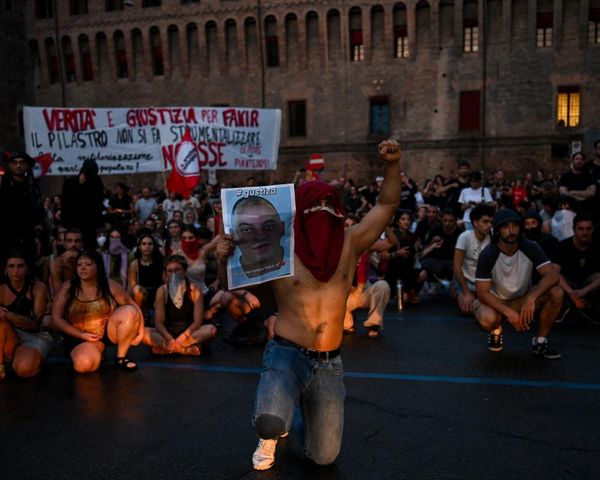
Needless to say, this is a huge blow for Russia that sees Armenia as its strategic backyard in the South Caucasus region. And Putin has been livid. His tense exchange with Pashinyan at a meeting in Moscow in April where he openly threatened the Armenian leader over moving closer to Europe instead of the Russia-led Eurasia Economic Union, exemplified this. Moscow has also threatened Yerevan with cuts in supply of gas and has imposed restrictions on some Armenian imports to Russia. There are also veiled references to the Ukraine scenario. Interestingly, Armenia hosted the 8th European Political Community Summit in May, which was attended – to Moscow’s horror – by Ukraine’s President Zelenskky.
All of this makes the upcoming Armenian polls very important. Russia is trying to pressure Pashinyan and is backing pro-Russian forces in the polls. But Pashinyan now has EU and US backing. Plus, Trump has openly endorsed Pashinyan. Thus, Yerevan now has important friends to counter Moscow.
Morocco, the new African industrial powerhouse:
In a big endorsement of Morocco’s industrial policy, the African Development Bank Group’s newly released 2025 Africa Industrialisation Index scores Morocco as the top industrialised economy in the continent. This sees Morocco edge out long-time continental leader South Africa, marking a big change in continental strategic-economic dynamics. Morocco’s success isn’t surprising. The country has been implementing a focussed industrialisation policy that emphasises high-quality, sophisticated manufacturing, especially in sectors such as automotives, aerospace, renewable energy, and advanced industrial infrastructure.
Notably, Morocco isn’t just an assembly hub for these sectors. It is now sourcing locally and integrating production for global players. And this industrial vision is supported by the country’s focus on connectivity infra in recent years. The huge Tanger Med Port that serves as a bridge between Africa and Europe and beyond; the increasing infra investments in Morocco’s southern provinces that are poised to serve as a connector between Morocco and the Sahel and rest of Africa, all serve to support Morocco’s industrial policy.
India should take note of Morocco’s industrial success and look to boost its investments in that country. This would not only serve as a solid base for India in Francophone Africa, but also provide alternative trade and supply routes to Europe and the Americas. That’s a huge bonus in the current uncertain geopolitical climate.