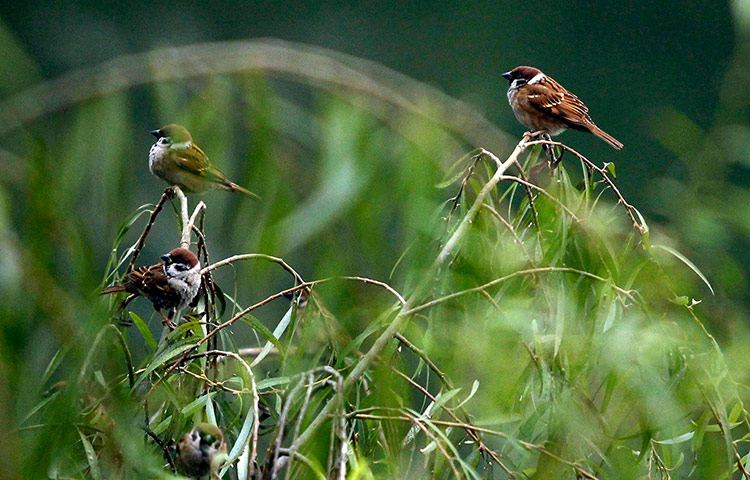
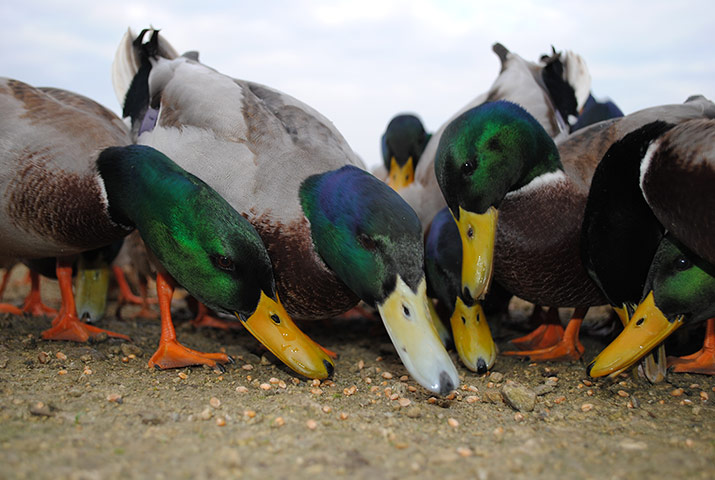
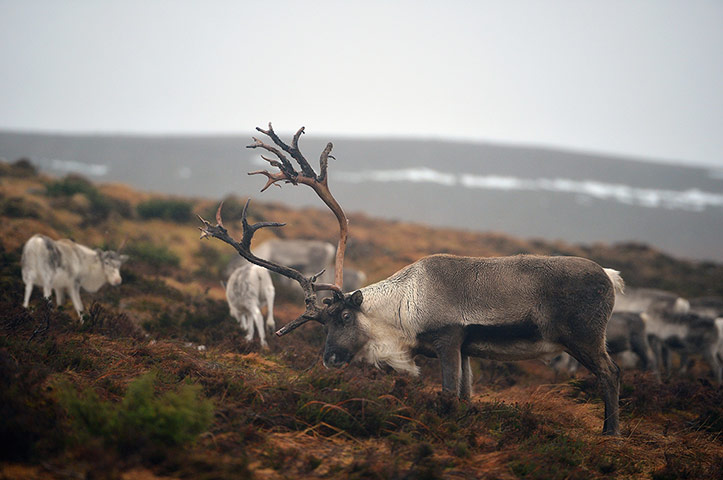
Sparrows perch on a tree in Hanoi, VietnamPhotograph: KHAM/REUTERSThe winner in the 10-and-under category in the National Trust photographic competition that celebrates the role green places play in people's lives. The winner is James Ashton from Doncaster with his intimate image of ducks feeding at Clumber Park, NottinghamshirePhotograph: James Ashton/National Trust/PAReindeer in Aviemore, Scotland. Reindeer were reintroduced to Scotland in 1952 by Swedish Sami reindeer herder, Mikel Utsi. Starting with just a few reindeer, the herd has now grown over the years to about 150Photograph: Jeff J Mitchell/Getty Images
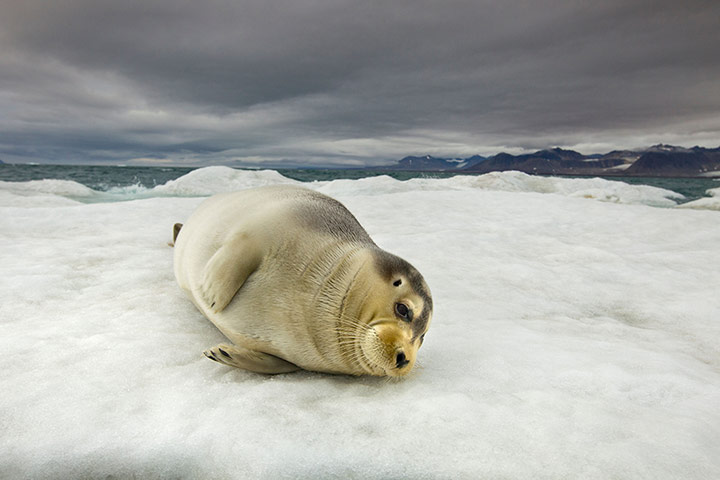
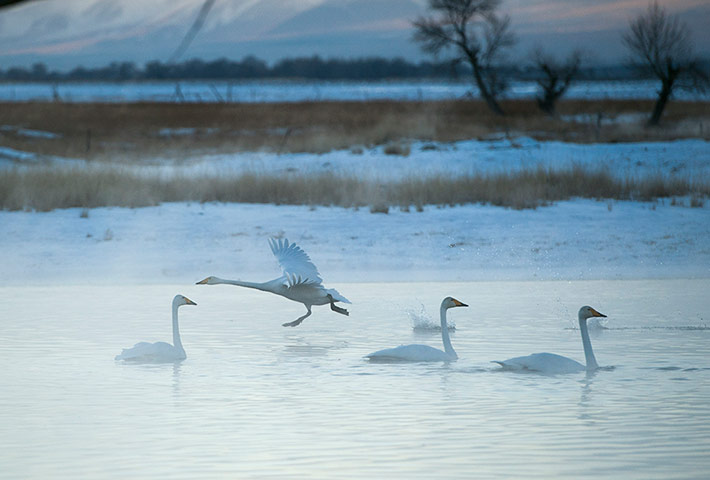
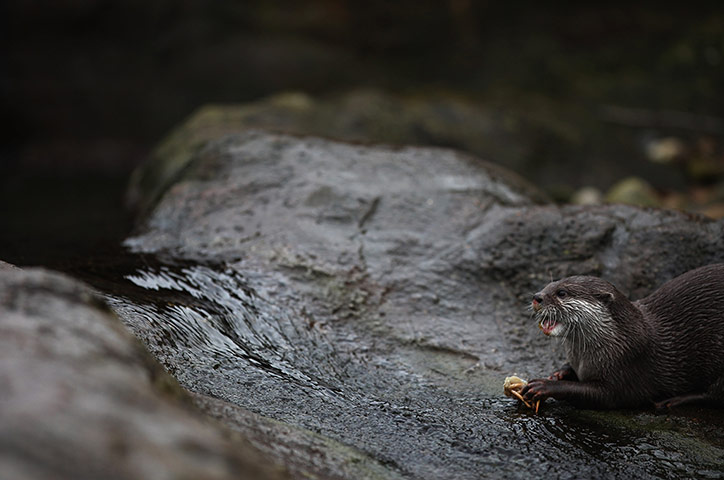
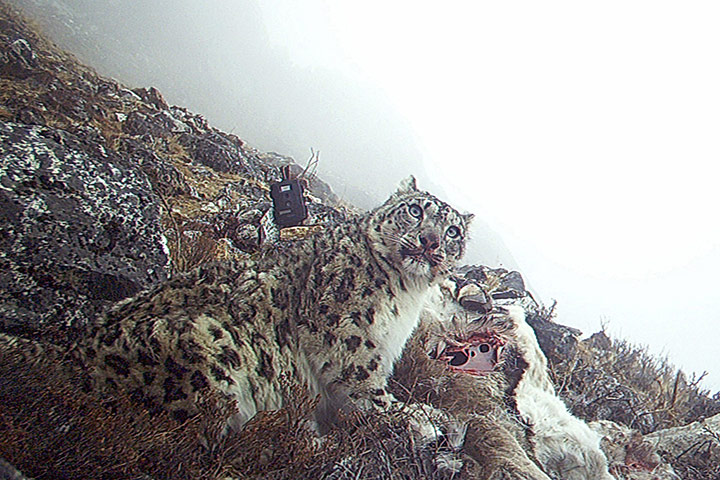
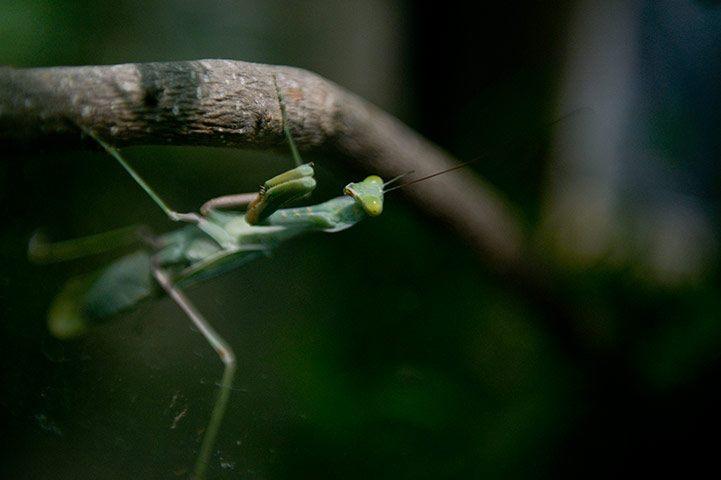
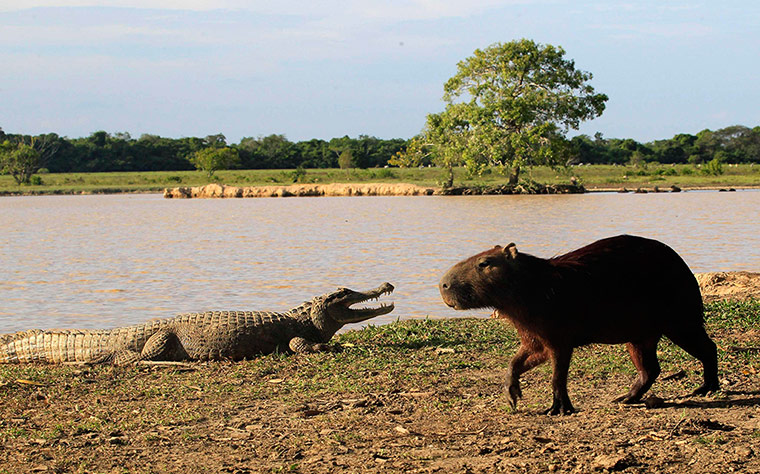
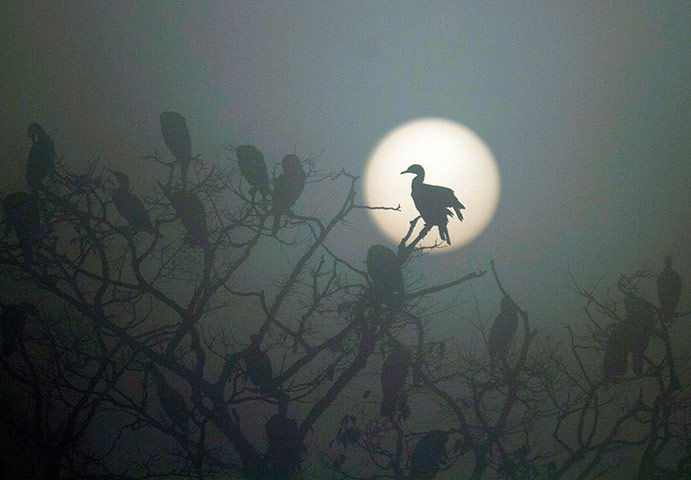
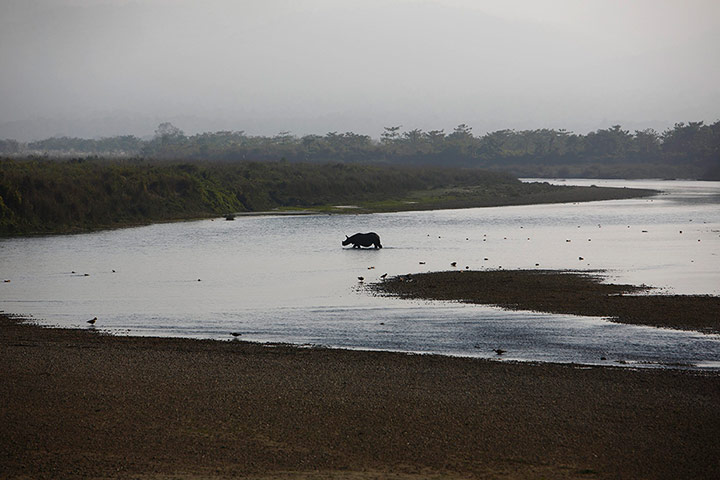
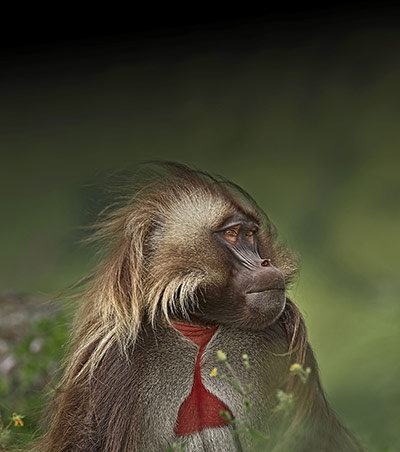
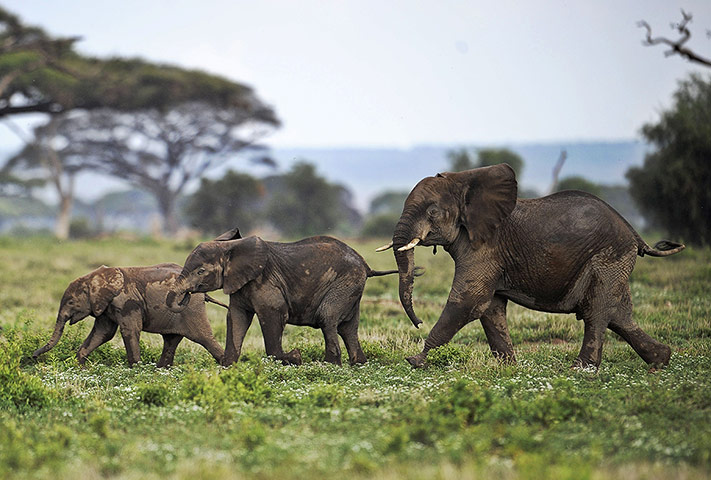
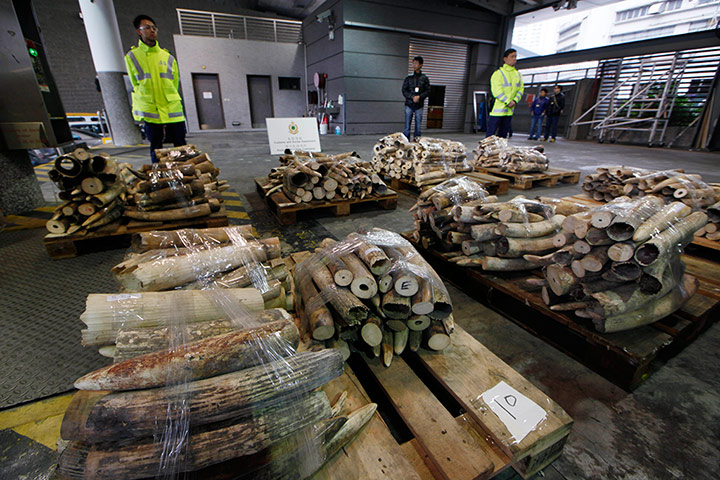
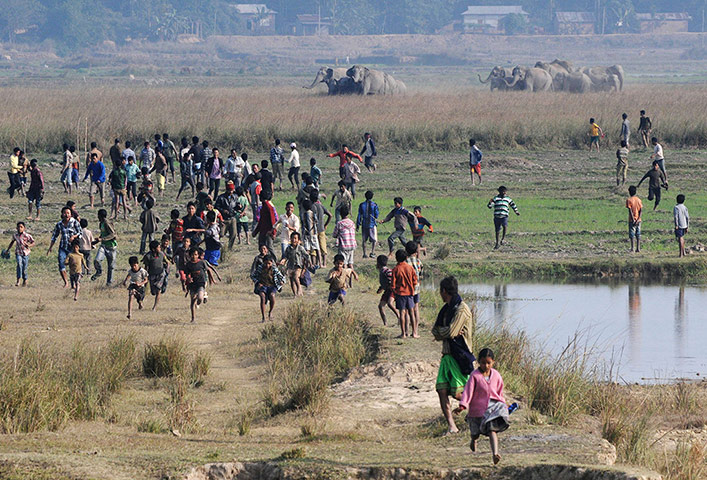
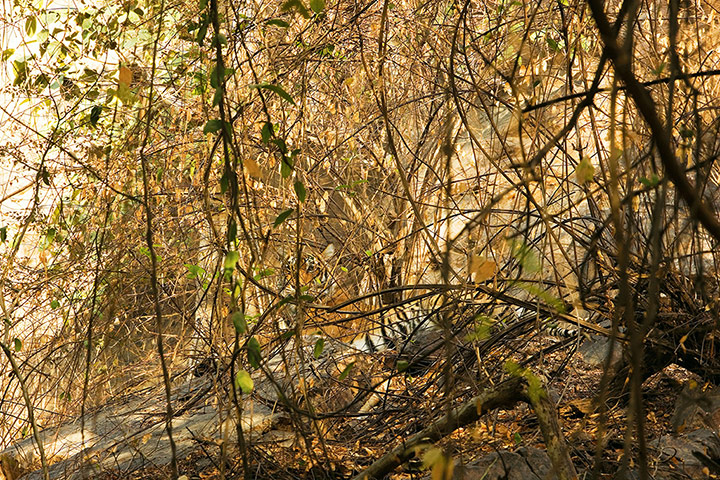
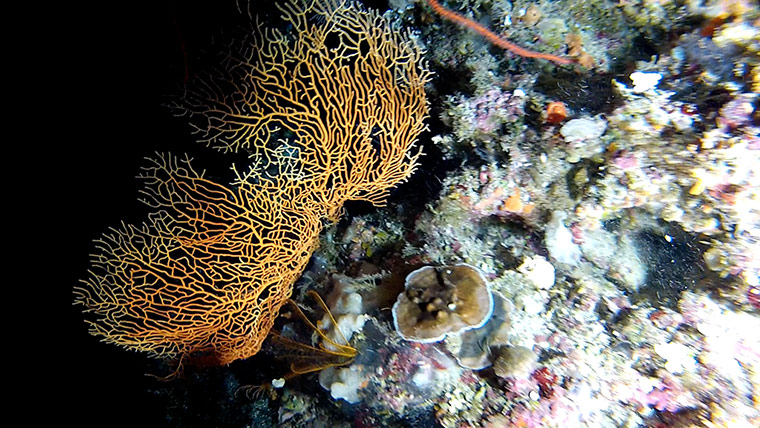
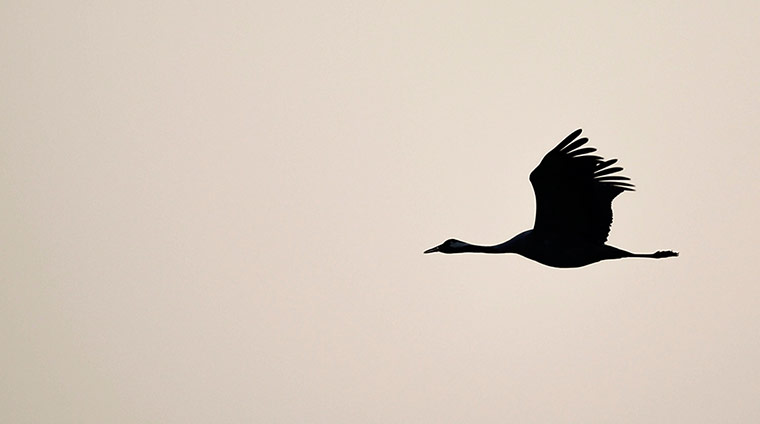
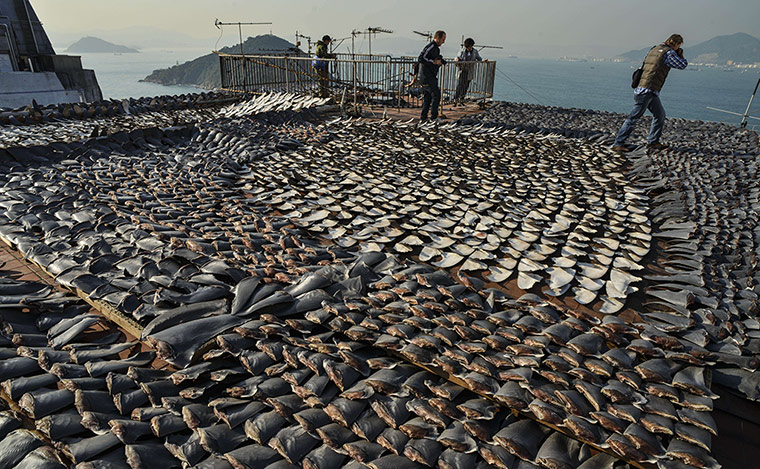
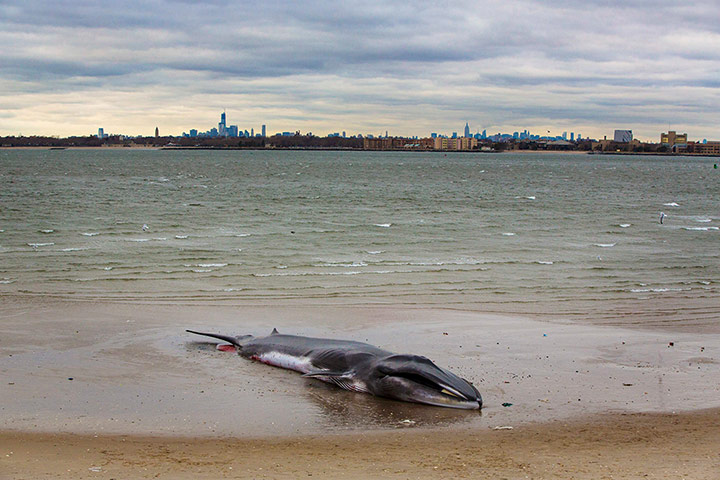
A bearded seal (Erignathus barbatus) resting on melting sea ice beneath storm clouds in Spitsbergen Island, Svalbard, Norway. The bearded seal is one of the two species of far-north seals that are victims of disappearing sea ice and dwindling snowpack in their Arctic habitat, and will be granted protections under the US Endangered Species Act, federal officials announced Photograph: AlamySwans at a wetland in Wenquan, China, where many migrant birds come for the winterPhotograph: Jiang Wenyao/CorbisOtters are fed in their enclosure during London zoo's annual stocktake of animalsPhotograph: Dan Kitwood/Getty ImagesIn this photograph taken by a WWF remote camera trap, a rare snow leopard is pictured in the Kangchenjunga conservation area, east of the Nepalese capital Kathmandu. An innovative insurance plan for yak and other livestock is deterring herders from killing snow leopards that attack their animals, conservationists say, giving hope for the species' survivalPhotograph: Wwf Nepal/AFP/Getty ImagesA praying mantis at a lab in Lima, Peru. Lima's insect breeding programme aims to combat pollution and protect the environment by using predatory insects as a natural pesticide in crop fields, urban gardens and parksPhotograph: Ernesto Benavides/AFP/Getty ImagesA caiman (left) and a capybara (right) at a lagoon at the Hato La Aurora, Colombia, a private nature reserve of 17,000 hectares that is home to more than 350 species of birds and hundreds of animals including deer, jaguar, iguanas and giant anteaters Photograph: Jose Miguel Gomez/ReutersA darter is silhouetted as the sun rises over Taudaha Lake, on the outskirts of Kathmandu, Nepal. Nepal is one of the destinations for the summer and winter migratory birds coming from the southern parts of south-east Asia as well as from Africa and Australia, due to its favorable breeding environmentPhotograph: Narendra Shrestha/EPAA rhino crosses the Rapti River at Sauraha in Chitwan, NepalPhotograph: Navesh Chitrakar/ReutersDavid Attenborough's impressive new six-part BBC series explores Africa and the myriad of wildlife the continent contains. This image from the series shows a male gelada, unique to the Ethiopian highlands and also known as a bleeding heart baboon. The bright red bleeding heart markings of the male indicates virility and attracts females while warning off rivalsPhotograph: Ian Llewellyn/BBCYoung elephants at the Amboseli game reserve, Kenya. The year 2012 was the annus horriblis (year of horrors) for elephants, according to the International Fund for Animal Welfare. Around 34 tonnes of poached ivory was seized - the biggest ever total of confiscated ivory in a single year, a rise of almost 40% on last year's record of 24.3 tonnes. Most illegal ivory is destined for Asia, in particular China, where it has soared in value as an investment vehicle and coveted as white gold Photograph: Tony Karumba/AFP/Getty ImagesHong Kong authorities have made their third big seizure of illegal ivory in three months, confiscating more than a tonne of elephant tusks worth $1.4m, customs officials said on Friday. Customs officers seized 779 pieces of ivory weighing 1,323kg (2,916lb) in a shipping container that arrived at Hong Kong's port from Kenya after passing through Malaysia. The officers discovered the ivory after x-raying the container, which was declared to be carrying architectural stones. Forty sacks holding the ivory were found inside five wooden crates, hidden under rocksPhotograph: Kin Cheung/APIndian villagers run away as a herd of wild elephants comes toward them at Kurkuria village, near Guwahati. At least 20 wild elephants from the nearby Amchang wildlife sanctuary were sighted foraging for food in farms near the villagePhotograph: Biju Boro/AFP/Getty ImagesMasters of camouflage - a Bengal tiger rests like a striped shadow in India's Bandhavgarh national parkPhotograph: Art Wolfe/Caters News AgencyA team of scientists from the Catlin Seaview Survey has discovered reef coral living at 125 metres, the deepest ever found on the Great Barrier Reef. The remarkable find of a community of reef corals was made on the outer edge of the Ribbon Reefs off the north of the Barrier Reef. The extreme depth is more than four times the depth of the shallow reef coral habitat (0-30m) which scuba divers can access Photograph: Catlin Seaview Survey ExpeditionA crane is silhouetted as it flies in the sky over the Hula Valley, Israel. The valley, located next to the northern Israeli town of Kiryat Shemona along the northern border with Lebanon, is a major stop-over area for migrating birds from eastern Europe and west Asia as they seek warmer weather in AfricaPhotograph: Atef Safadi/EPAThousands of shark fins dry on the rooftop on a building in Kennedy Town, Hong Kong. Environmentalists want China to outlaw the trade and practice of shark finning, where fins are chopped off the sharks and the bodies thrown back into the water to die. It is estimated that up to 75,000 sharks a year are killed to fulfil the demand in Hong Kong and mainland China for shark fin soup, which is considered a delicacy that is popular in traditional banquets and weddings. Shark fin also has the reputation of benefiting health and boosting sexual potencyPhotograph: Antony Dickson/AFP/Getty ImagesA dead whale lies on a beach with the skyline of New York rising behind it in Jamaica Bay, Queens. The 60-foot finback whale became stranded last weekPhotograph: Lucas Jackson/Reuters
Sign up to read this article
Read news from 100’s of titles, curated specifically for you.