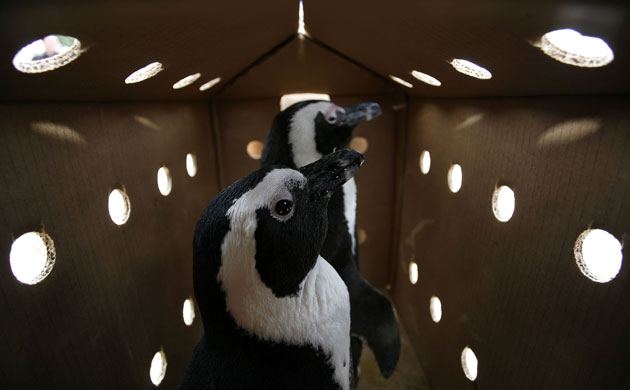
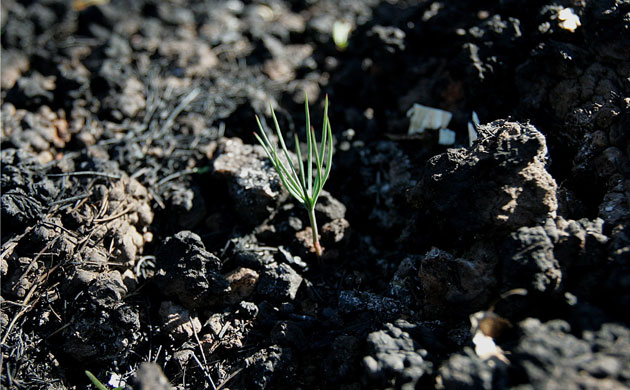
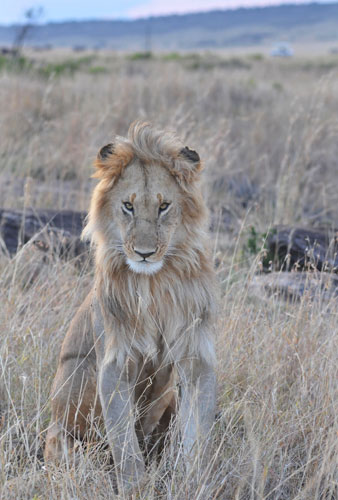
Rehabilitated African penguins in boxes await their release at Boulders beach breeding colony in Cape Town. The release formed part of a national penguin day event organised by the Southern African Foundation for the Conservation of Coastal Birds (SANCCOB). SANCCOB specialises in the conservation and rehabilitation of endangered birds that are either abandoned chicks, injured birds or birds that have been affected by oil spillages Photograph: Mark Wessels/ReutersAmid a charred backdrop, a pine seedling emerges from the ground near the fire-ravaged Marathon township, north-east of Athens, Greece on 29 September 2009. The area was ravaged by wildfires in August 2009Photograph: Orestis Panagiotou/EPAA male lion in Masai Mara national park in Kenya. Kenyan wildlife officials say the country's 2,000 lions are at grave risk because of recurrent drought and a pesticide that conservationists blame for 76 poisoning deaths of the predator since 2001Photograph: Riccardo Gangale/AP
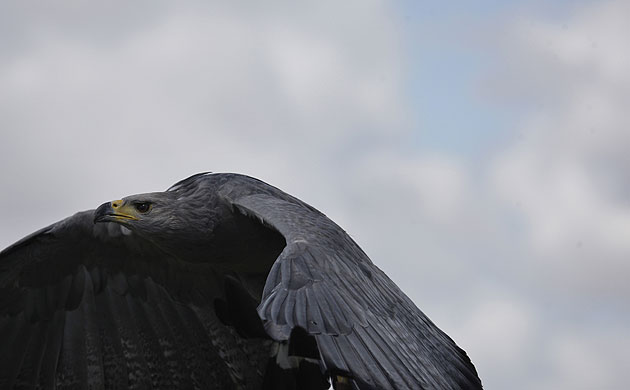
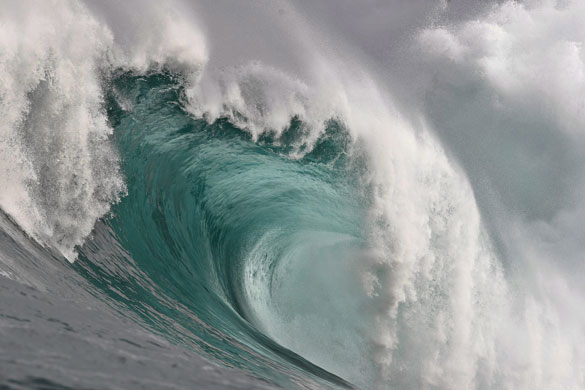
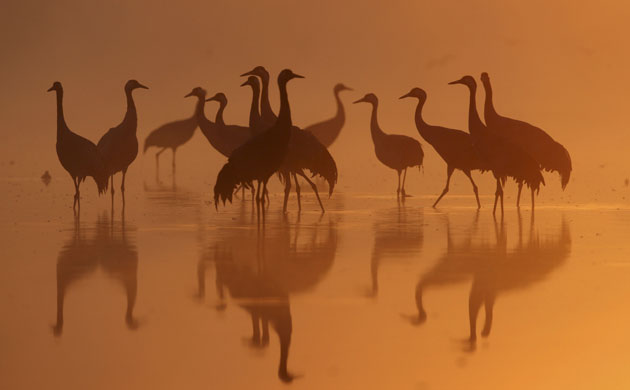
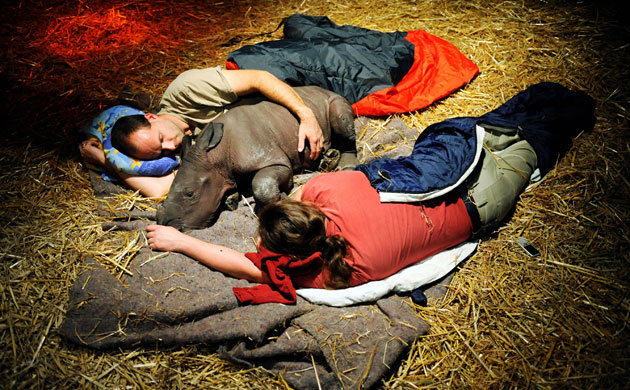
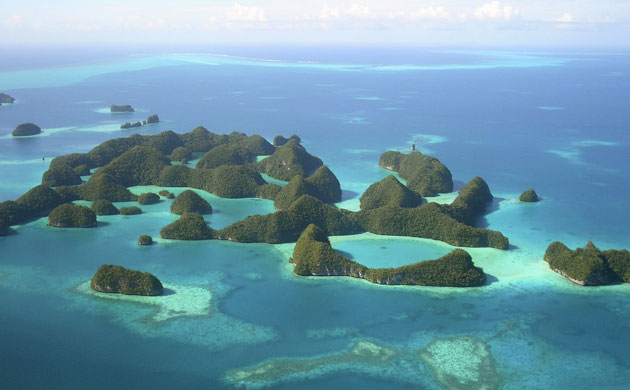
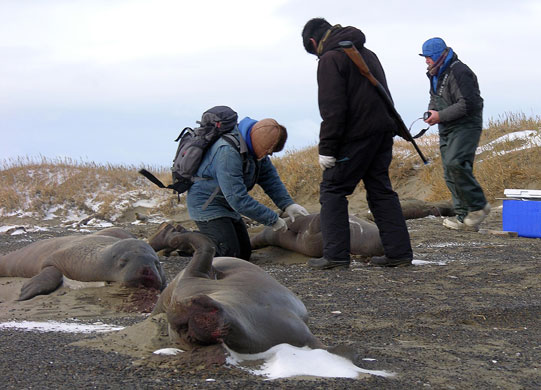
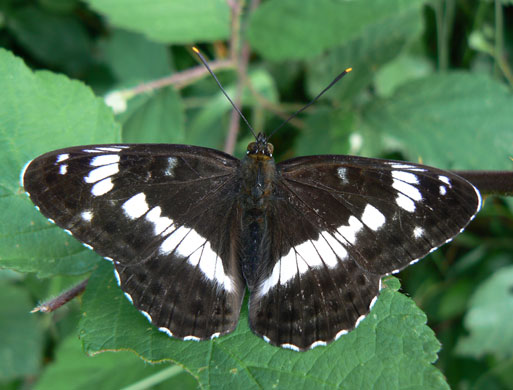
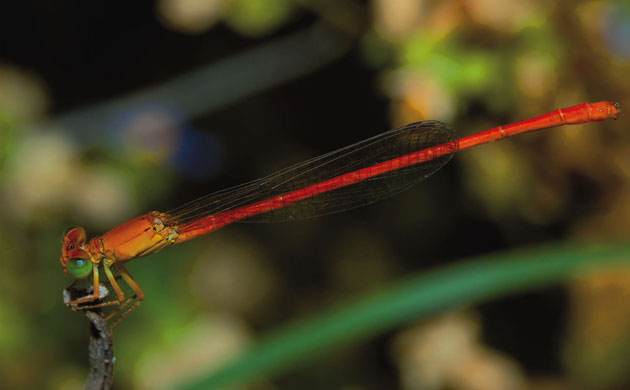
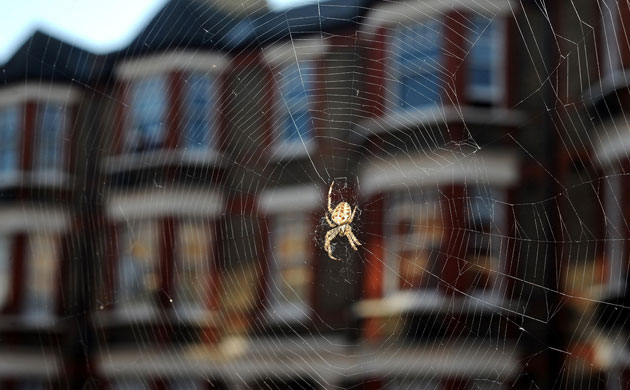
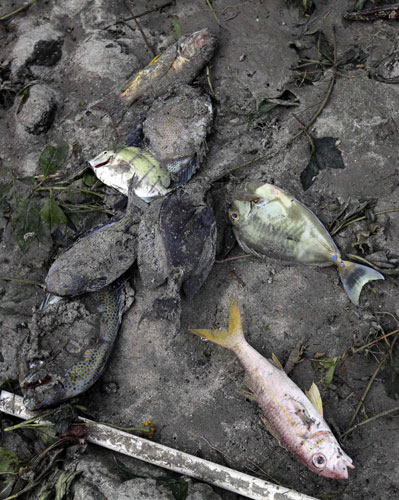
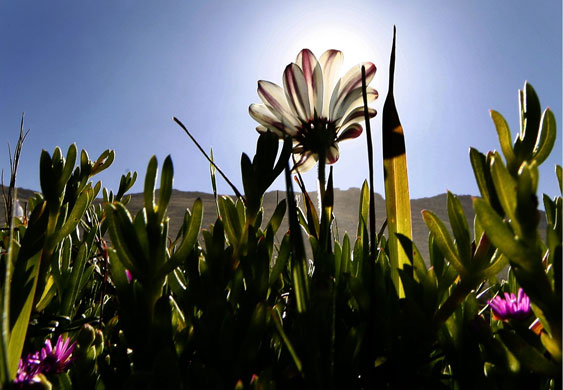
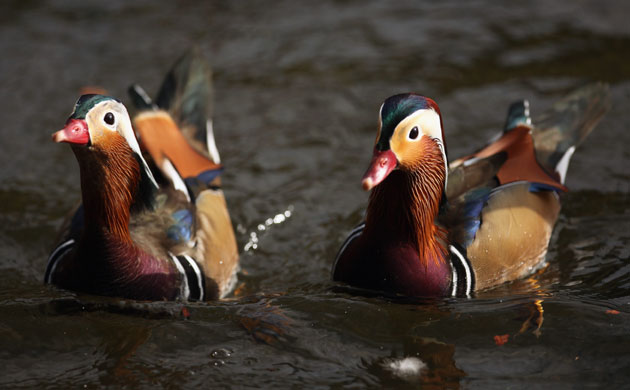
A crowned solitary eagle flies to its trainer before being released, after going through a rehabilitation programme at the Buenos Aires zoo. Less than 1,000 crowned solitary eagles remain in the world as of 2004, landing them on the list of most endangered species in South America, according to Buenos Aires zoo's Raptor Birds Rescue and Conservation ProjectPhotograph: Natacha Pisarenko/guardian.co.ukA wave breaking in the Atlantic Ocean on the South Peninsula of Cape Town, South Africa. As the earth's climate changes the sea level rises and hurricanes change in frequency and strength. There is evidence that the number of intense hurricanes has increased in the Atlantic since 1970Photograph: Nic Bothma/EPAA group of common cranes gather in dawn light, on their night-roost on a lake in the German state of Brandenburg, close to Berlin. From September to November tens of thousands of Cranes use the rural area for a stopover during their migration from Scandinavia and Eastern Europe to their wintering quarters in Spain. The agricultural plains surrounding Berlin are among the biggest crane roosts in Europe, with several tens of thousands of birds gathering during the peak of migration between September and NovemberPhotograph: Thomas Krumenacker /guardian.co.ukA female baby rhino lies between two keepers in her indoor enclosure in the zoo of Muenster, western Germany. The rhino baby, born on 20 September 2009, was rejected by her mother, Emmi, and will now be brought up by the zoo keepersPhotograph: Clemens Bilan/AFP/Getty ImagesAn aerial view of islands in Palau. The tiny Pacific nation of Palau is creating the world's first shark sanctuary, a biological hotspot to protect great hammerheads, leopard sharks, oceanic whitetip sharks and more than 130 other species fighting extinction in the Pacific Ocean. But with only one boat to patrol 240,000 square miles of Palau's newly protected waters, including its exclusive economic zone that extends 200 miles from its coastline, enforcement of the new measure could be like swimming against the tide Photograph: HO/ReutersVets and biologists from the Fish and Wildlife Service, the US Geological Survey, the Alaska SeaLife Centre and the North Slope Borough taking samples from dead walruses on the beach near Icy Cape on the Chukchi Sea, Alaska. The dead walruses were spotted from the air by USGS researchers on their way to walrus satellite radio tagging projects and were likely trampled by other walrusesPhotograph: USFWS/APA white admiral butterfly. Britain is experiencing an autumn invasion of butterflies, long after butterfly migration from Europe has usually ceased, probably due to a mild and sunny September. It comes at the end of a summer that has seen the biggest migration of butterflies into the UK for more than decade. Over recent days there have been numerous reports of newly arrived red admiral, large white and clouded yellow butterflies along the south coastPhotograph: Neil Hulme/Butterfly ConservationA common pond damsel (Ceriagrion glabrum). One fifth of Mediterranean dragonflies and damselflies are threatened with extinction at the regional level as a result of increasing freshwater scarcity, according to the IUCN Red List of Threatened Species. Four species are already listed as extinct in the Mediterranean, including the little whisp (Agriocnemis exilis), the common pond damsel (Ceriagrion glabrum), the phantom flutterer (Rhyothemis semihyalina) and the darting cruiser (Phyllomacromia africana)Photograph: Elisa Riservato/IUCNIndi, a three-year-old black and white colobus monkey kisses his newly arrived sibling, who was born at the Melbourne zoo five days ago. Black and white colobus are native to Angola, Zaire, Uganda, Rwanda, Burundi, Tanzania, and Kenya, and are vegetarians. Hunters seeking their spectacular pelts have contributed to the monkey's current endangered status, and as with all rainforest species habitat, loss is also a major factor Photograph: William West/AFP/Getty ImagesA spider sits in the centre of a web in London. It may not have been the promised 'barbecue summer', but the past year's weather could make this a bumper season for creepy crawlies, conservationists said today. Buglife's director, Matt Shardlow, said he thought there was a good population maturing and people would see 'lots of fantastic spiders in houses and gardens' at the momentPhotograph: Anthony Devlin/PADead fish lie in the mud at Maninoa Siumu on the southern coast of Samoa after it was destroyed by a tsunamiPhotograph: Tim Wimborne/ReutersA spring daisy grows in Cape Town, South Africa. As the earth's climate changes, ecosystems are changing. As temperatures warm, species may either move to a cooler habitat or die. Warming has also caused changes in the timing of spring events and the length of the growing seasonPhotograph: Nic Bothma/EPAMandarin ducks add a splash of colour to the lake in St James's park in London. The UK is currently enjoying the final warm spells of the summer, which are due to end soon, with colder and wetter weather on its wayPhotograph: Dan Kitwood/Getty Images
Sign up to read this article
Read news from 100’s of titles, curated specifically for you.