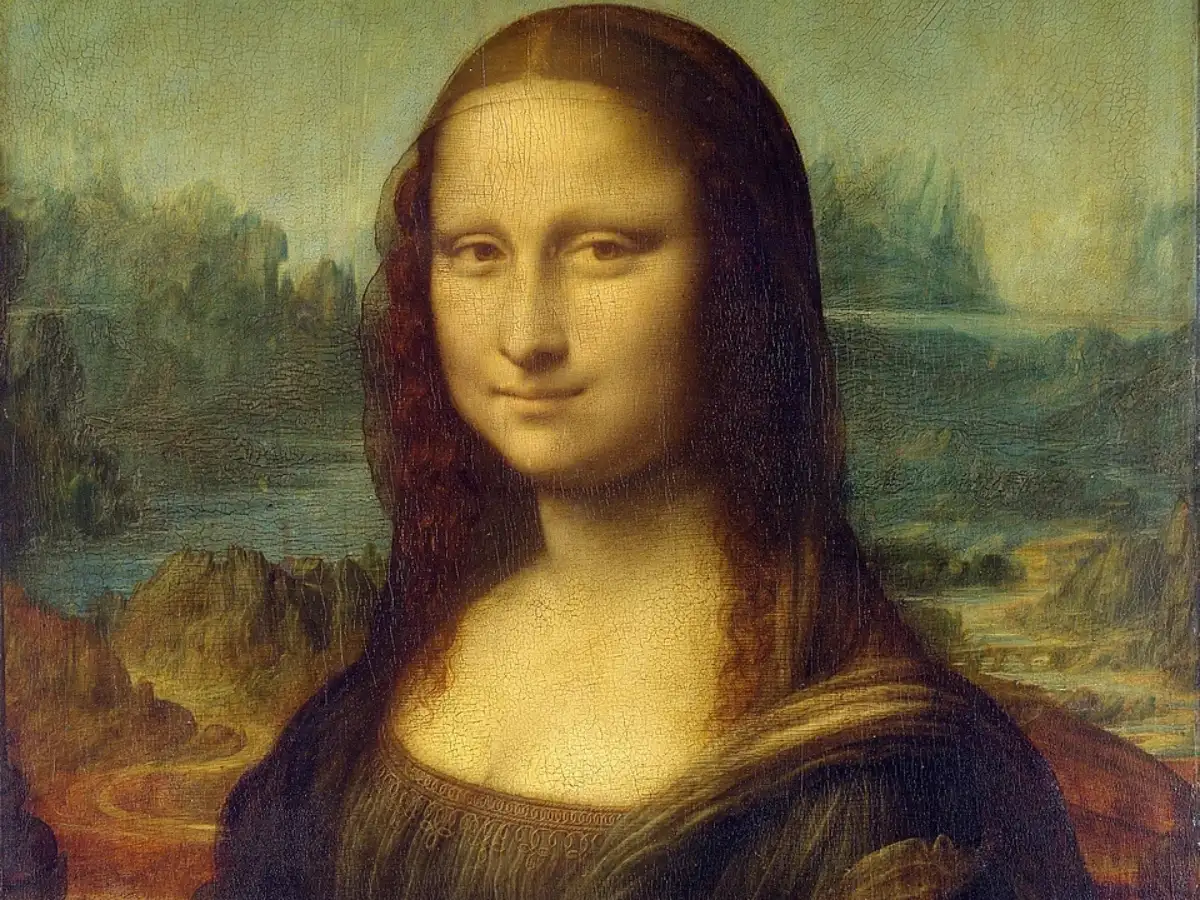
Here's something that might surprise you: before 1911, the Mona Lisa was not a household name.
It was painted by Leonardo da Vinci between 1503–1519. It was revered and known among artists, critics, and educated Europeans as an important Leonardo work, but it had never entered the world of a global pop culture icon. If you walked into the Louvre in the early 1900s, you wouldn't have found crowds gathered around it as they do now.
Then, on the morning of August 21, 1911, the Mona Lisa simply vanished from the Louvre's walls, and everything changed.
How was the world's most famous painting stolen
The plan was nearly painfully simple. Handyman Vincenzo Perugia, who had worked at the Louvre installing protective glass cases on paintings, hid inside the museum overnight with two accomplices. The next morning, when the building was still empty, they took the Mona Lisa off the wall, stripped it of its frame and case, wrapped it up, and slipped out before anyone showed up for work. Then they left Paris.
No one noticed the painting was missing for 28 hours. The person who finally noticed was a painter who had set up his easel in the gallery and was annoyed that the Mona Lisa wasn't on the wall because he wanted to paint that corner of the room. He flagged a guard, the guard checked with the photographers (who were photographing artworks on the roof), and that was it; nobody had it.
The media did the rest
When the Louvre announced the theft, the story exploded. The Library of Congress’s Chronicling America research guide described the heist as “the most colossal theft of modern times,” and the subsequent coverage is what made the painting a global icon overnight.
It was on the front page of newspapers all over the U.S. and Europe. The New York Times reported that 60 detectives were on the case. J. P. Morgan was suspected of having ordered the theft. Pablo Picasso was called in for questioning. There were even theories that the Kaiser might somehow be involved. Tensions were already simmering in Europe with World War I looming.
The Louvre opened its doors again after a week, and crowds flocked in just to look at the empty hooks on the wall. As JSTOR Daily wrote in a piece, the Mona Lisa’s cultural standing was predicated on that two-year absence. The painting went from a niche art-world item to something the whole world was talking about and searching for.
Fame is a feedback cycle
This is a well-documented phenomenon, actually. A 2021 academic study titled How Art Theft Affects Museum Attendance, Membership, and Fundraising Revenue, found that, in several notable cases in history, the press coverage around an art theft actually benefited the fame of the stolen piece itself. Attention produces attention. The more people read about the Mona Lisa, the more they had to see it. And the more they had to see it, the more it was worth.
By the time Perugia was nabbed in Florence in 1913, trying to sell the painting to an art dealer who immediately called the police, the Mona Lisa had become untouchable, both literally and culturally.
Perugia said he was a patriot, just trying to get back an Italian masterpiece he believed Napoleon had stolen from Italy. The court was not without sympathy. He was given only eight months in jail.
What this means for us today
Look at it with a modern lens. The Mona Lisa is basically the original viral moment. It wasn’t the fact that it was a great painting that made it famous. It was a slow Monday morning, a guy with no place to hide a stolen painting, and a media ecosystem in need of drama.
We see this very same mechanic happening all the time. It's not the best product that goes viral; it's the right story around the right product at the right time. A person becomes a household name not because of what they do but because of a controversy, a scandal, or an absence that makes people take notice.
The Mona Lisa didn’t get to sit behind bulletproof glass at the Louver on artistic merit alone. Where 400 years of art appreciation could not, a storage closet, one ambitious thief, and the 1911 press cycle got it there.