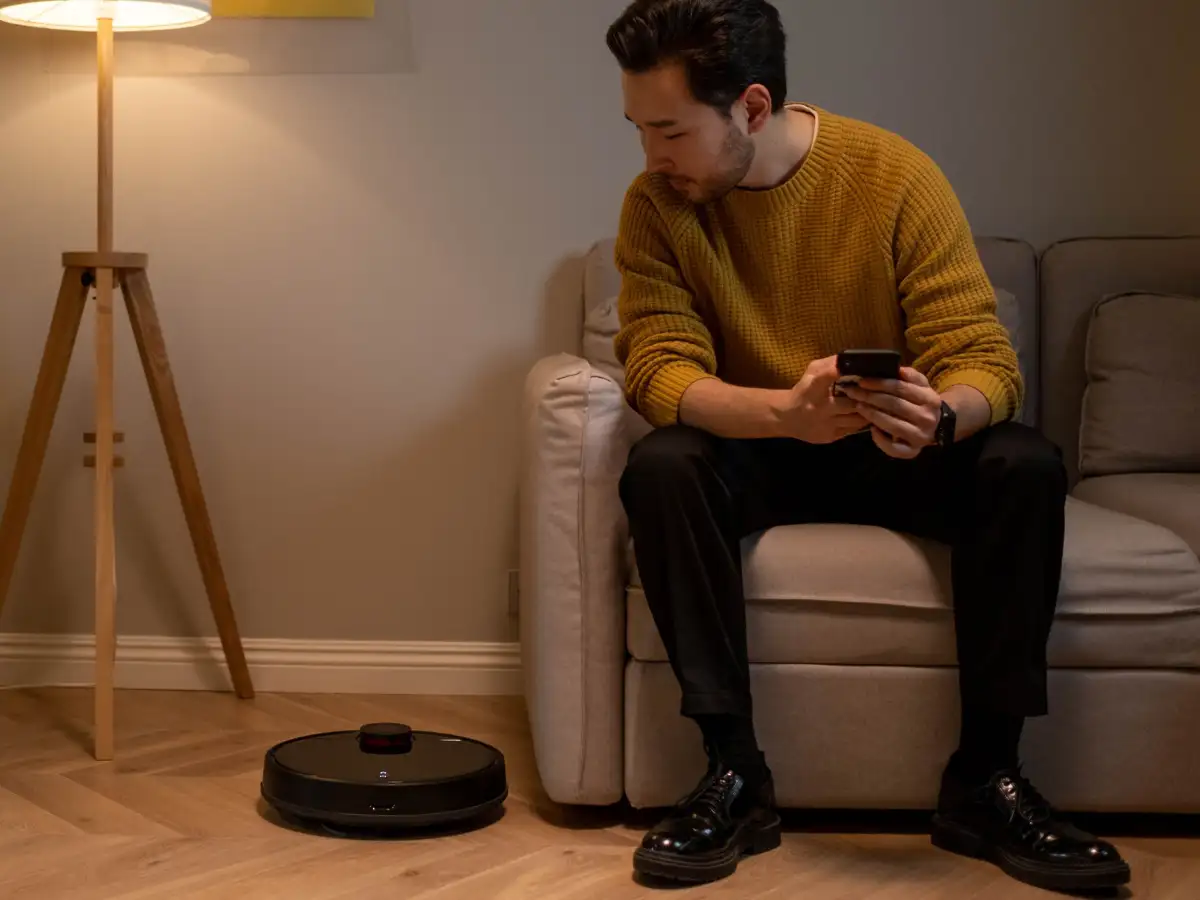
Your robot vacuum has an exact idea of the layout of each room in your home. Your AI companion robot has probably seen your kids do their homework. Your smart speaker could have things you would never say in public. And somewhere on a server you will never see, all of that is sitting in a database, probably one you agreed to share without even knowing it.
This is not speculation. According to a February 2026 study by researchers at the University of Wisconsin–Madison, 'It's like a pet... but my pet doesn't collect data about me: Multi-person Households' Privacy Design Preferences for Household Robots', household robots equipped with mobility, cameras, microphones, and powerful AI models create privacy risks far beyond those posed by earlier smart home devices.
The study found that people do not fundamentally trust that robots, or the companies that build them, will handle their personal data responsibly. And a robot that can roam around your home can observe private moments a stationary smart speaker could never dream of.
The robot that knows too much
The problem with home robots is not what they collect, but how much more they can collect compared to older devices.
A smart speaker sits on your kitchen counter, listening to everything that happens around it. By contrast, a home robot can drift into your bedroom, loiter near a private conversation, or roll past a computer screen displaying your bank account. According to the University of Wisconsin–Madison study, participants in co-design sessions were especially concerned by their robot’s ability to roam unsupervised. One participant described feeling “held hostage” in their own home, changing their daily routines depending on where the robot might end up. Another simply didn’t want to be alone in a room with it, even when they knew it wasn’t actively recording.
That unease is not unwarranted. The same study discovered that people who live together in homes, families, roommates, or couples often have different privacy preferences. Rarely was one person’s comfort level with the robot gathering data the same as another’s. Who decides when the device is turned on? What if a guest is talking in its presence, not knowing it is listening?