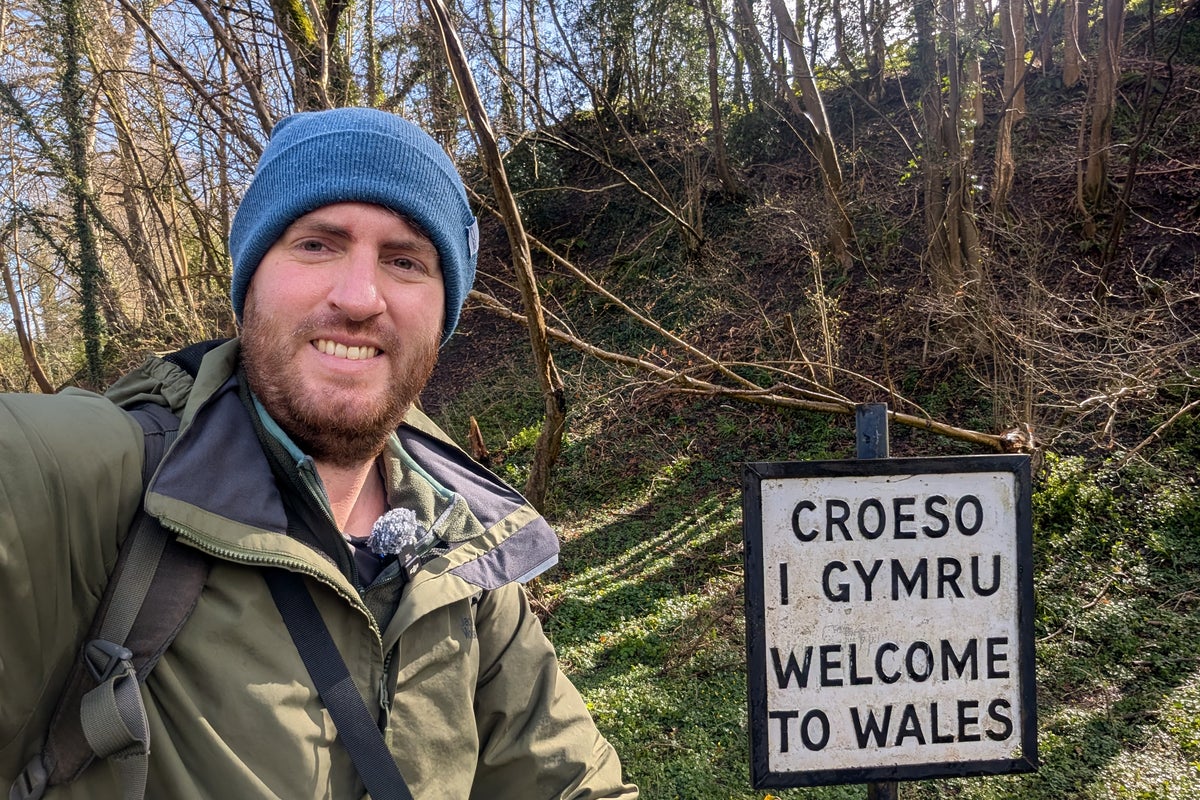
Croeso i Gymru. The “Welcome to Wales” sign flashed past as I crossed over the Severn Estuary, to find the landscape swathed in brooding clouds. Despite the characteristic weather, I was excited to begin my three-day road trip along the 160-mile-long border between England and Wales.
Beginning in Chepstow – where an 11th-century Norman castle guards the southern gateway to Wales – the border carves a path north towards the Dee Estuary. I was loosely following the route of Offa’s Dyke, an 8th-century earthwork that divided the earliest Anglo-Saxon kingdoms from their Welsh counterparts. It is arguably Britain’s oldest border.
My self-planned itinerary would take me along an ancient divide defended by crumbling medieval castles. I’d follow winding river banks into the Wye Valley, traverse the looming Black Mountains and hike historic sections of Offa’s Dyke Path on my way north. It was a route I knew well, having spent the past three years travelling Britain’s borders while researching my new book. Although it’s not an “official” route, a journey through the Welsh Marches rivals established road trips like Scotland’s NC500, and with far less traffic too.
Read more: 10 of the best places to go in Cornwall to avoid the crowds
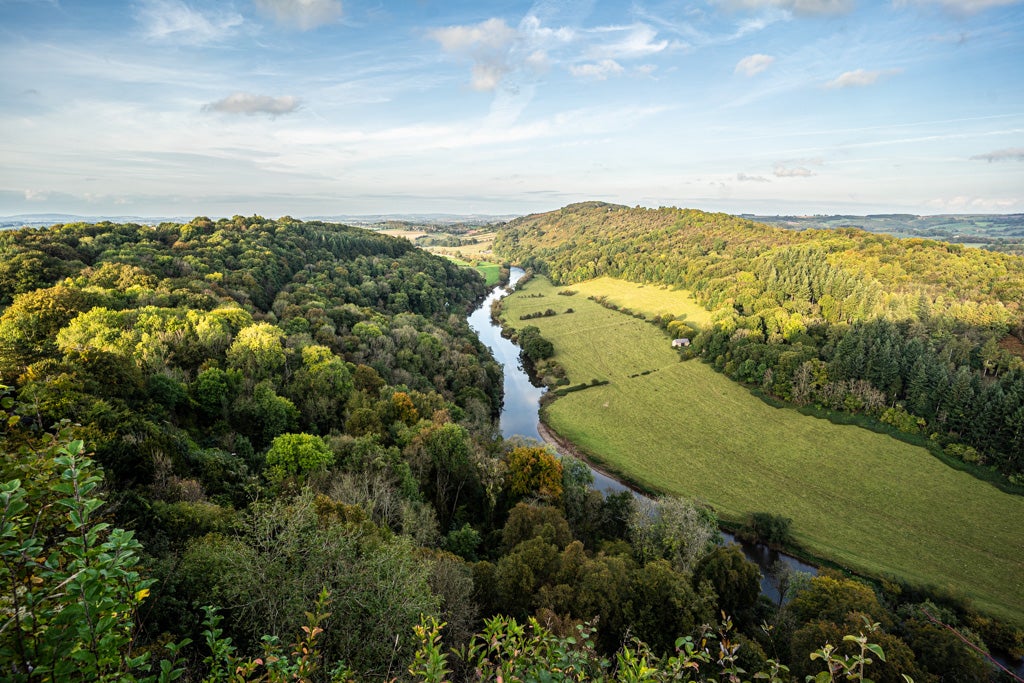
From Chepstow, the A466 – perhaps the most underrated A-road in Britain – took me along the Welsh bank of the River Wye. Cliffs rose on my left and tall trees cocooned me on the right, before Tintern Abbey’s ragged stone arches appeared in the valley. Tintern Abbey has stood in ruins since the Reformation, but it shot to fame in the late 18th century when romantic poets like William Wordsworth inspired the Wye Valley’s first tourism boom.
The £5 parking charge hints at Tintern Abbey’s enduring popularity, and instead, I parked for half the cost at The Old Station up the road, from where it’s a two-mile stroll along quiet riverbanks. The Wye Valley’s first tourists enjoyed the same scenic river views from paddle steamers and the Wye Valley Railway, which opened in 1876, brought yet more visitors along a scenic line connecting Chepstow to Monmouth. The paddle steamers and the railway are long gone, but in summer, you can ride a miniature train around Tintern’s Old Station and enjoy afternoon tea on the platforms. For the most part, though, the best way to get around The Welsh Marches these days is by car and on foot.
From Tintern, the A466 weaved back and forth over the River Wye (and back and forth between Wales and England), until Monmouth appeared some 12 miles later. Home to the last fortified medieval bridge in Britain, this Welsh border town was the birthplace of Henry V, the English king who defeated the French at Agincourt. At Monmouth, the border temporarily leaves the River Wye behind, following the River Monnow westwards towards the Black Mountains. I temporarily left the border (and Wales) behind, too, following the A40 along the edge of the Forest of Dean to spend the night in England at the Cross Keys Inn, 20 minutes’ drive north.
A rural, 14th-century coaching inn hidden away in the Wye Valley, I was the only overnight guest on this particular Tuesday. A few local foresters kept the bar open until around 8pm, and after a few pints of Butty Batch beer from the Wye Valley Brewery, I was caught in tales of the paranormal.
“This could be the most haunted pub in the Wye Valley,” I was told, as the bartender soberly explained how the inn’s oldest cellars once doubled up as the village mortuary. “But don’t worry, your room’s in the newer part. I don’t think it’s haunted.”
At £50 a night, I was happy to brave a ghostly encounter, especially when the Cross Keys Inn is just a short drive from spectacular sights like Symonds Yat Rock. I drove westwards from here the next day. I had planned to follow the border over the Black Mountains, where titan-like peaks divide England from Wales.
On a previous trip, I’d crossed Gospel Pass, which, at 549 metres, is the highest paved road in Wales. The weather proved fearsome, however, and I soon discovered the mountain roads were closed indefinitely due to landslides. Instead, I navigated B-roads and country lanes, arriving at Hay-on-Wye an hour later.
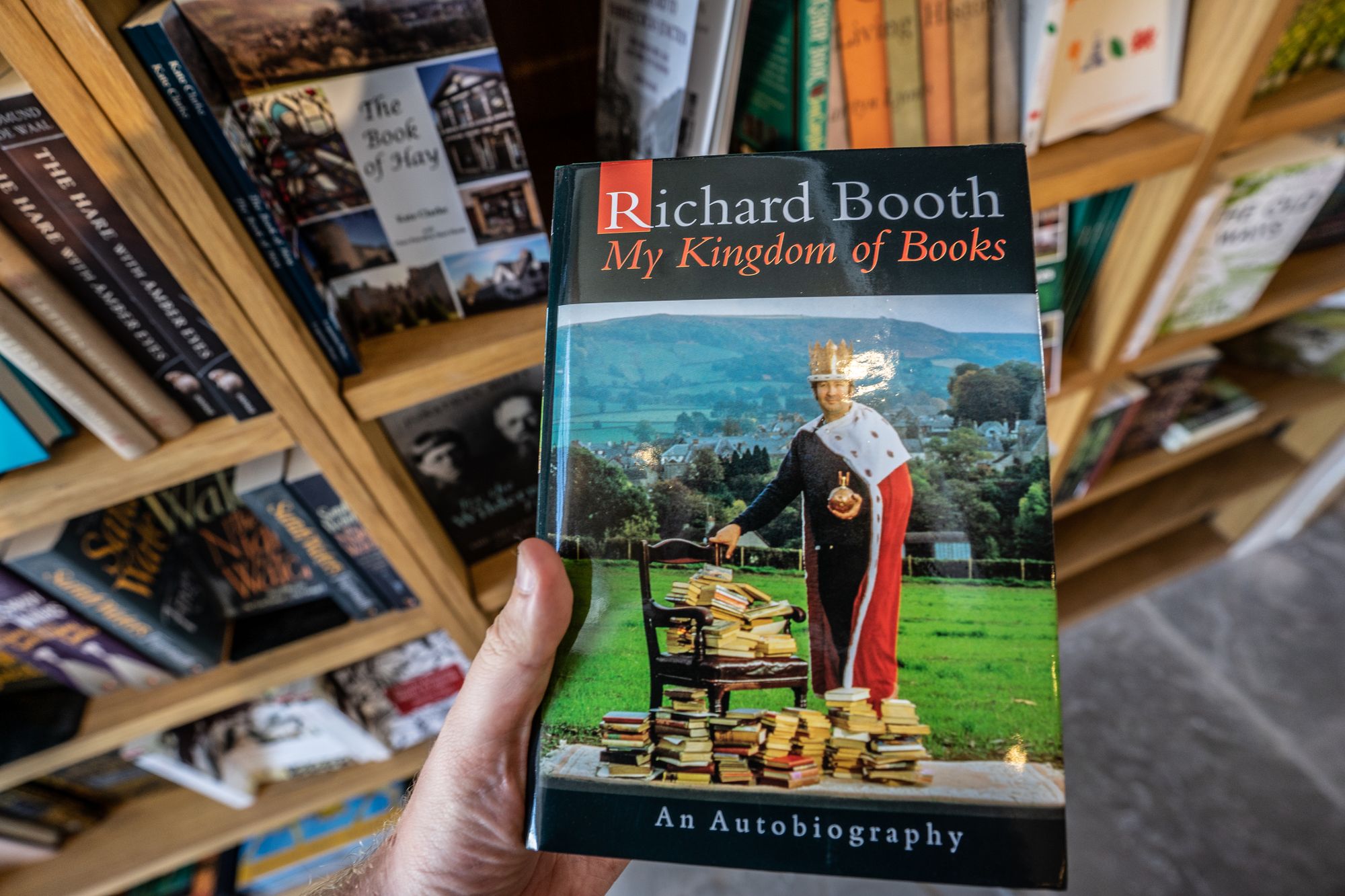
Famed for its annual literary festival, Hay-on-Wye is perhaps the quirkiest border town in Wales. This was the world’s first “Book Town” and the high street is lined with second-hand book stores. An “Honesty Bookshop’’ occupies the Norman castle’s moat. On the top floor of Hay Castle, I uncovered the curious story of Richard Booth. A bookseller and eccentric, on 1 April 1977 Booth declared himself the King of Hay. The castle’s museum preserves Booth’s homemade crown jewels, while Richard Booth’s Bookshop is always packed with bibliophiles.
I drove north through an undulating borderland where medieval English kings fought rebellious Welsh princes. In Knighton – which sits almost exactly halfway along the border, a 45-minute drive from Hay-on-Wye – I popped into the Offa’s Dyke Centre to learn more about the origins of this ancient divide.
Read more: The best family-friendly UK holiday destinations for kids and adults of all ages
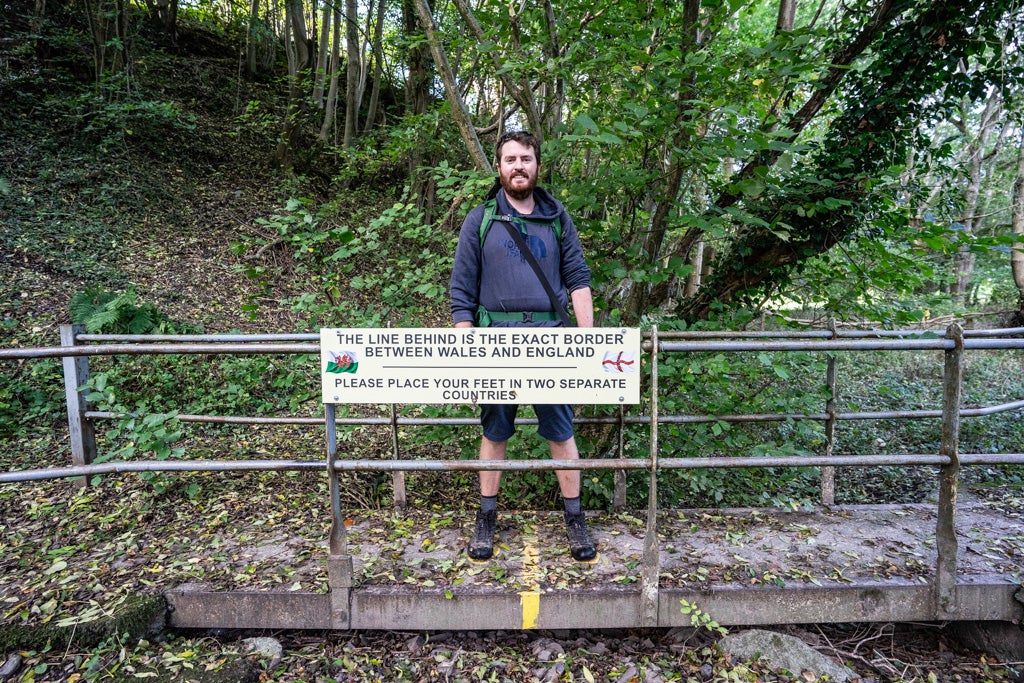
Large sections of the border still follow the route laid down by King Offa, an Anglo-Saxon king, more than a thousand years ago. It’s for this reason that the modern border has a justifiable claim to be Britain’s oldest. Outside Offa’s Dyke Centre, you can find some of the best preserved sections of the dyke itself, and if you follow Offa’s Dyke Path down to the river, you can stand on a bridge with one foot in Wales and the other in England.
From Knighton, the A488 took me north into Shropshire, then back into Powys, where I spent the night at the 400-year-old Dragon Hotel in Montgomery. Here, yet another crumbling Norman castle holds tales of a bloody medieval borderland that shaped England and Wales. With its grand Tudor facade and home-cooked pie and mash dinners, The Dragon Hotel is the perfect base for exploring the northern reaches of the border.
The next day, I continued north through rolling fields, stopping in Oswestry (a Shropshire town with a sizeable Welsh-speaking population), Chirk Castle (another Norman castle on the border) and the dramatic Pontcysyllte Aqueduct before turning back at Wrexham. The border itself continues onto the Dee Estuary, and if you’re not castled out yet, you can finish the drive at Flint Castle, a 1.5-hour drive from The Dragon Hotel.
Packed with history, country pubs and ever-changing scenery, a road trip along the Anglo-Welsh border is a serious contender to Scotland’s NC500. The difference? Here in the Welsh Marches, you're only likely to get stuck behind a tractor, rather than a queue of campervans.
Richard Collett is the author of Along the Borders: In Search of What Divides and Unites the British Isles. Published on 30th April by Doubleday.
How to do it
This isn’t an established or marked road trip route, so you’ll need to plan your journey along the Anglo-Welsh border using Google Maps or similar. Doubles at the supposedly haunted Cross Keys Inn start from £50 per night, room only.
Doubles at The Dragon Hotel in Montgomery start from £101 per night, including a hearty Welsh breakfast.
The 10 UK beaches that look like they’re abroad
The best budget-friendly hotels in the Lake District for an affordable trip
Two new walking trails set to launch in Wales this year
Once a year, silent film fans from around the world descend on this tiny Scottish town
The 12 most spectacular UK lakes for walks, kayaking, wildlife and more