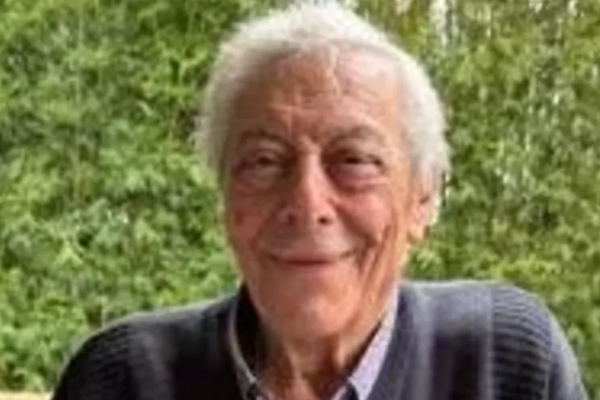
At 91, Margaret Mills's debut novel is a best-seller. Who is she?
I have been told that I have had an interesting life. I wish that someone had told me that at the time because I was too busy living it to notice.
I was born in 1929, the day the stock market on Wall St crashed and plunged the world into the Great Depression. My father was a teacher, and although government servants were all required to take salary cuts, we had a Baby Austin and got around whenever we could. The first bit of history I can remember was driving to see Kingsford Smith land on Foxton Beach.
The thing that had the most enduring effect on me was my parents' break-up in 1939. It meant that I had to change schools and had to endure three years of being bullied. I left there swearing that I would never be bullied again. This made me into a most obnoxious teenager, but I never let anyone bully me again. I was a scrawny child, but I also learned that I had a valuable weapon - my tongue. If I could make people laugh at the bully it took away their power. It also made me a very fast runner.
The war came and went. My father and I had been sitting watching Mt Ruapehu's crater lake erupting when it started throwing rocks at us, so we ran. When we got back to the hut, we learnt that the war in Europe was over.
The next thing of importance to me was when, at the age of 19, I discovered that horse riding was easy; it was like dancing with a partner; all you had to do was follow your partner's lead as closely as possible. I was never a posh rider, but in all my decades of riding I only came off five times, not counting the time that my horse fell over a bank. That year I also learnt that I was a pretty good cook so I would make a living outside of academia.
I went south looking for adventure. I didn't find it. I went to Queenstown for a weekend and stayed for 27 years, during which I got married and had children. I tried to become a 1950s housewife. I wasn't very good at it. I had never even handled a baby or had much to do with children. My poor kids had to put up with a lot while I learned. I don't think I learned very well.
Queenstown in the 1950s and 60s was a village and a great place for kids to grow up. I practised being a parent, but I was never very good at it. Ask my kids. Each of them, Bruce, Brett, Jonell and Loris are very different from each other, but they are all as opinionated as I am and enjoy an argument. I love them all dearly, but don't rabbit on about it.

In 1978 they had gone and my marriage was over, so I came to Waiheke and found all the things I had been missing. I joined a peace group, a political party and made a living cooking and taking out horse treks.
Then I accidentally joined Greenpeace. I was asked if I would be a voluntary relief cook on the Rainbow Warrior for three weeks and I said, "That sounds like fun; what have I got to lose?" These were the favourite years of my life, and although I lost all my clothes, my money and my typewriter when the ship was bombed, I made some of the best friends I could ever have, and they were at least 20 years younger than I. All these years later, some of them remain my best friends.
I stayed with Greenpeace for another five years as a cook and wintered over cooking for a crew of three and lots of casuals. This made catering difficult as I never knew how many I was feeding. In 1989 I cooked up and down the east coast of the US and Canada and then home across the Pacific. I had my 60th birthday onboard.
Then something life-changing happened. I met Trevor Darvill, an Australian who crewed on the Greenpeace yacht Vega which had crossed the Tasman for the funeral of the Rainbow Warrior. We hit it off and a pen friendship began. That developed into a partnership and he came to live in 1992.
Trevor fitted in well. His parents were both from New Zealand so he reverted to his childhood accent except for when he was in Australian company. We turned our energies to working for the local community - mostly getting land that got into private hands back into public use. Tracks, paths and a stairway were opened and maintained.
My worst time: 2011, Bruce, my oldest son died of cancer.
My best time: 1987, meeting Trevor.
In 2016, Trevor had heart surgery and our active years were over. I needed something to use my energy, so I thought it was about time to start writing that book I had always been too busy to write.
The Nine Lives of Kitty K. by Margaret Mills (Mary Egan, $34.99), a historical novel set in the Otago goldfields of the 19th century, is available in selected bookstores nationwide. Her book is launched in Queenstown at the Lakes District Museum on March 25, and she will give an author talk at the Frankton Library on March 27.