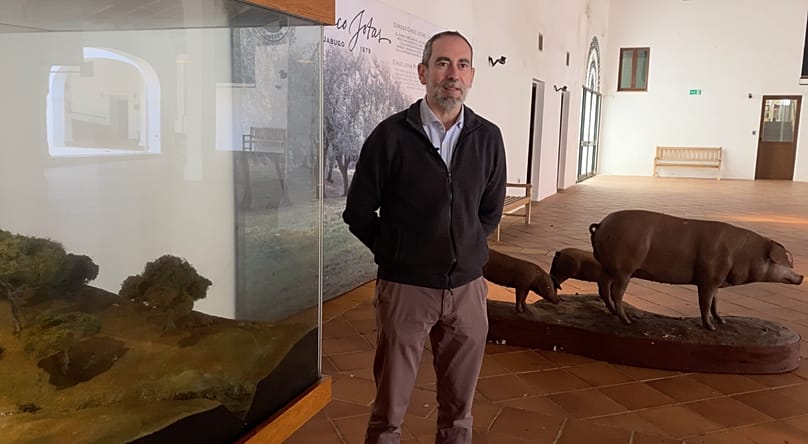
“100% Iberian pigs are restless animals. They spend the whole day moving about, sniffing, rooting, roaming freely across the estate and feeding on acorns and grass,” explains Jesús García Sánchez, who rears them on a pastureland in Gerena, in the province of Seville, in south-western Spain. “The Iberian breed is everything. It is a unique product in the world.”
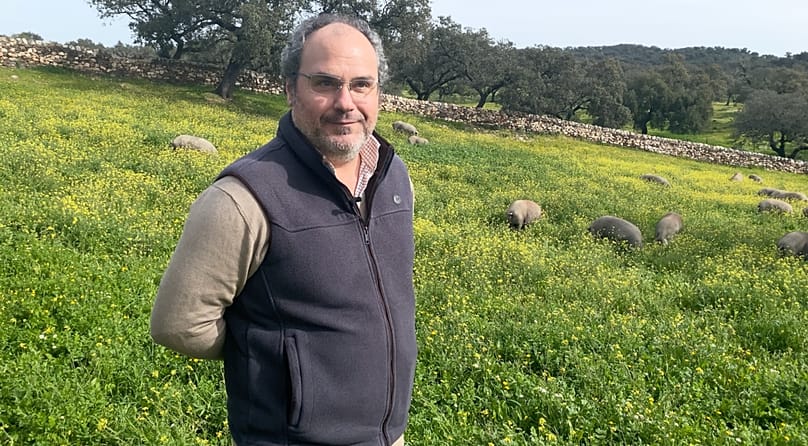
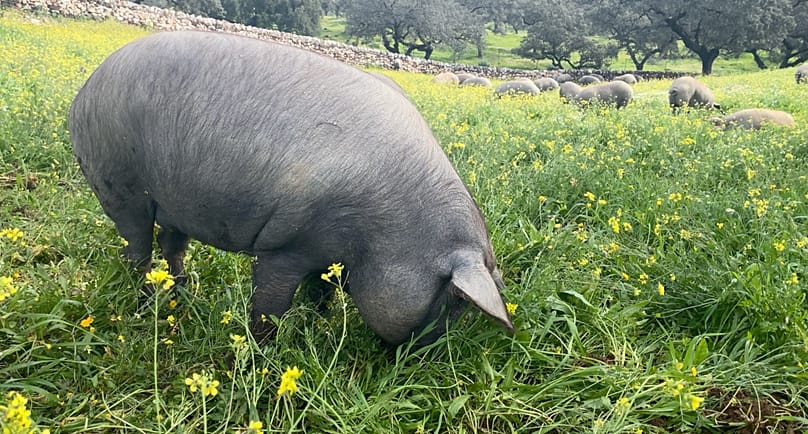
In their pasture, the animals graze freely in search of acorns. The pigs live in this idyllic setting from birth until they are slaughtered at the age of two. They can cover up to 14 kilometres each day.
Jesús is one of the 700 breeders of 100% Iberian pigs working for Cinco Jotas. Founded over 150 years ago, the company is one of the most exclusive producers of “Pata Negra” ham, a global delicacy that has become a symbol of culinary excellence in Spain and Europe.
In their natural curing cellars, thousands of hams are carefully tended throughout the curing process. The temperature ranges between 14 and 16 °C. Humidity varies according to the season. Specialised staff treat each leg individually, moistening it and moving it from cellar to cellar to ensure it cures evenly.
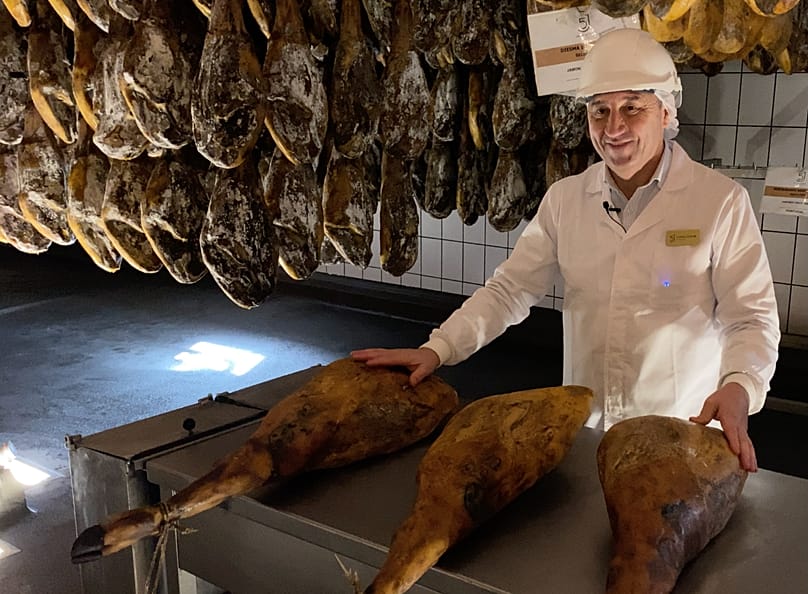
“These cellars are nestled into the side of a mountain, with their external windows on the sides. And each floor has external windows and doors. We have a staff of between 55 and 60 people working in shifts throughout the year, and what we do is move all the hams every three months,” explains Valeriano Ramos, ham master cellar.
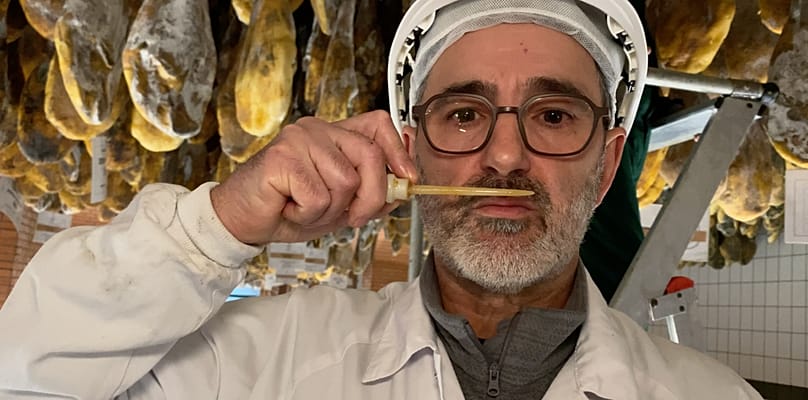
After three years of curing, the ham is ready to eat. But first, its final quality is assessed by sight, touch and smell.
“Whether the ham will be good is also determined by the fat. The fat must be runny. Then we judge it by the aroma,” says Manuel Vega, Master quality control.
The company provides around 700 direct jobs during the winter peak season and 250 for the rest of the year, explains Luis González, its managing director. The price of its Pata Negra ham is currently around 100 euros per kilo.
Around 35% of its total production is exported to 55 countries, including the United States, China and Japan. Last year, total sales of 100% Iberian products reached €130 million.
“La Brida Negra, which is acorn-fed 100% Iberian ham, accounts for well under 10% of all Iberian ham produced in Spain. And within that niche, we account for approximately 35%,” says González.
The final key step before tasting the ham is cutting it.
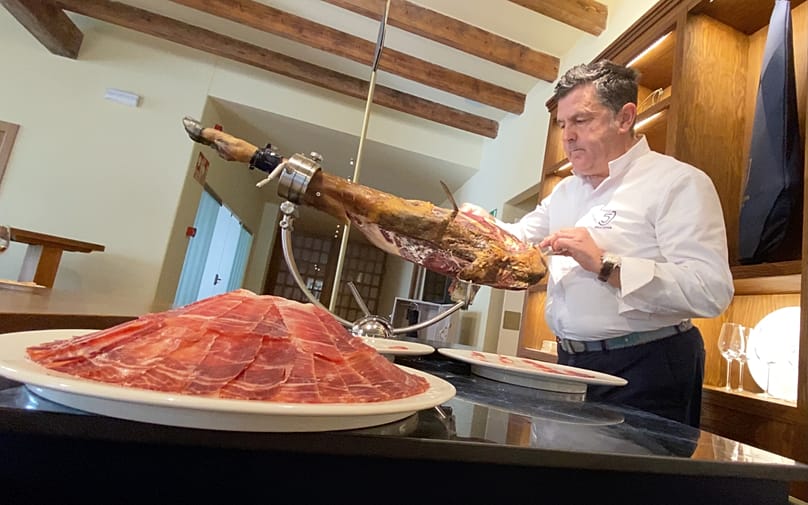
Severiano Sánchez has been working as a master carver for 34 years, a profession he has pursued in 40 countries. An ideal cut, he explains, makes the best use of the meat and enhances its flavour.
“A good carver can turn a mediocre ham into a great one, whilst a poor carver can turn an extraordinary acorn-fed 100% Iberian ham into a poor one,” says Sánchez.
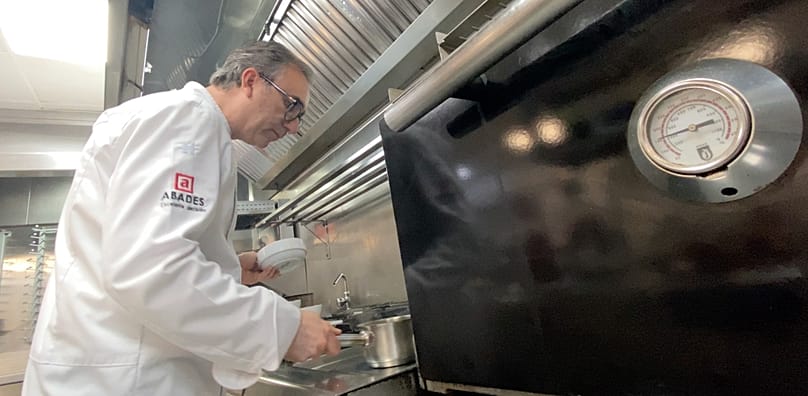
In fact, this product is becoming increasingly popular in European haute cuisine. The Abades Triana restaurant in Seville serves around 90,000 diners a year. Acorn-fed 100% Iberian ham has earned a prominent place on its menu, often paired with seasonal vegetables and even fish.
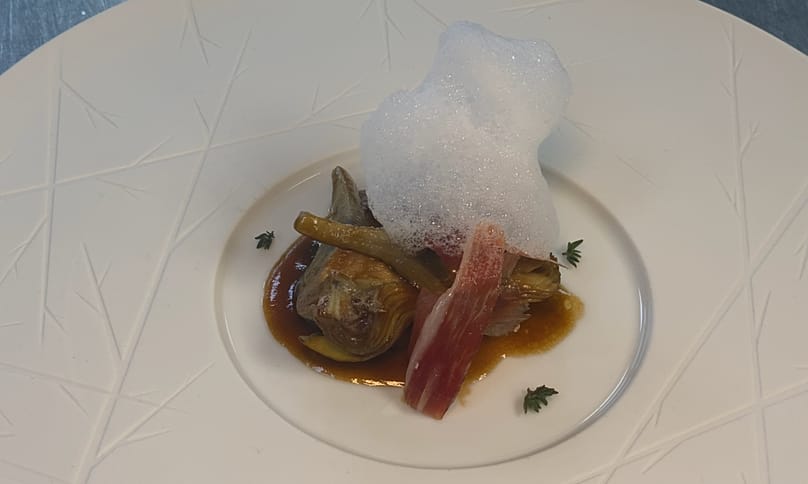
“It’s a truly wonderful product. Firstly, because it’s a superb product. Secondly, because of its unique character – those subtle nuances, that umami flavour – it’s simply indescribable when it comes to creating a recipe,” concludes Elías del Toro, the restaurant’s executive chef.