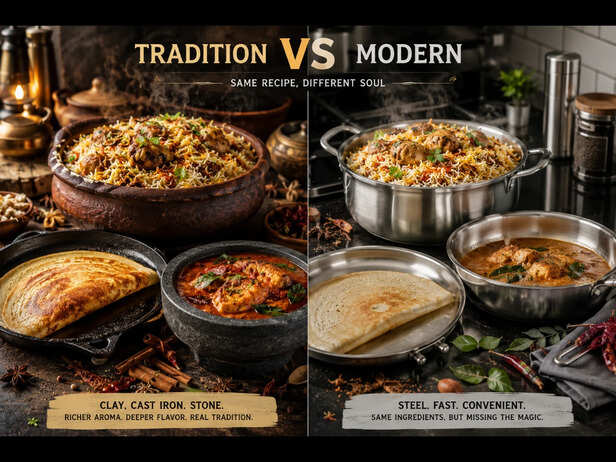
Have you ever wondered why your grandmother's dal never tastes quite the same when you cook it in a modern non stick pan? Or why restaurant biryani has a depth of flavor that is hard to recreate at home? The answer often lies in something we rarely think about, the cooking vessel. Long before advanced kitchen appliances existed, people relied on clay, iron, brass, copper, and stone cookware. These materials were chosen not just because they were available, but because they changed the way food cooked. Every vessel interacts differently with heat, moisture, and even the ingredients themselves. The result is food that can taste richer, smokier, softer, or more aromatic. Sometimes, changing the pot changes the entire personality of the dish.
Clay Pots Create Earthy And Naturally Sweet Flavors
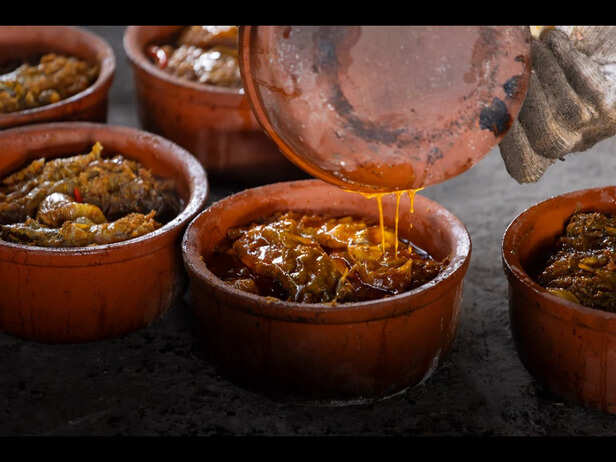
Nothing illustrates the magic of cookware better than a clay pot. Clay heats slowly and evenly, allowing ingredients to cook gently without losing too much moisture. Tiny pores in the pot trap steam, creating a self basting effect that keeps food juicy. Curries become deeper, rice develops a delicate aroma, and slow cooked meat turns incredibly tender. Even simple dal acquires an earthy note that cannot be replicated in steel cookware. Many Indian dishes like handi chicken, matka biryani, rasam, and sambhar owe part of their unique identity to clay cooking. The vessel itself becomes an invisible ingredient.
Cast Iron Gives Food A Richer And More Intense Taste
A well seasoned cast iron pan carries years of cooking history. Its exceptional heat retention creates beautiful browning, caramelization, and crisp edges that lighter cookware often cannot achieve. Rotis develop attractive brown spots, dosas become perfectly crisp, and vegetables gain a roasted flavor without needing excessive oil. Many home cooks also notice that food from cast iron feels more satisfying because the cooking process enhances natural flavors rather than masking them. As an added bonus, cast iron can contribute small amounts of iron to food, making it both flavorful and practical.
Copper And Brass Bring Out Traditional Flavors
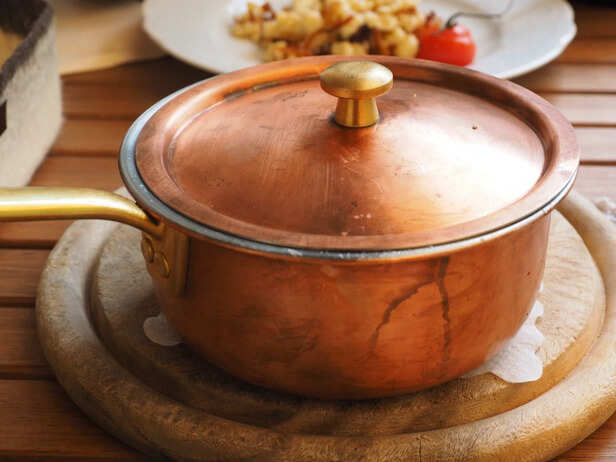
Before stainless steel became common, copper and brass vessels dominated Indian kitchens. When properly lined for safe cooking, copper distributes heat remarkably evenly. Milk based sweets like kheer and rabri develop a creamy consistency because there are fewer hot spots that cause burning. Brass cookware has long been associated with slow cooked curries and festive meals. Many families still believe that traditional sweets prepared in brass utensils have a richness modern cookware cannot match. These metals require more care, but generations continue using them because they preserve culinary traditions that machines cannot replace.
Stone Cookware Unlocks Slow Cooked Perfection
Stone cookware has been used across South India and several other regions for centuries. Soapstone pots absorb heat slowly and release it gradually, making them perfect for simmering dishes over long periods. Fish curry, mutton curry, and tamarind based gravies become richer because spices have enough time to blend naturally without aggressive boiling. Stone mortars and grinding slabs also produce chutneys with a texture and flavor that electric mixers rarely achieve. The ingredients are crushed gently rather than sliced at high speed, preserving essential oils and natural aromas. Sometimes old methods survive because they simply work better.
Wooden And Bamboo Cooking Methods Add Unexpected Character
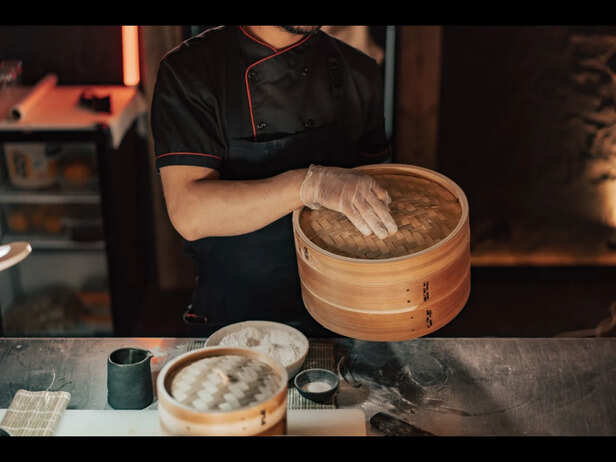
Not every cooking vessel is made of metal or clay. Across Asia, bamboo steamers produce soft dumplings, fluffy buns, and delicate vegetables with a subtle woody aroma. Because excess moisture escapes easily, steamed foods remain light instead of becoming soggy. In India, bamboo tubes are traditionally used in parts of the Northeast to cook rice, chicken, and fish. The natural fragrance from the bamboo infuses the food, creating flavors that cannot be copied in conventional cookware. Similarly, wooden barrels used for fermenting certain foods and drinks gradually shape their taste over time, proving that containers influence food long after cooking is complete.
Sometimes The Secret Ingredient Is The Pot
Recipes often receive all the credit, but cookware deserves its share of appreciation. Every vessel tells a story of geography, tradition, and generations of experimentation. Clay preserves moisture, cast iron builds rich crusts, copper distributes heat beautifully, stone rewards patience, and bamboo adds delicate fragrance. As modern kitchens become faster and more convenient, many traditional cooking vessels are making a comeback. People are rediscovering that authentic flavor does not always come from expensive ingredients. Sometimes, it comes from cooking the same recipe in the vessel it was meant for. The next time a family recipe tastes different, it may not be the cook. It might simply be the pot.
Unlock insightful tips and inspiration on personal growth, productivity, and well-being. Stay motivated and updated with the latest at My Life XP.