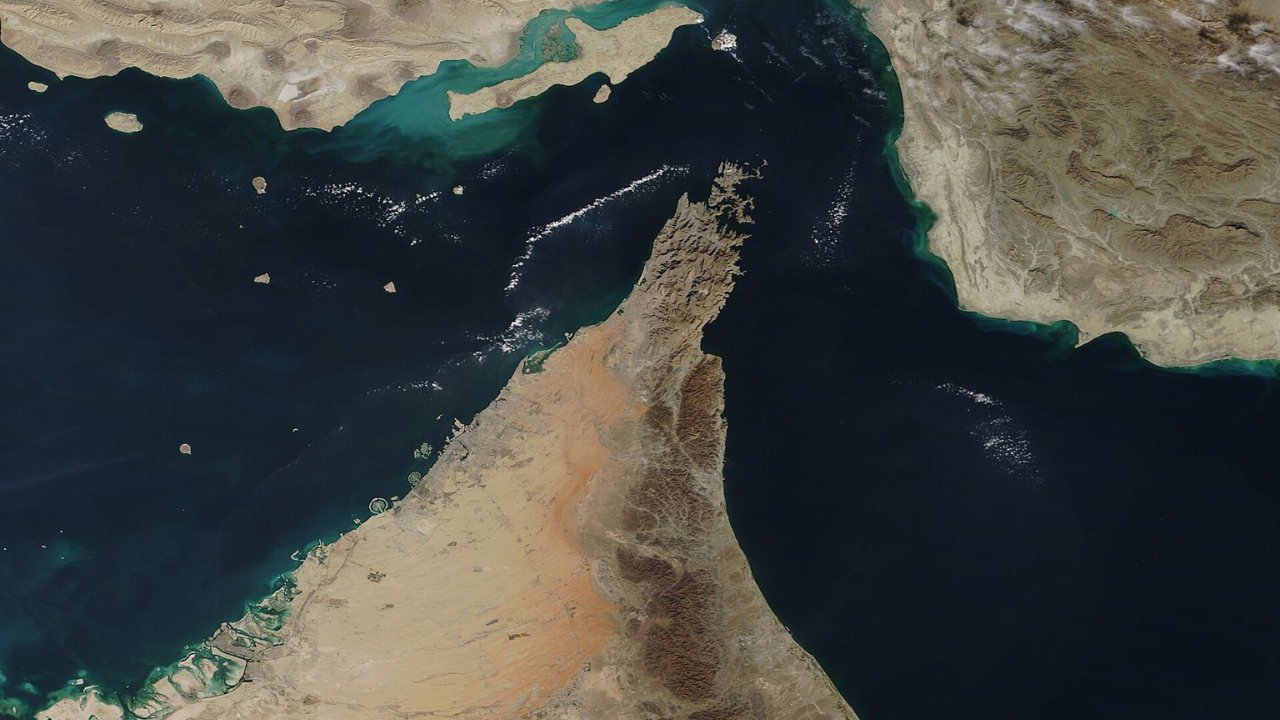
There are more than 1,500 commercial ships that have spent months sitting nearly motionless in and around the Persian Gulf after the closure of the Strait of Hormuz. This has created what marine scientists describe as an ecological threat unlike anything previously documented, allowing unusually dense layers of marine organisms to accumulate on their submerged hulls. Researchers say those heavily biofouled ships, rather than the closure itself, now pose an ecological threat once they begin sailing again.
Get breaking news anytime, anywhere. Download the TOI app now!
Global attention has primarily focused on disrupted oil shipments and regional security, but this particular problem has been quietly growing beneath the waterline. The hulls of idle vessels have become coated with dense communities of algae, barnacles, mussels, sea squirts and other marine organisms that normally have little time to establish themselves on moving ships. According to a study published in Biological Invasions , the danger could emerge when the strait reopens and international shipping resumes, and allows thousands of biofouled vessels to carry those organisms to ports across the world in what researchers call a potential marine “super-spreader” event. As ships leave the Persian Gulf and return to international shipping routes, the organisms that have accumulated on their hulls could detach or release larvae in distant ports, introducing species that have never previously occurred there.
Months of inactivity have created ideal conditions for marine hitchhikers
Commercial ships routinely transport marine life across oceans, but modern anti-fouling coatings and constant movement usually limit how much accumulates on their submerged surfaces. But the situation in the Persian Gulf is different, since many vessels have remained anchored since late February 2026, giving marine organisms months rather than days to colonize steel hulls, sea chests and other underwater structures. Researchers say the Gulf’s exceptionally warm and saline waters create an environment where hardy species can flourish before hitching rides to distant coastlines. According to the international team behind the study, there has never been a previous shipping disruption that has involved such a large number of vessels remaining stationary for so long, which creates conditions that could spread invasive species on an unprecedented scale once maritime traffic resumes.
A familiar problem, but on a much larger scale
Marine invasive species have transformed ecosystems before, as seen in the case of Zebra mussels that spread through North America’s Great Lakes after arriving in ballast water during the 1980s. They clogged water intake pipes, disrupted native ecosystems and caused billions of dollars in economic damage. This new threat is different because much of the biological cargo is expected to travel on the outside of ships rather than inside ballast tanks. Organisms that are attached to hulls can detach, reproduce or release larvae after vessels arrive in new ports, and potentially establish populations that outcompete native species or introduce new pathogens. Scientists warn that ports with environmental conditions similar to those of the Persian Gulf, including parts of India, Singapore and other tropical shipping hubs, could face the highest risk because many Gulf species are already adapted to extreme temperatures and salinity, according to the Guardian .
But the researchers also stress that the outcome is not inevitable, since ships can be inspected, cleaned and treated before returning to international trade, and ports can increase monitoring for newly introduced organisms while strengthening biosecurity measures. Those precautions become more important because once an invasive marine species establishes itself, eradication is often impossible. The study’s authors argue that the unusual pause in global shipping presents a rare opportunity to prevent a problem before it spreads across oceans. Today, it might appear as a layer of barnacles and algae clinging to idle ships, but if left unchecked, it could reshape marine ecosystems thousands of miles away long after the Strait of Hormuz reopens.