
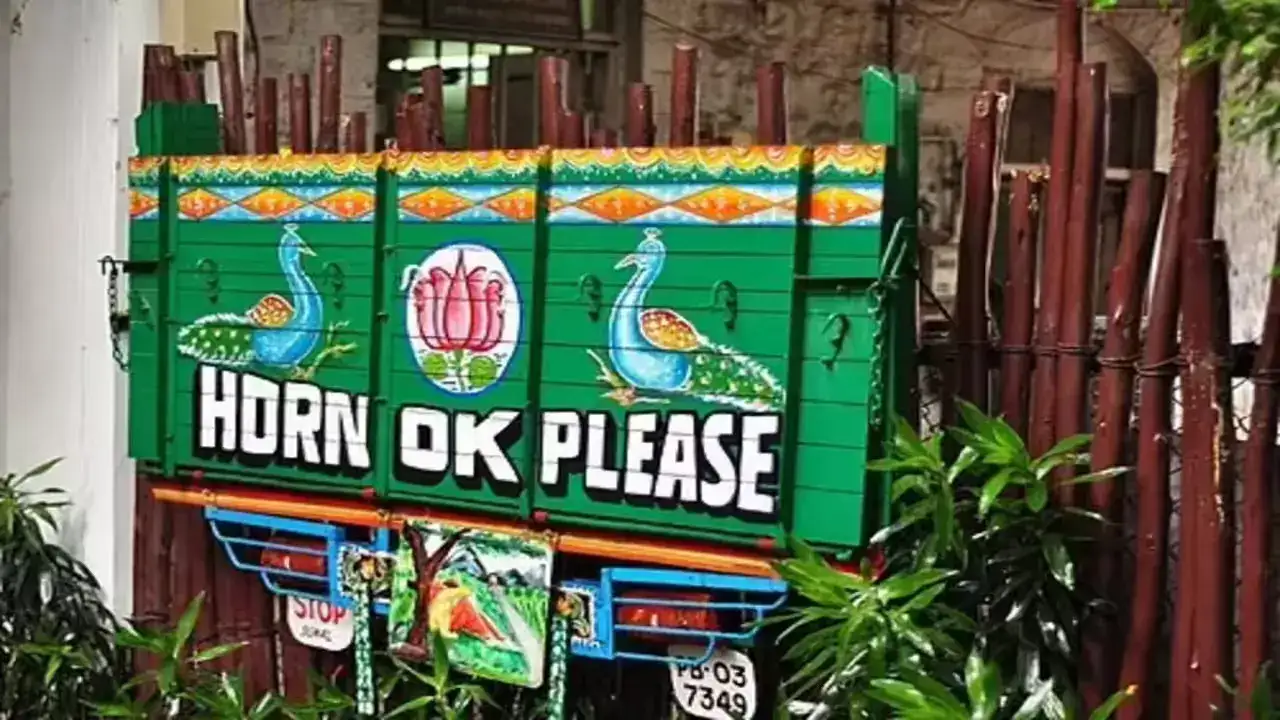
Anyone who has travelled on Indian highways has likely noticed brightly painted trucks decorated with images of gods, mountains, flowers, or film stars. One phrase that almost always appears on the back of these trucks is: "Horn OK Please."
For many people, the message may seem unusual. In several countries, honking is often viewed as rude or aggressive. However, in India, trucks traditionally encourage other drivers to use the horn while overtaking.
The World War II Theory
Although the exact origin of the phrase remains unclear, there are several popular explanations behind it. One widely accepted theory traces it back to World War II.
During that period, many trucks reportedly operated on kerosene, which is highly flammable. Even a minor collision could become dangerous. To warn drivers, military trucks were believed to carry the message: "Horn Please. On Kerosene."
The ‘OK’ Brand Theory
Another theory connects the phrase to a detergent brand called OK, manufactured by Tata Oil Mills. The company’s branding reportedly featured a lotus symbol.
According to this explanation, trucks already carried the words "Horn Please" on the rear side, and the “OK” logo was later painted in the middle as part of an advertising campaign. Over time, the phrase became popularly read as "Horn OK Please."
More Than Just a Road Warning
Regardless of how the phrase actually originated, "Horn OK Please" has now become deeply linked with Indian trucking culture.
Truck drivers often spend long periods away from their homes and develop a strong emotional attachment to their vehicles. Many decorate their trucks with colourful artwork, slogans, and symbols while also giving them names. Over the years, the phrase has evolved from a practical road instruction into a lasting symbol of life on Indian highways.









.jpg?w=600)




