Can you make a fun thriller about a subject as anxiety inducing as climate change? That’s a question that has vexed veterans of the entertainment industry, like Michael Crichton, author of State of Fear, and Roland Emmerich, director of The Day After Tomorrow. And it’s something that the BBC tackles, head on, with its new five-part series, The Rapture, which elevates the impending disaster to positively Biblical levels of pulpy carnage.
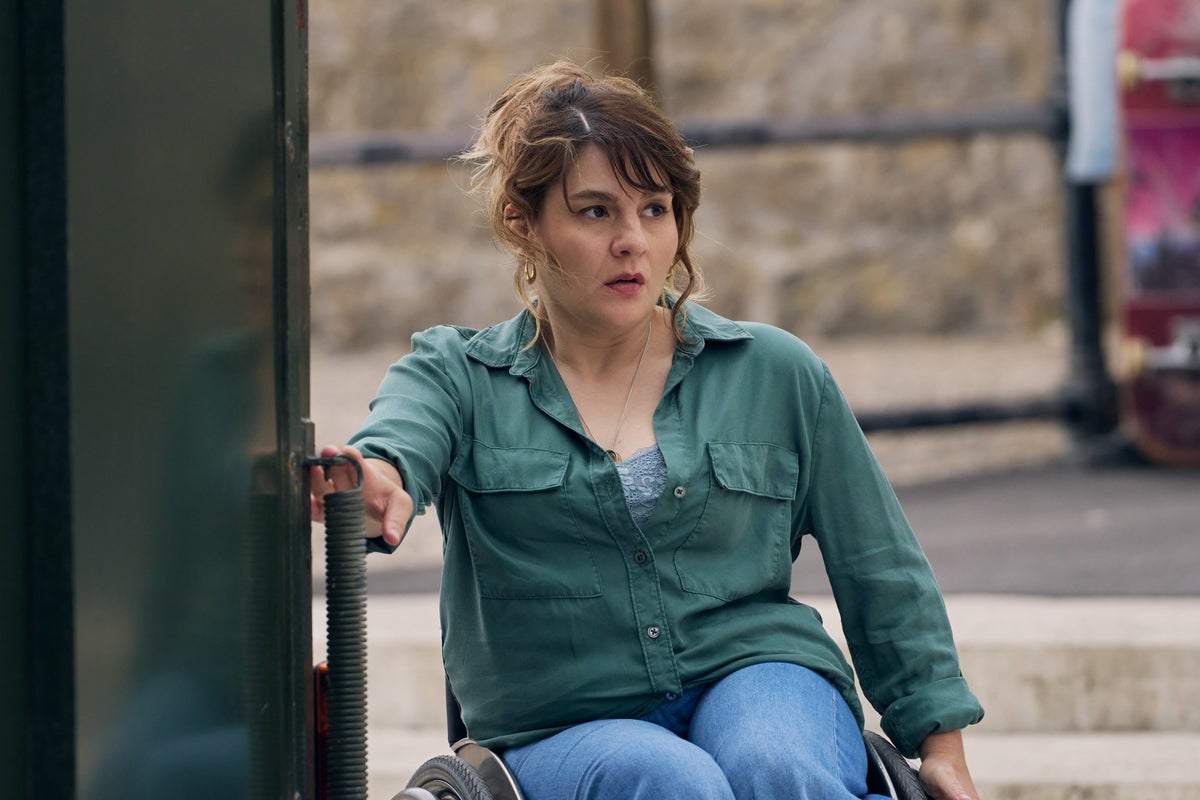
Gabrielle “Gabs” Fox (Ruth Madeley) has just returned to her work as a psychologist after a car crash that killed her husband and left her disabled. Her first assignment is a tough one: Bethany Krall (India Amarteifio), a young woman who has visions of Armageddon and is currently imprisoned for the murder of her mother. “Work always made me feel alive,” Gabs tells her therapist, Mel (Ruth Jones). “I want to get that feeling back.” She quickly rediscovers her professional chops, but questions remain. Did Bethany really murder her mother? Or is there something going on with her father, Leonard (Sam Hazeldine), the charismatic leader of a cultlike church? Just as she is starting to get her life back on track, Gabs finds herself stumbling into a conspiracy.
Drawing on the paranoia of classic thrillers like Edge of Darkness, The Rapture starts to pull together big themes. There’s a fossil fuel company, run by shifty CEO Max Leland (Stephen Campbell Moore), who are hoping to build a wind farm near where Gabs lives in Wales. Then there’s Dick Carwyn (Iwan Rheon), an investigative journalist who has ended up on the wrong side of the Kralls. And, finally, there’s the Climate Front, an Extinction Rebellion-style activist organisation run by the mysterious Anika Drake (Siena Kelly). Somehow these threads are interlinked, snaring Gabs and her smooth new squeeze, Fraser (Jack Farthing), into a quest for justice. “You’re damaged,” Leonard snarls at her. “It’s been far too easy for Bethany to get under your skin.”
Unlike Edge of Darkness, which took the nuclear anxieties of the 1980s and created something grimly compelling, The Rapture is a deeply silly look at climate anxiety. “The young are constantly served up doom,” comes the sceptical mantra of Leonard’s church. “Every generation deserves hope.” This silliness is both a weakness – it stops the series having any real tension – but also a strength. This is not a po-faced polemic masquerading as entertainment, but a story focused on twists and turns. The politics might be naïve (there is something of the angsty teenager’s “everything is a cult, dude” mindset) but it’s worn lightly. Tonally, The Rapture feels more like Trigger Point or Bodyguard, where politicians and corporate executives and activist groups exist as broad archetypes. And so, writer Bryony Kimmings’ dialogue is suitably hammy: “I’ve been more focused on saving myself than the planet,” Gabs confesses.
As with so many domestic thrillers, the acting is no better than it needs to be. Madeley and Amarteifio grow into their parts, and their chemistry develops over the episodes. Generally, however, the cast are limited by lines that veer between expository and clunky. “Together we have the power to change the system, not the climate,” the elusive Anika Drake proclaims. Rheon tries to bring more energy to proceedings, yet his character is tasked with unforgivingly plot-moving lines, while Jones is woefully underused. But the twists and turns keep coming, and, by the denouement, the unravelling of the mystery trumps all else.
A show that brings together the climate crisis, the evil machinations of the oil industry, modern faith organisations, corrupt politicians, and the subliminal control mechanisms of Big Tech sounds more ambitious than The Rapture actually is. Its dominant ambition is to be an enjoyable, propulsive watch. Some might find its conclusions hectoring, but the journey is fun and frivolous. The show ends up feeling pleasantly disposable, the single-use plastic of the TV world.