The project:
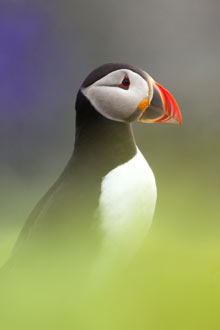
Climate change, says Dr David Bullock, head of nature conservation at the National Trust, is a serious threat to puffin populations around the UK. "Puffins prefer to feed on sand eels. In cool seas these fish get nice and fat, but as the sea temperature rise they become harder to find and less plump. In turn this is likely to affect the kinds of fish puffins feed to their chicks."
The National Trust and Banrock Station are working on a project that will help them to both measure and raise awareness of this problem, with plans to carry out radio-tracking surveys of puffins and other seabirds during breeding season so that they can assess the impact of climate change. Volunteers and students will help carry out the work, interpreting the data coming in from the birds.
The results can be used by the National Trust to work out what their conservation priorities should be. But they'll also be used to make the public more aware of the problem; it is vital that people see that climate change is already having a worrying impact on our wildlife. The findings from this project will be shared with other projects around the country.
If this project wins the higher funding from Banrock Station:
The project would be extended over a longer period and would include more birds, as the more detail, the more useful the final picture. The extra money will also help the National Trust fund the more accurate (but more expensive) GPS system, instead of radio-tracking.
Puffin facts:
Colourful orange-red beak
Black and white plumage
Puffins feed on fish
Great hunting skills, diving into the sea and able to hold as many as a dozen fish in their beak at a time
Forage over long distances before bringing food home for their young
Puffin colonies can be found on many islands and headlands in Scotland and in Ireland. There are not many in England but the Farne Islands off Northumberland, and Skomer and Skokholm islands off Wales are amongst the most spectacular.
What the experts say:
David comments: "Lundy island, in the Bristol Channel, used to have a large colony of puffins ("Lundy" is Norse for puffin island). Today only a handful of birds come back to breed. We want to find out why the colony has declined – is it climate change making the sea temperature too high for sand eels? And will the colony recover now that rats have been eliminated from the island? We are also interested to find out if a lack of sand eel prey has forced adult puffins in the Farnes to feed their chicks on less suitable fish species which sometimes get stuck in the chicks' gullets, with disastrous consequences."