

In 2025 (almost 2026!), instant gratification isn’t just preferred; it’s expected. With devices at our fingertips and ChatGPT primed to answer any question we can think of—not always with the most accurate answers, but an answer nevertheless—we’ve been conditioned to resent waiting. The same is true when it comes to seeing results in our skin after trying a new product or procedure. Patience? We don’t know her. Lucky for us, though, technology is keeping up with our need for speed. The Pico Laser, which is a dermatologist go-to for removing pigmentation, tattoos, and acne scars, works fast. As in, a picosecond, which is a trillionth of a second. Yeah, that fast.
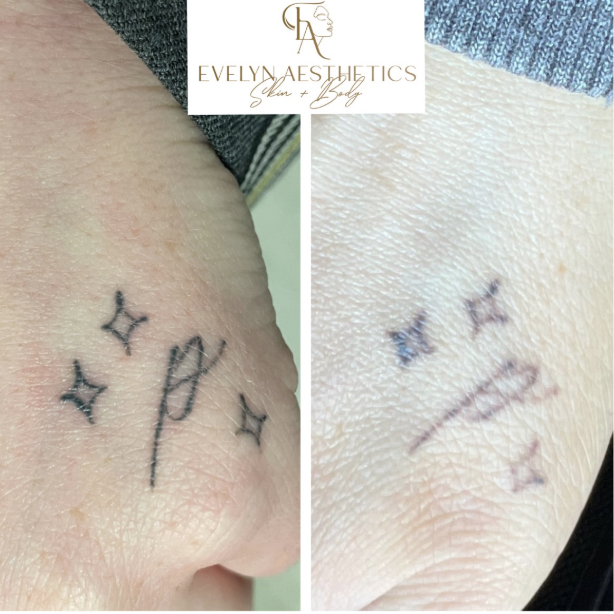
The three models in the Pico Laser portfolio (PicoSure, PicoWay, and PicoSure Pro) all deliver energy in short pulses to effectively destroy pigment in the skin. “The ultrafast picosecond pulses shatter ink and pigment into tiny fragments that the body can naturally clear,” explains Evelyn Ramirez, LME, a licensed esthetician and the founder of Evelyn Aesthetics NYC.
Because there are different devices, Pico Lasers are designed to address a range of concerns, from removing tattoos to stimulating collagen production. “Pico lasers are especially great for pigment (treating sun spots, freckles, melasma, and post-inflammatory hyperpigmentation, et cetera),” explains board-certified dermatologist, Chelsea Hoffman, MD, at Hudson Dermatology and Laser Surgery. Arguably, the most promising aspect of a Pico laser is that “because the energy is delivered more mechanically than thermally, there’s typically less heat damage, which means a lower risk of pigment problems and faster recovery compared with many traditional lasers.” This makes Pico Laser a good treatment option for all skin tones, whereas other lasers often raise concerns when treating deeper skin. Plus, faster recovery is exactly what skincare patients want—and deserve.
Read on for an in-depth explainer about Pico Lasers, including how they work, who they’re best suited for, what recovery looks like, and more. Plus, expert takes from Ramirez, Dr. Hoffman, and board-certified dermatologist Morgan Rabach, MD.
What is the Pico Laser?
Pico Lasers, in general, are favorable “because the pulses are so short, they create a sound-wave effect that shatters unwanted pigment or tattoo ink into tiny particles with very little heat created,” she says. She adds, “when we treat with lower energy passes of this fractional beam, we often call this picotoning.”
This tech isn't limited to a single device, though. Dr. Hoffman reiterates that a “‘Pico laser’ is actually not one single machine, but a family of lasers that fire energy in picoseconds, or trillionths of a second.” Depending on the model, each Pico Laser will treat different concerns.
For example, when removing a tattoo, PicoWay is best for darker ink, while PicoSure can be better suited for treating more vibrant colors. When someone’s looking for smoother, more taut skin, they’ll want to go for the PicoSure Pro. "Some devices can also deliver the beam in a fractional pattern (which creates a grid of microscopic zones of controlled injury) that stimulates collagen and elastin and helps with texture, pores, and fine lines," says Dr. Hoffman. Your board-certified physician will know which option to use for your specific skin concerns.
What are the Benefits of a Pico Laser Treatment?
The standout benefits of the Pico Laser include its versatility in treating a range of concerns, including boosting collagen production, smoothing texture (such as acne scars), and removing tattoos. It can treat areas from the neck down, too, Ramirez points out. “I treat the face, neck, chest, hands, arms, and even the back. If there’s pigment or scarring, Pico can usually help,” she says. And unlike other laser treatments, Pico Lasers are recommended for all skin tones, including more melanated skin.
Plus, Pico Laser treatments are speedy (a session typically only lasts 15 minutes, if that), often requiring fewer sessions than the older, nanosecond lasers, notes Dr. Hoffman. And the cherry on top: they involve faster recovery with minimal downtime of 24 to 48 hours.
Am I a Candidate for a Pico Laser Treatment?
Dr. Rabach says the best candidates for Pico Laser Treatments are “people with pigmentation issues like sunspots, melasma, and post-inflammatory hyperpigmentation,” as “it can be used to help brighten and even out skin tone.” Ramirez adds that it’s easily one of the most inclusive lasers available, noting that “because it’s non-thermal, Pico is safe for all Fitzpatrick skin types, including deeper skin tones and those prone to melasma or post-inflammatory hyperpigmentation.” In summary, “anyone struggling with pigmentation, uneven texture, or dullness is a great candidate,” she says.
What are the Risks of Pico Laser?
“Even though pico lasers are generally safer and gentler than many traditional lasers, they’re still powerful medical devices,” says Dr. Hoffman. Ramirez agrees, saying, “Risks are low, but temporary redness, swelling, or darkening of pigment can happen.” She warns that you can experience post-inflammatory hyperpigmentation if you don’t follow the aftercare protocols given to you by your provider.
Dr. Rabach adds that it’s possible to experience hypopigmentation, too, where the skin looks lighter as opposed to hyperpigmentation, where the skin looks darker. Sun protection is absolutely mandatory as your skin heals, and as with any medical cosmetic treatment, Ramirez says, “choosing an experienced provider makes a huge difference.”
Best Products to Use Post-Pico Laser
Dr. Rabach says a good post-Pico regimen should include “gentle cleanser, fragrance-free products, broad-spectrum SPF that has physical blockers like titanium, zinc, hydrating moisturizer, and [an occlusive product like] Aquaphor.”
Once the skin has healed, you can layer back in antioxidants, niacinamide, azelaic acid, or prescription lighteners if we’re treating hyperpigmentation, says Dr. Hoffman. The reason to keep these kinds of products in your routine: they not only help boost and maintain results, but also reduce the risk of pigment rebounding, especially in melasma and darker skin tones, she explains.
Does Pico Laser Hurt?
Pico Laser treatments are typically very tolerable when used to address discoloration. “Most patients describe it as a quick snapping sensation,” adding that numbing isn’t usually necessary because the pulses are so fast. However, for tattoo removal, which requires more energy and a longer time on a particular area, Drs. Hoffman and Rabach state that the area being treated can be injected with a local anesthetic to make the procedure more comfortable.
What Does Recovery Look Like Post-Pico?
As mentioned, one of the biggest perks of a Pico Laser treatment is its minimal downtime. “You might see mild redness or a light ‘peppering’ effect where the pigment darkens before it flakes away,” explains Ramirez. “That’s completely normal and usually subsides within hours to a couple of days.” She tells patients to avoid sun exposure, heat, sweating, and active ingredients for 48 to 72 hours.
When Will I See Results From Pico Laser?
“For brown spots and uneven tone, patients might see brighter, more even skin within a few weeks, with continued improvement over several sessions as the immune system clears pigment,” says Dr. Hoffman. However, it’s important to note that while results are long-lasting, they’re not permanent, “because new sun damage, hormones, and inflammation can create new pigment.”
Dr. Rabach says that when getting the treatment for brighter skin with less pigmentation, “yearly maintenance is recommended to keep skin bright.” For texture, pores, and fine lines, the collagen boost can last months to years. Still, ongoing maintenance with procedures and home skincare, and sun protection is key. "Tattoo removal is pretty permanent, though, according to Dr. Hoffman, but she warns that “there can be some faint ink that persists.”
How Does Pico Laser Compare to Other Lasers?
When searching for the best easy-to-recover laser for pigmentation, you'll probably also hear buzzing about Intense Pulsed Light (IPL) and Broad Band Light (BBL) lasers. The key difference is that Pico lasers don't use heat and can target deeper pigmentation than the first two. Ramirez explains, “IPL and BBL use heat and broad-spectrum light, which isn’t safe for deeper skin tones or melasma.”
Pico lasers are also better suited than IPL or BBL lasers if you're looking for more targeted treatment and want to “focus in” on individual dark spots, which can be helpful for stubborn sun spots, freckles, and pigmented scars, explains Dr. Hoffman.
Why Trust Marie Claire
For more than 30 years, Marie Claire has been an internationally recognized destination for news, fashion and beauty trends, investigative packages, and more. When it comes to the products Marie Claire recommends, we take your faith in us seriously. Every product that we feature comes personally recommended by a Marie Claire writer or editor, or by an expert we’ve spoken to firsthand.”