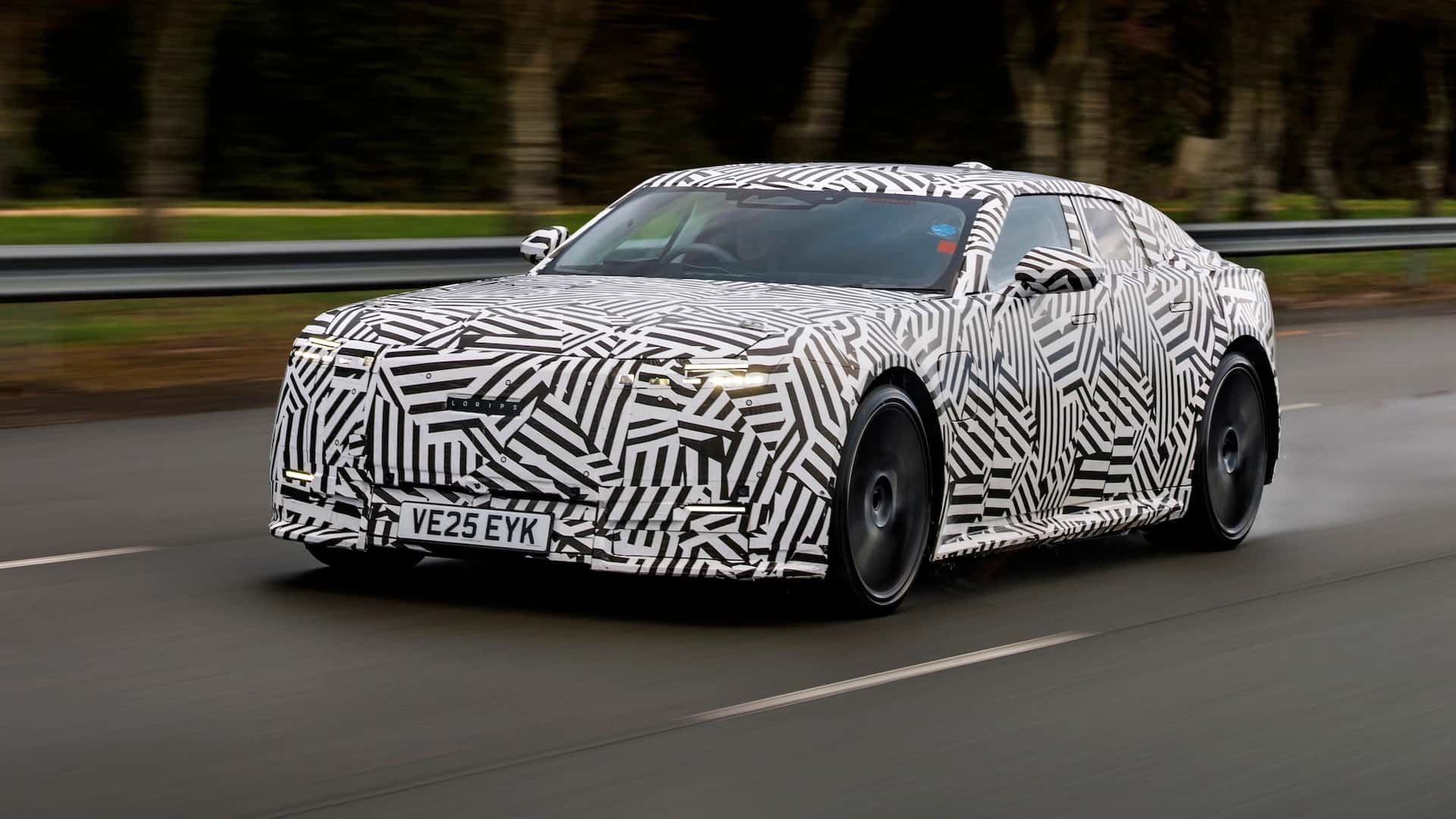
Jaguar is in no hurry to reinvent itself as a super-luxury brand. Even though it’s down to a single model, the aging F-Pace, the struggling company isn’t rushing the Type 00 to market. Time certainly flies, considering it’s already been a little over a year since the concept broke cover, signaling a complete departure from the old ways. The camouflage will finally come off sometime next year, but deliveries won’t begin until later in 2027.
In the meantime, Jaguar is providing a rare update on its progress in development and testing. It has locked in the main technical specifications for what it internally calls the “X900.” The extravagant grand tourer will have more than 1,000 horsepower from three electric motors: one at the front and two at the rear. We're told it'll have a rear-biased setup with a 30:70 torque split, although the ratio will vary.
As you can imagine, this will be a very heavy car. Although the exact weight remains a mystery, Jaguar is targeting less than 2,750 kilograms (6,062 pounds), split evenly between the two axles. Measuring over five meters (196.8 inches) long and riding on standard 23-inch wheels, the new-era Jag will have a commanding presence.
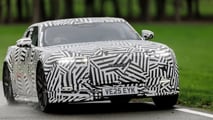
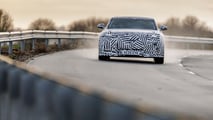
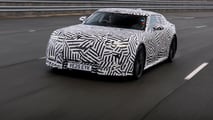
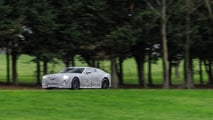
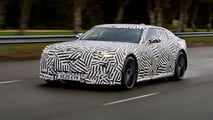
Its stately allure is accentuated by an imposingly long hood that seems to beg for a large-displacement combustion engine. However, the Tata Motors-owned company has made it crystal clear that it’s waving goodbye to ICE, putting all its eggs in the EV basket. At the back, it features a tailgate, effectively making it a hatchback. The cutout in the camouflage for the fifth door suggests the tailgate has a narrow opening, potentially hampering access to the cargo area.

At the heart of Jaguar’s long-nosed electric GT will be a sizeable battery pack, which Autocar estimates at 120 kWh. On a full charge, the first of a new wave of fancy models bearing the leaping cat will manage 400 miles (644 kilometers), presumably in the WLTP cycle. The vehicle has been developed on a bespoke platform intended exclusively for EVs. Top Gear rode shotgun in a prototype and learned it has all-around air suspension and twin-valve damping akin to a Range Rover.
Given the vehicle’s grandeur and massive wheelbase, the inclusion of rear-wheel steering comes as no surprise. Jaguar has engineered the rear wheels to steer at a maximum angle of six degrees opposite to the front wheels to tighten the turning circle. Not that many owners will ever test the top speed, but PistonHeads reports one of the prototypes effortlessly reached 160 mph (257 km/h) while remaining eerily quiet thanks to noise cancellation.
Managing director Rawdon Glover told our sister site InsideEVs that Jaguar has built 150 prototypes and that the final design has been frozen. The test fleet is currently being evaluated worldwide under the harshest conditions. When it’s ready for the limelight, the opulent EV will start at $120,000, with order books expected to open next summer.
It remains to be seen whether the four-digit horsepower figure will lure in buyers. Whatever the case may be, Jaguar has accepted that it will likely alienate most of its current customers. Earlier this year, Glover estimated that only 15 percent of Type 00 buyers are going to be returning clients. In other words, 85 percent will be new to the brand.
Moving into a higher price tier than past models will directly impact sales. Jaguar is already on a slippery slope, having stopped production of all but one model. It delivered only about 33,000 cars last year, compared with 181,500 vehicles in 2018.
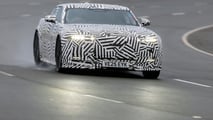
Jaguar Type 00 Prototype Testing
Based on the latest data from the European Automobile Manufacturers' Association, the numbers will be even lower in 2025. Through October, Jaguar registrations plummeted 86.2 percent to 2,845 units across 27 EU countries, plus Iceland, Liechtenstein, Norway, Switzerland, and the UK. Global figures aren’t available, but all signs point to 2025 being far worse than 2024.
The new Jaguar will no longer prioritize sales volume; instead, it will target higher profit margins. It’s too soon to say whether it can make real money on an EV, given that these are notoriously more expensive to build than combustion-engine cars. With a remarkably daring design, unusual shape, and lofty price tag, the outlandish GT is a risky bet. The controversial marketing campaign that signaled Jag’s new direction only adds to the uncertainty.
Sources: Autocar, Top Gear, PistonHeads, InsideEVs, European Automobile Manufacturers' Association