
THE BREAKDOWN
- Heated seatbelts will increase comfort and safety.
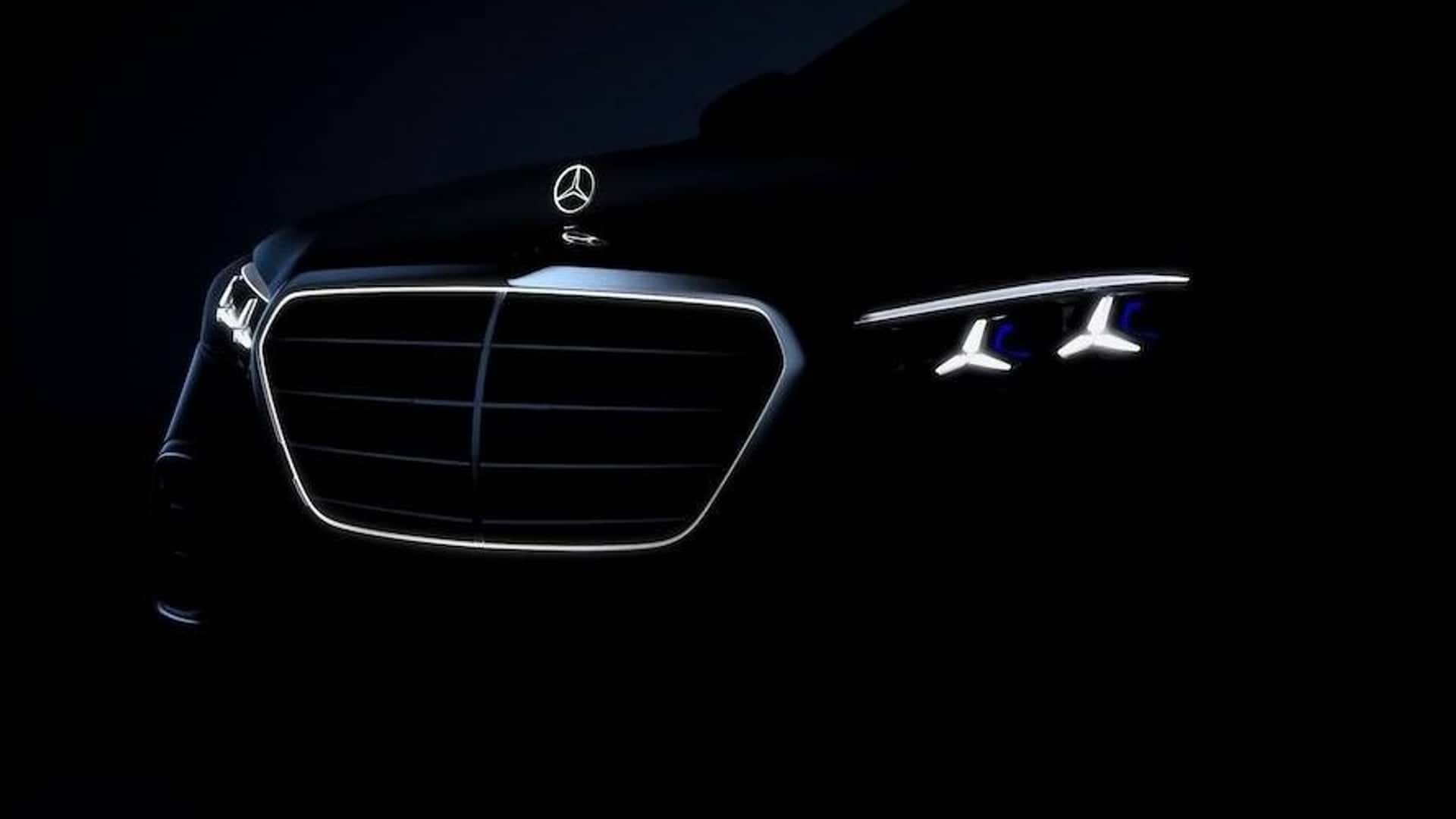
- Stuttgart's updated luxobarge is getting an illuminated hood ornament.
- The three-pointed stars will extend to the headlights and taillights.
- The 20-percent larger front grille will also be decked out with stars.
Mercedes is easing the wait until the S-Class facelift’s debut on January 29 by sharing more details about its updated flagship. The latest teaser features none other than CEO Ola Källenius chatting with YouTuber Justin Tse about what’s changing. For 2026, the S-Class receives the largest facelift Mercedes has ever applied to its range topper, with 2,700 new or updated components, roughly half of the entire vehicle.
One unusual addition will be heated seatbelts. In an interview with ABC News, the Mercedes boss confirmed the feature is coming as part of the S-Class’ mid-cycle refresh. It’s not entirely surprising, considering the Experimental Safety Vehicle (ESF) concept also featured heated seatbelts. When that concept debuted in 2019, Mercedes claimed the technology would enhance both comfort and safety.
The idea was that warming the belt would encourage occupants to buckle up on cold days. In turn, they’d be more likely to remove bulky winter jackets, reducing the risk of excess belt slack. In the GLE-based concept, the heating elements took less than four minutes to raise the belt from an ambient 14 degrees Fahrenheit (-10 degrees Celsius) to body temperature.
Mercedes-Benz Experimental Safety Vehicle



The Experimental Safety Vehicle offered three-stage seatbelt heating that automatically activated alongside the seat heating. In that SUV concept, temperature was thermostatically controlled by sensors built into the belt, with heating elements spread across its entire width.
Heated Seatbelts Could Improve EV Range In Cold Climates
Beyond comfort and safety, there’s a third benefit: efficiency. When automotive supplier ZF updated its Heat Belt last year, it claimed up to a six-percent increase in driving range for electric vehicles in cold conditions. By reducing the energy needed to heat the cabin, the system placed less strain on the battery. The belt itself required less than two minutes to warm up from 23°F to 104°F (-5°C to 40°C).
ZF’s technology calculates optimal heating output based on exterior and cabin temperatures, as well as the amount of sunlight detected by the vehicle’s sensors. It even pulls data from the climate control system. This approach eliminates the need for sensors embedded directly into the belt webbing, as used in the original Heat Belt.

Motor1's Take: Heated seatbelts may sound like a gimmick at first, but the benefits are hard to ignore. For Mercedes, they’re a natural evolution after offering heated armrests, door panels, and center consoles in some high-end models. Still, there’s a strong chance this feature won’t be standard equipment, meaning buyers will likely pay extra for the so-called “warm hug.”
As welcome as heated seatbelts may be, Mercedes is unlikely to address the main criticism of the current S-Class interior. Don’t expect a return to physical controls or a reduced reliance on screens. There have also been complaints about material quality, which one can only hope have been addressed as part of this extensive facelift.