
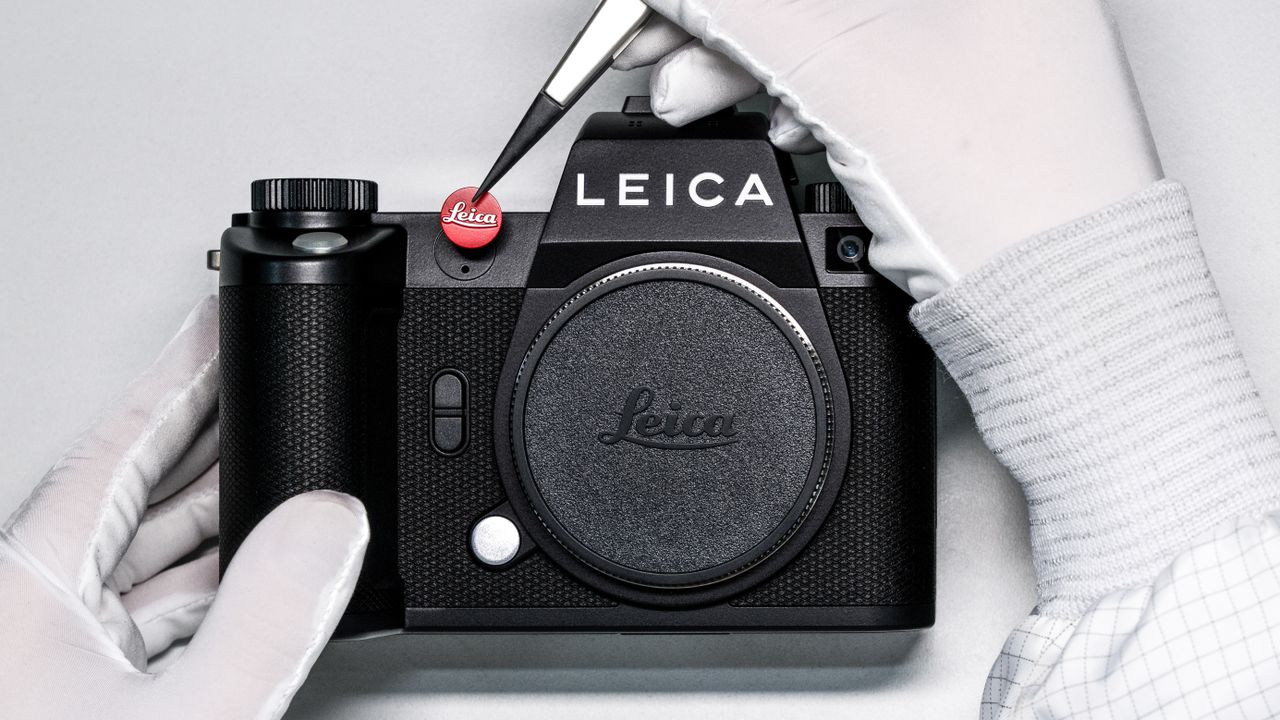
Leica is a camera company that has always dared to be different and do things that other camera makers wouldn't dare to do. This approach has proved to be a great success in recent years – and has brought the German company record-breaking profits.
While continuing with both its iconic digital and film rangefinder cameras, Leica has diversified into other areas. It continued to make compact cameras when others gave up on them – partly through its own Q range, but also in collaboration with Fujifilm and Panasonic.
Working closely with other companies has become part of the Leica success story, with Xiaomi on camera phones and founding the L-Mount Alliance for mirrorless lens production.
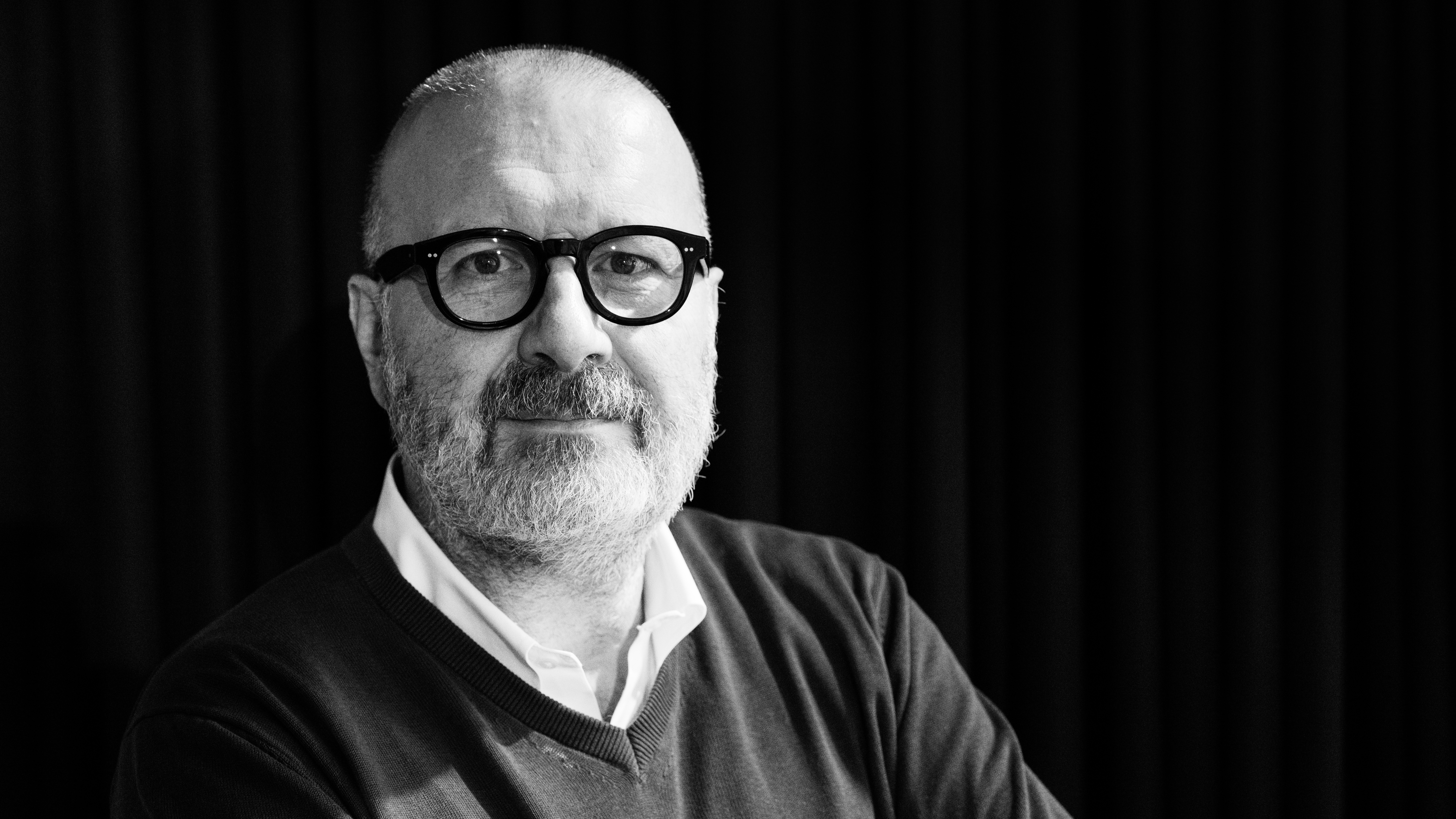
On a recent trip to the company's Wetzlar HQ for the launch of the Leica SL3-P, I had the opportunity to talk to Andrea Pacella, Leica's VP of global marketing and communications, and quiz him to find out more about Leica's innovative approach…
I was really interested in something you said about the launch of the SL system – that you were now swimming in a wider sea with more competitors. Do you want to explain how you see that?
Yes. Let’s take it from the past for a moment. Leica came out with the Leicaflex system in the mid-1960s after having dominated the market with the M3 and M2, and even before that with its rangefinder cameras.
In around 1965, Leica understood that there was a new market in photography that had been immediately dominated by Nikon with the Nikon F, later developing the F2 and everything else. But the Nikon F was really the breakthrough in terms of SLR cameras.
Leica had the Visoflex, so they understood there might be a need, but what Nikon developed in the late Fifties with the Nikon F was the game changer.
Leica somehow missed the train and went on making the Leicaflex cameras. They were great cameras mechanically – beautiful cameras, better than any other camera on the market – but too expensive, too limited in terms of lenses, and so on.
Then, Leica was always behind Canon and Nikon in developing professional cameras. Even when they moved from the Leicaflex to the R system – the R3, R4, R5 – they were still cameras that were somehow behind the Canon F-1 or the Nikon F3. We were always catching up.
Not to speak of autofocus; autofocus was invented by Leica. You can see it in the museum – the first autofocus cameras were developed by Leica. The project was called Correfot, and it was a real idea for autofocus. But I don't know if they didn't believe in it, weren't able to produce it industrially, or didn't have enough money to develop the project.
What happened is that the project was shifted to Minolta, who at the time was Leica's partner for electronics. Minolta was the first to launch an autofocus SLR camera with the Maxxum 7000. Leica was not able to hop on the autofocus SLR train, so we progressively lost ground.
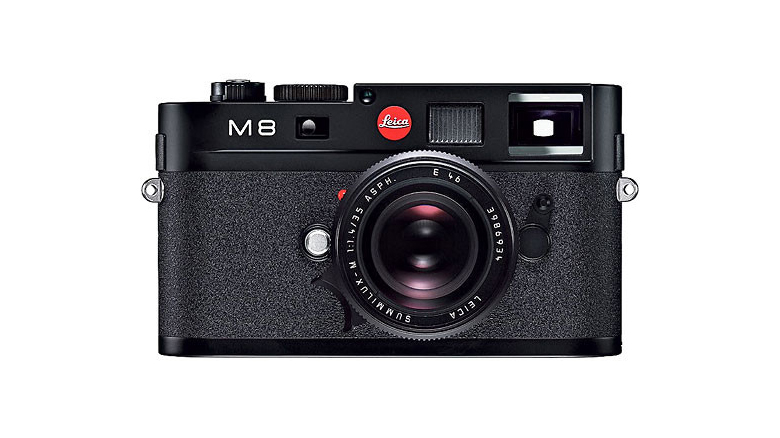
Then we entered the 2000s, when Leica was also late on digital. We caught up with the M8 and then the M9, and then we were back on track. We developed the S camera system, which was a DSLR, but it was big, had limited lenses, was medium format, and very expensive, so it was a very niche product.
At a certain point, the idea was: "What do we do? Do we go on with DSLRs?" No, because developing another one was no longer where the market was heading. "Can we only live with the M system?" We didn't know if that was feasible long-term.
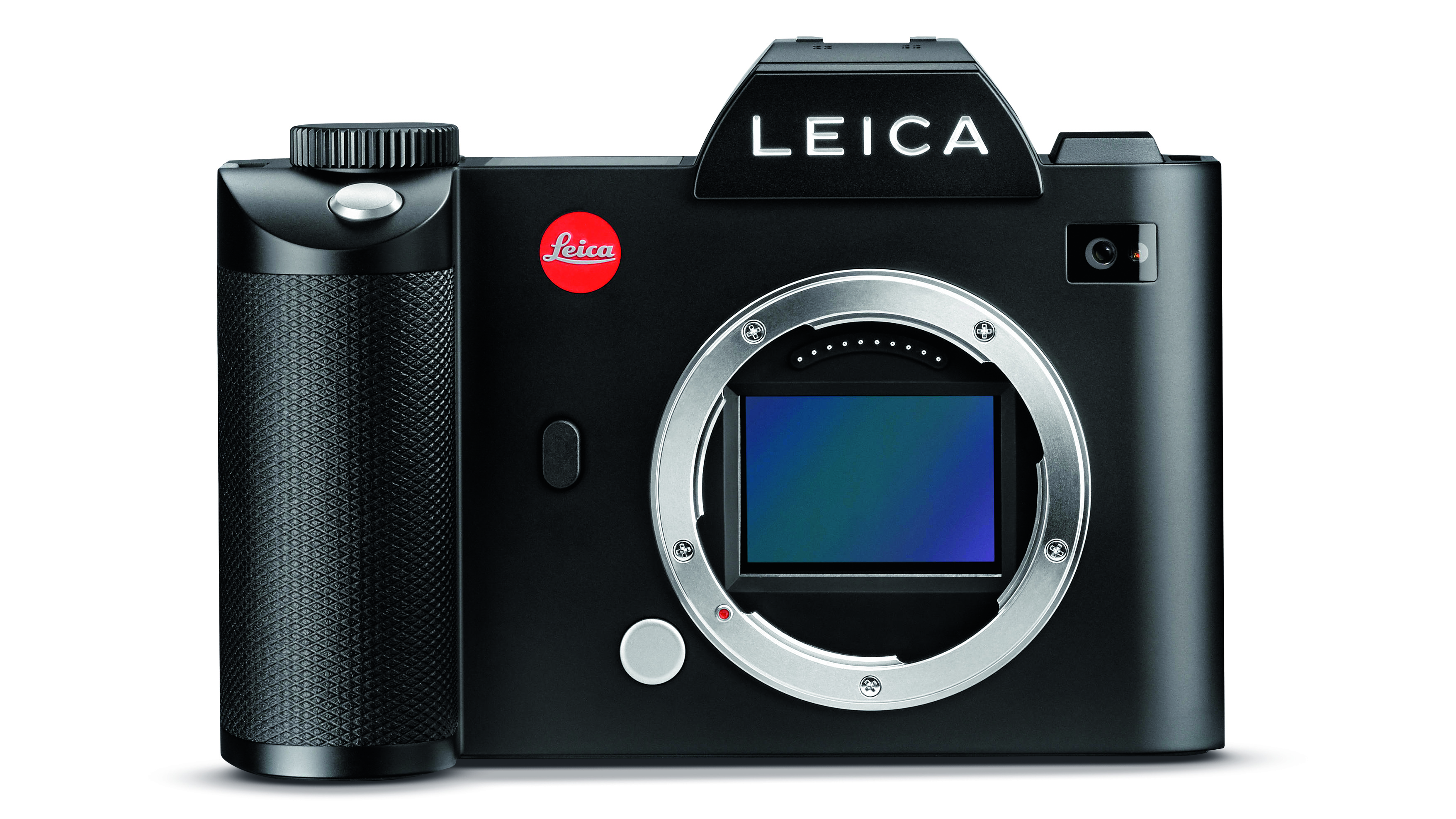
Then came the great idea to be among the first to move to full-frame digital mirrorless cameras. If you think back to 2015 when Leica came out with the first SL, the only full-frame mirrorless system on the market was Sony's. Nikon and Canon were still making DSLRs; they were very late.
So we were among the first, and we made a good decision to say, "Okay, we need to serve professional photographers. We need to give our customers an alternative to the M system."
We dared to try it and developed the first SL. That then became the SL2, then the SL3, up to the latest iteration, the SL3-S. So it was the right move to make.
The problem was that when we launched the first SL, there was no established mirrorless market. Sony was only selling the A7 series at the time, and it was half the price of our Leica SL. What changed later was that our competitors saw that Leica was having success in the higher price segment.
In the last five to six years, our competitors also started releasing flagship cameras at high prices – at "Leica prices." Sony added the A9 and then the A1. Canon brought in high-end mirrorless models like the R3 and R1 series.
They all brought in top-tier cameras, and paradoxically, if you look at the price lists – knowing street price is another story – the Leica SL is not the most expensive camera on the market any more. Canon, Nikon, and Sony all have cameras that cost as much or more than a Leica.
You mentioned going into an ocean that is more competitive, you've named your principal competitors, and you've now produced a camera that you describe as a no-compromise option. Would you say the competition now is more ferocious?
I think there is ferocious competition because this high-end segment of the market has expanded slightly. The higher tier of more expensive cameras has grown. It hasn't fully compensated for the collapse of compact and low-priced cameras, but it's a market where everyone is competing now.
In that market, paradoxically, Hasselblad and Fujifilm are also competing with their medium format systems, which are priced similarly to top full-frame cameras. Honestly, it's a trade-off when you choose medium format over full frame because you gain resolution, but you lose speed and overall operational performance.
However, a customer who has the money to buy a Leica SL3, a Canon R5 series or a Sony Alpha 1 also has the money to buy a Hasselblad X2D or a Fujifilm GFX. So it’s one single market: the market for high-end interchangeable lens systems, whether full-frame or medium-format.
There, the problem is that the whole industry has reached a plateau in terms of sensor resolution and raw performance. Customers are no longer interested in jumping from 44MP to 60MP to 100MP. The megapixel race has ended, and now manufacturers are working more on the overall system, build quality, usability, and dynamic performance.
Again, we thought there was a dedicated space for Leica because image quality and glass are becoming more important. With the SL system, we are able to deliver a complete package – a camera that handles everything a photographer or videographer needs, short of specialized scientific applications.
So you feel you're right there in the mix now, but everyone else is there too.
Yes, everyone has competitive bodies now. Some are less expensive, some are priced similarly, though street prices vary.
There is also a structural difference: we think in terms of thousands of cameras per year, whereas our competitors think in terms of hundreds of thousands. They have to be much more aggressive.
We rely on very selective distribution – our Leica Stores, Leica Boutiques and a small number of authorized multi-brand dealers. There might only be 300 to 400 points of sale globally for a Leica.
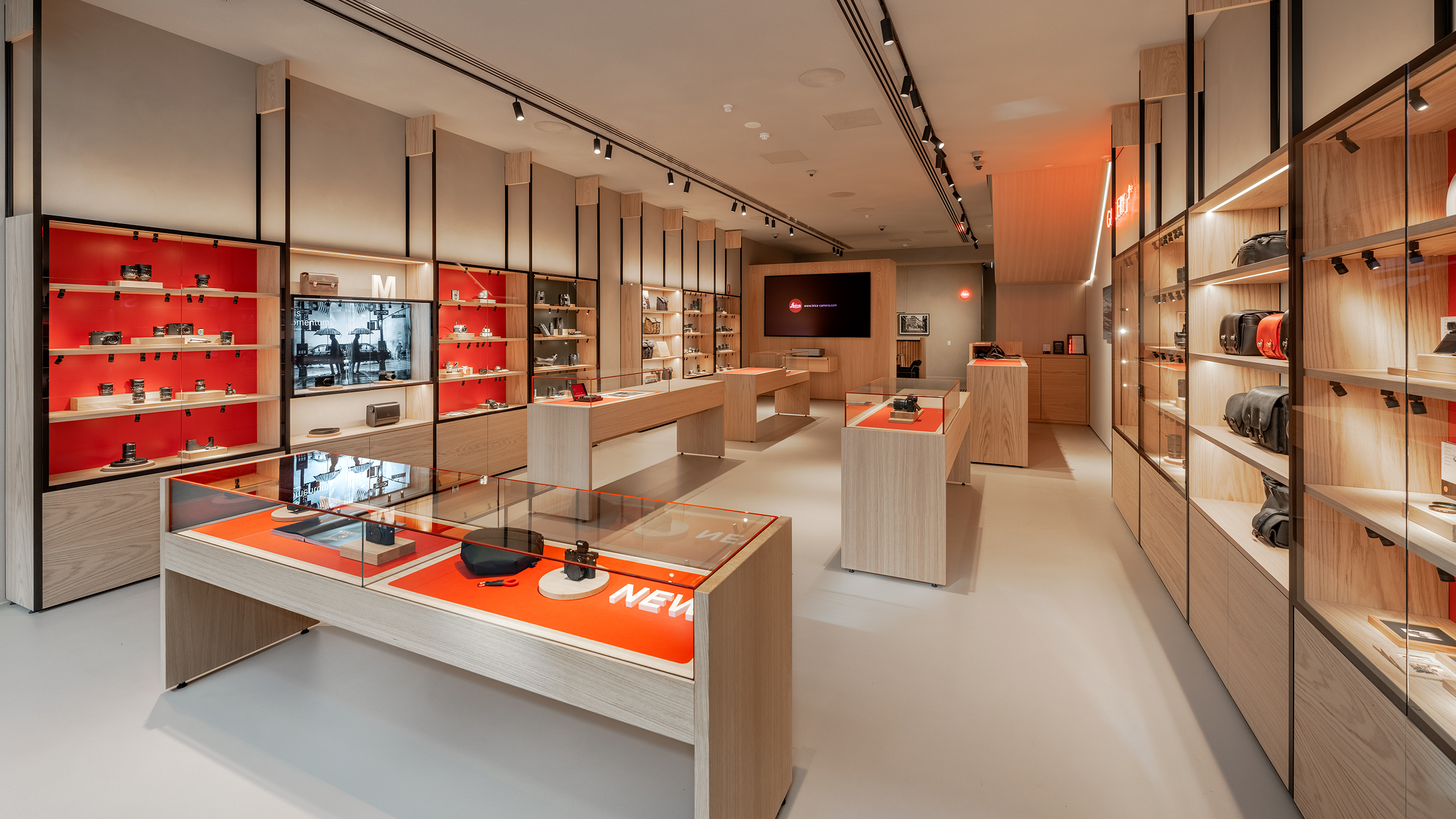
What percentage of cameras do you sell through your own stores compared to the rest of your dealer network?
It depends on the camera line. For the M System and the Leica Q series, I would say it’s a bit more than half in our stores – around 60% in Leica Stores and 40% elsewhere.
When we look at the SL system, the dynamic flips: it’s about 30% in our stores and 70% through independent dealers. That's because people who buy professional production cameras tend to buy through specialized dealers for workflow reasons.
If you buy for videography, for instance, the camera is only one piece of the rig. You need cages, external monitors, microphones, media cards, matte boxes, and support systems. Leica Stores don't carry all those third-party accessories. To buy a complete professional video setup, you go to a specialist dealer.
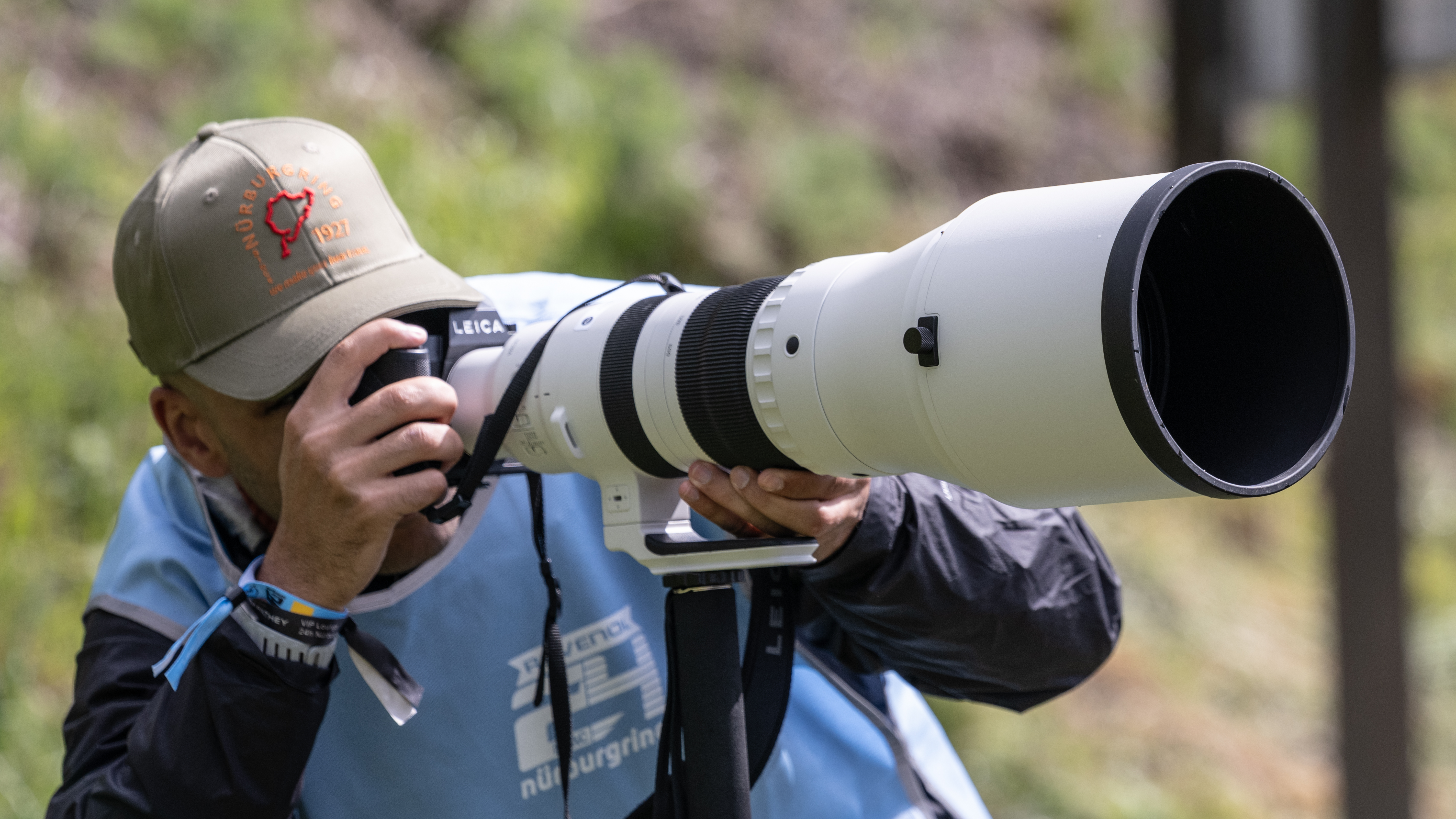
Speaking of lenses, there are over 130 native L-Mount Alliance lenses available, and Leica makes about 17 SL lenses natively. Given that the latest SL bodies lean into high-speed action and sports capabilities, do you feel Leica should manufacture more first-party telephoto glass?
We are working on expanding the lineup and filling remaining gaps. The 100-400mm was strongly requested. We have the 70-200mm f/2.8, and we still have the 90–280mm, which is heavy, but its optical performance is unmatched.
For extreme telephotos, it makes more sense for us currently to leverage the Alliance and recommend lenses like the Sigma 300-600mm f/4 or Sigma 500mm f/5.6. We recently had photographers using Sigma glass on SL bodies at Formula 1 events and motorsport shoots with outstanding results.
We have no hesitation suggesting Sigma optics to our users where appropriate.
Looking at that market, what is the next gap in the SL lens lineup you need to fill?
Size and weight reduction. We are rethinking our optical design approach to deliver the exact same optical performance in smaller, lighter barrels.
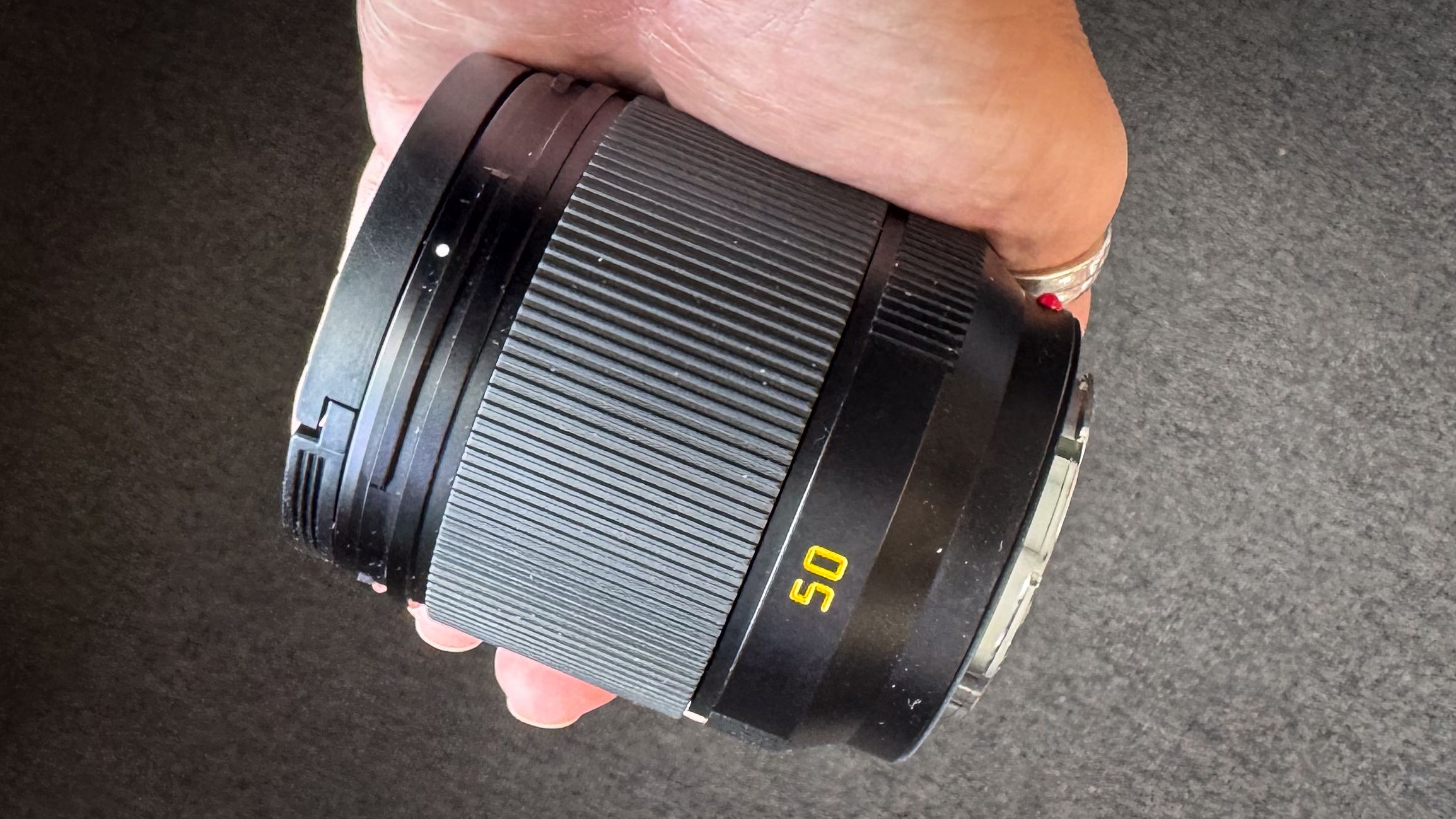
Our Apo-Aspherical primes are optically stunning, but they carry significant mass. You saw this design direction with our reworked 50mm f/1.4 Asph – the original version was quite large and heavy, whereas the redesigned iteration offers even better optical performance at roughly half the size and weight.
The immediate future for SL glass isn't necessarily adding exotic focal lengths – it's optimizing compactness and ergonomics.
Leica announced a joint development agreement with Gpixel regarding sensor technology. What is the realistic timeline before we see custom, co-developed Leica sensor architectures in shipping cameras?
Sensor development cycles are long. It is not something that allows us to launch a new camera next season; it will take several years to bear fruit.
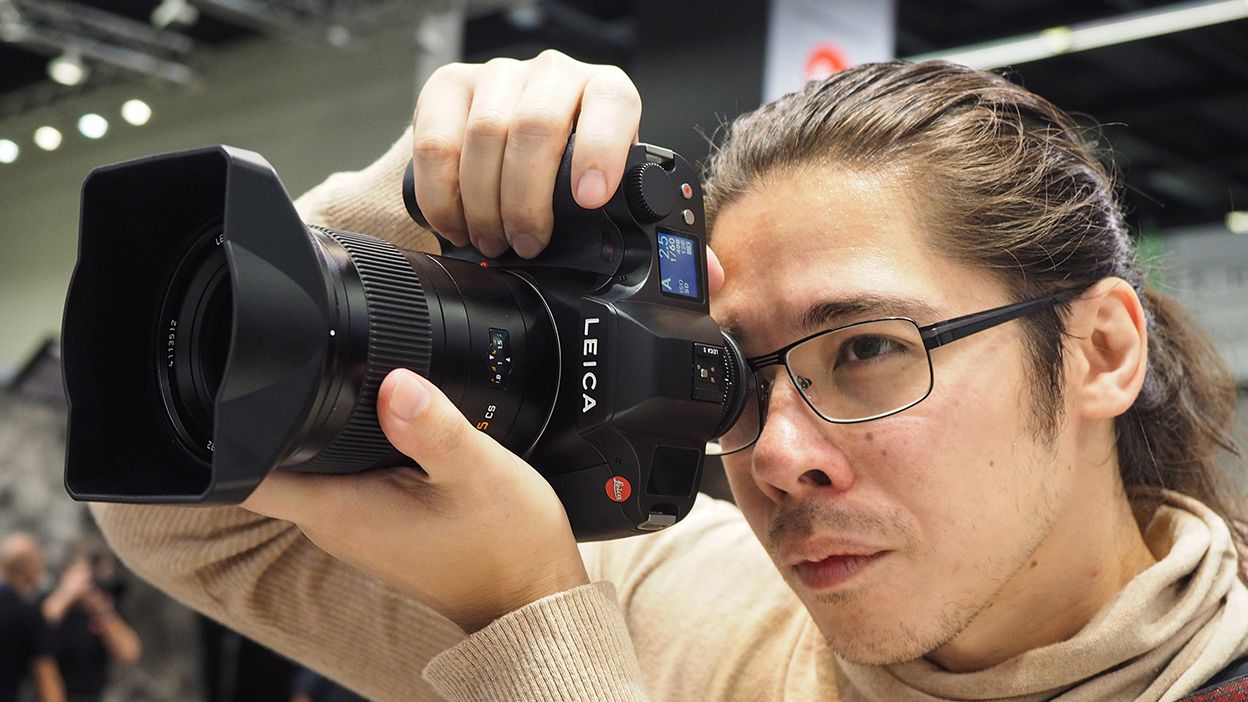
One of Leica's unique strengths is that while other brands abandoned legacy segments, Leica maintained film camera manufacturing and compact cameras. However, it sometimes feels like medium format (the S system) was set aside. Is that project still alive?
We haven't abandoned medium format. We had to pause development on the next-generation S camera due to broader technological shifts in processors and sensor architectures.
The industry is evaluating the next evolution of imaging processors. Most dedicated cameras still rely on traditional processor architectures like our Maestro series.
Meanwhile, mobile applications leverage mobile SoCs [system on a chip] like Snapdragon platforms, which currently aren't architected to handle full-frame or medium-format readout pipelines effectively.
Technology has hit a temporary structural plateau. The next major leap requires global shutter implementations, stacked architectures and next-generation processing platforms that are still maturing in the supply chain.
Because camera development takes 3 to 5 years, we have to design around technologies that will be available in 2030 and beyond.
Rather than releasing a camera costing over €20,000 that quickly becomes constrained by current-gen hardware, we paused the project until the underlying component ecosystem aligns with our performance targets.
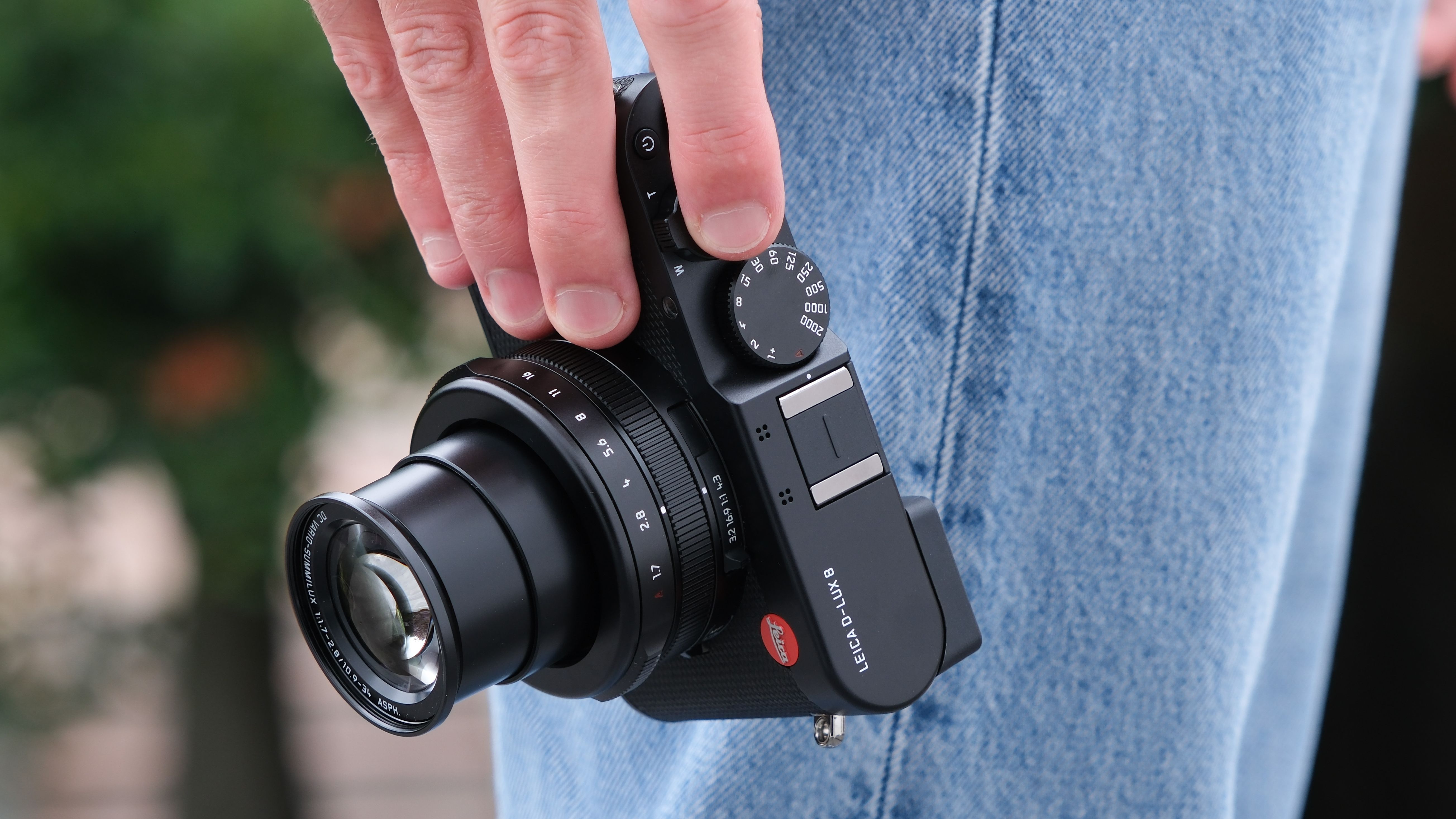
Fixed-lens compacts have seen a massive resurgence recently. Leica continued making models like the D-Lux series alongside Panasonic. With Panasonic recently re-entering that space, how do you approach entry-level premium compacts?
Even when equivalent models existed under the Panasonic umbrella at lower price points, customers chose the Leica D-Lux versions. The differentiator comes down to color science, physical build and user interface design.
Traditional Japanese camera menus can be overly complex, featuring dense menu structures and dozens of physical buttons. Leica prioritizes minimalist design, streamlined menus and intuitive physical controls. Camera operation should be an intuitive process, not a frustrating experience.
With models like the D-Lux 8, we remain heavily backordered. We are actively committed to maintaining a strong entry point between €1,000 and €2,500 to welcome younger creators, female photographers and new users into the Leica ecosystem.
How do you see your strategic partnerships – like the L-Mount Alliance, Panasonic, Fujifilm and mobile partnerships like Xiaomi – evolving over time?
Strategic alliances are essential for the future of the photo industry. While the premium hardware market is growing in total value, global unit volumes are lower than they were 15 years ago.
That shift requires brands to collaborate on shared underlying architecture – such as mounts, sensors or processing standards – while competing on brand identity, optical design, color science and user ergonomics.
Rather than duplicating massive R&D costs individually, technical alignment allows independent brands to remain sustainable and innovative.
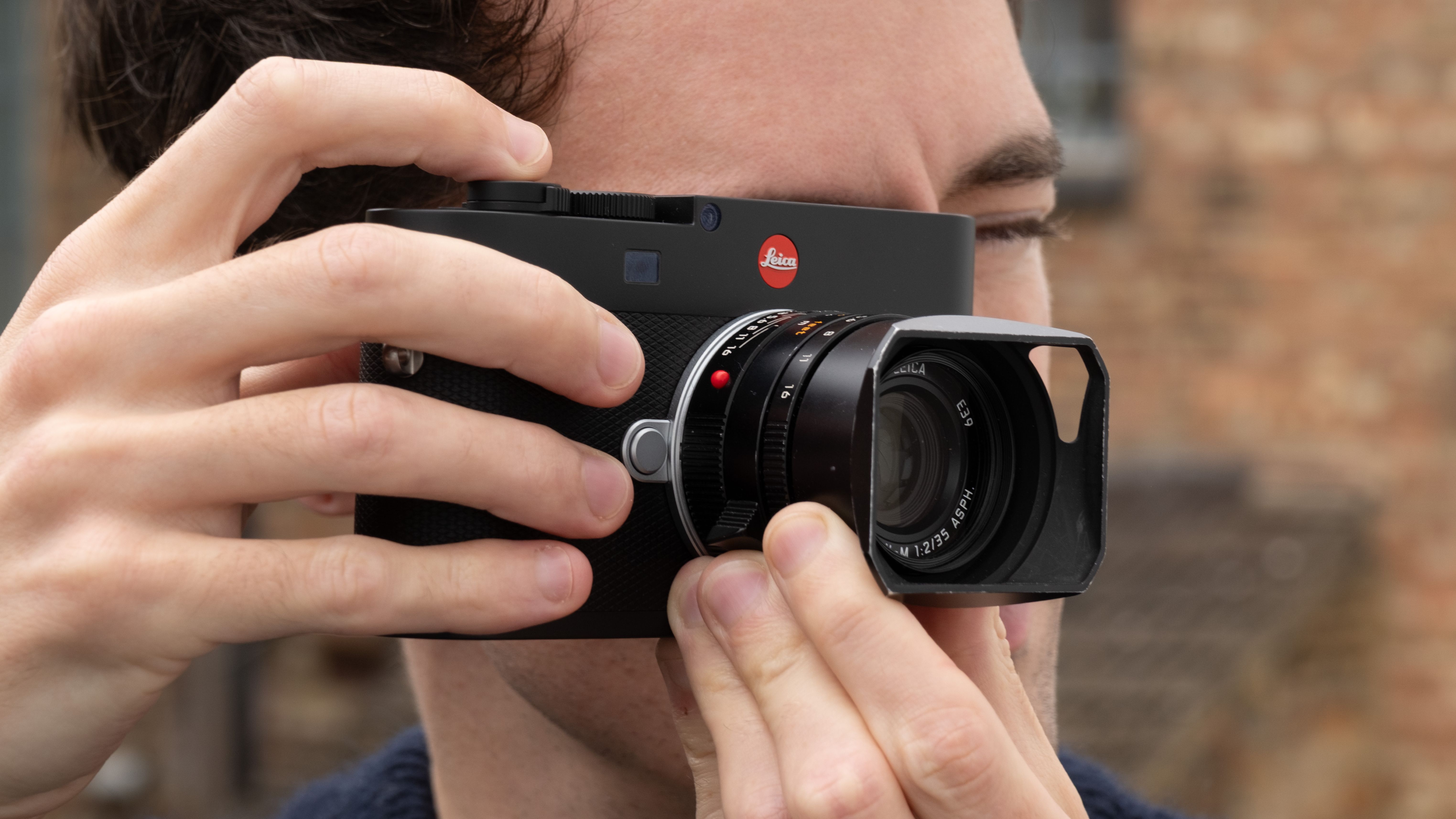
So let's end by talking about the M system. You launched the Leica M EV1 last year with an electronic viewfinder. That was controversial…
No, it's not. I don't think it's controversial; I think it's an evolution.
We knew that the M system has a lot of purists as customers. Paradoxically, those same hyper-purist customers initially considered digital to be an abomination, because for a true purist, it had to remain film-only. Eventually, most of those converts understood the advantages of digital and made the switch to the digital M.
Now, some of these same purists say, "Oh, but the M means only a rangefinder." Someone says that because M stands for Messsucher (rangefinder). But today, M stands for the M-mount – it means M lenses.
And honestly, a lot of people are getting older and having eyesight troubles.
Honestly, it really annoys me that I can't see my camera screen without putting my glasses on!
Yeah, I had progressive lenses made for that problem! But being honest: if I put a Noctilux on my Leica M11-P, I nail maybe one picture out of ten. If I move that lens onto an M EV1, I nail ten pictures out of ten in terms of precise focus marks. It’s a game changer.
If you want to shoot wide open with a 50mm, 75mm or 90mm, or on the flip side, if you want to make precise compositions with a 21mm, 24mm or 28mm, the M EV1 is the best camera to have.
It serves two clear purposes: It's the ultimate companion / second body, for existing M owners who want to use telephoto lenses or super-wide angles while keeping a 35mm or 50mm on their rangefinder M body.
It's also an easier entry point: It makes the transition to the M system much easier for newcomers.
What is unique about the M system today? It's manual focus. It's the only camera system remaining on the market that was originally designed from the ground up for manual focus, where the whole design philosophy is built around that manual experience. That is a pure pleasure.
If you do street photography, I will bet with anyone – and always win – that I can shoot faster on the street using hyperfocal distance with an M lens than anyone trying to rely on autofocus, because autofocus gets fooled far too easily in street environments.
So there are distinct reasons for anyone who enjoys manual focus. If you're new to the M system, it lowers the barrier to entry because the rangefinder mechanism can be intimidating.
It's also perfect for people who love vintage lenses with character, flare and imperfections, because through the EVF, you see exact real-time previews of what you're capturing.
It isn't a replacement for the Leica M11; it occupies a separate segment within the M system. It will find its place in many photographers' hands over time, the controversy will fade, and it will simply become part of the M family.
A lot of perceptive reviewers, photographers and customers have said it best: instead of complaining, look at it as an extra choice. If you like it, you buy it; if you don't like it, you don't. But we are offering another opportunity.
How is it doing in terms of sales?
It's doing well, though it moves at a steadier, lower-volume pace. Like the Monochrom bodies, these aren't high-volume mass drivers. We see an initial spike at launch, and then demand stabilizes on its own path.
If we only evaluated projects based on sheer sales volume, we would have stopped manufacturing analog film cameras years ago. We would have stopped making certain lenses that only sell a few hundred units per year. But should we stop making them? No, absolutely not.
You might also like…
Take a look at the best Leica cameras, along with the best Leica M lenses for rangefinders and the best Leica SL lenses for mirrorless.