Last July, the home secretary, Priti Patel, fired off a triumphant tweet: “We have published a clause to end so-called ‘rough sex defence’ which enables perpetrators to avoid justice by claiming their victims consented to rough sex.” The tweet was the result of rising fury over cases such as that of Natalie Connolly, the 26-year-old mother from Worcestershire, who in 2016 bled to death after sustaining more than 40 injuries, which her partner, John Broadhurst, claimed occurred as part of consensual sex. (His account was believed and he served less than two years for manslaughter.) In 2018, the campaign group We Can’t Consent to This began collating cases and found that uses of the so-called “rough sex” defence increased tenfold between 1996 and 2016 – and in 45% of cases had led to lesser charges of manslaughter rather than murder, or sometimes no charge at all.
This weekend, the Sunday Times reported that nine British soldiers made jokes about “choking” a Kenyan mother, Agnes Wanjiru, whose body was found dumped in a septic tank in Nanyuki, Kenya. Following a local police inquiry, a 2019 inquest presided over by a Kenyan judge concluded that one or two British soldiers were responsible for the death, but the MoD took no further action.
The subject of Patel’s tweet – section 71 of the Domestic Abuse Act (DAA), which states that a defendant cannot use the defence that the victim “consented to the infliction of the serious harm for the purposes of obtaining sexual gratification” – was going to change all that. Except it has not.

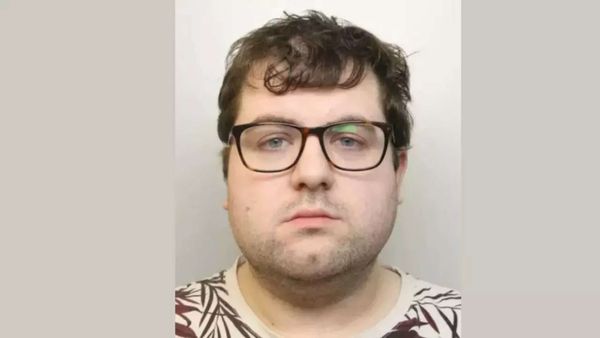
Barely a year later, on 7 September, Sam Pybus, from Middleton St George, a village near Darlington in County Durham, was sentenced to just four years and eight months after pleading guilty to the manslaughter of Sophie Moss, a vulnerable mother of two. (He could expect to serve half that; compare this with the sentence this month of Penelope Jackson, 66, who will serve a minimum of 18 years for the murder of her husband, David Jackson, a man she claims was violent and coercively controlling; their daughter had seen him holding a knife to her mother’s throat.)
At Pybus’s sentencing hearing, the court heard that, late on a Saturday night last February, after drinking 24 bottles of Amstel lager, he left the home he shared with his wife, Louise Howitt (who was sleeping upstairs), and drove to Moss’s home in Darlington. Although Pybus claimed to recall little of what happened, Moss died after “sustained pressure” to her neck, something Pybus claimed Moss “enjoyed and encouraged” during sex.
According to his account, Pybus awoke in the early hours to find his hands were hurting and Moss unresponsive beside him. Rather than administering first aid or dialling 999, he got dressed, left the flat and sat in his car for 15 minutes, deciding what to do. Then he drove to the police station to give his story. His lenient sentence has sparked another outcry – and been referred to the court of appeal by the attorney general. The case is currently expected to be heard on 12 November.

So what went wrong? Harriet Wistrich, the director of the Centre for Women’s Justice, who has spent decades fighting discrimination in the justice system around male violence against women, admits that even she was surprised by the Pybus case, occurring so soon after the new clause was enacted. “I think it’s an embarrassment to the government that, having passed this law, heralded as a new intervention, you get the same outcome,” she says. “In a sense, though, the DAA amendment did little more than codify what had already been determined. The legal principle that a person cannot legally consent to being injured or killed was already established. The amendment doesn’t outlaw ‘rough sex’ as a defence.”
In cases like Pybus’s, Broadhurst’s or any other so-called “sex game gone wrong”, the critical issue is not the victim’s consent – it is the defendant’s intent. And the judge in Pybus’s case accepted that he did not intend to kill. A murder charge requires proof beyond reasonable doubt that someone intended to cause serious harm or death – and a statement from the Crown Prosecution Service (CPS) North East claimed that, with Pybus, the evidence for this was insufficient.
“For me, the most concerning thing is, first, the way the case was investigated,” says Wistrich. “Was it with a view to determine whether Pybus was dangerous and a risk to women, or was it a search for evidence to stand up his story? Second, the readiness with which the CPS seemed to accept that evidence, instead of putting it to a jury, is impossible for me to understand. Third, the length of the sentence just seems so inappropriate.”
Some of those closest to the case agree. Howitt, Pybus’s estranged wife, and Daniel Parkington, Moss’s former partner and the father of her children, have been shocked by how quickly and easily Pybus’s narrative slipped through. “The police told me at the very start that the charge would probably be downgraded to manslaughter,” says Parkington. “It always felt like they were accepting the easy option. If it’s tricky to take this person to court for murder and let a jury decide, you get the sense that they’d rather accept a guilty plea to manslaughter and go for the slam dunk, the tick in the box. Move on. Next case.”

Parkington, 39, who works for his family’s telecom business, lives 10 miles from Darlington with the boys, aged five and six, he fathered with Moss. He met Moss nine years ago when she worked in a stable yard and as a personal trainer in the local gym. “She was a hardworking girl with so much charm and charisma,” he says. “When Sophie entered a room, you knew she was there. I first introduced her to my family at my mum’s 60th birthday dinner. They were amazed by how perfect she was. And she was perfect.”
The couple moved to a tiny cottage in the village of Bolton-on-Swale, North Yorkshire, before relocating to Darlington just before their first son was born. After six years, they separated – Parkington says Moss’s deteriorating mental health and alcohol dependence were factors, although he stresses that he carries much of the blame. It was, he says, in the boys’ best interests that the couple lived apart. Parkington had custody, but Moss remained central to all their lives. She would meet them at the school gates most mornings to see the boys into school. They would FaceTime every evening. They stayed with her on a weekly basis.
Parkington would bring food to Moss at her flat and order her takeaways to make sure she was eating – two months before she was killed, she was seriously ill in hospital with liver and kidney infections. There was no doubt that Moss was extremely vulnerable to abuse. Parkington says he had witnessed one male visitor arrive at her flat at 9am with two bottles of wine. He had seen another – a local solicitor – bring wine in his lunch hour. “I used to tell Sophie’s friends that, if we didn’t stop this, one day she’ll turn round and say: ‘I’m not in the mood,’ and some man is going to kill her.”
There were also, he says, high value items going missing from her flat, and money disappearing from her account on a monthly basis. (Parkington is convinced that CCTV footage at her local cash machine would confirm that someone else was using her card.)
On the night Moss was killed – before Pybus had arrived at her flat – she had texted Parkington and asked him to order a taxi to take her to hospital, as her ankles were swollen and she was struggling to walk. Unfortunately, Parkington was already asleep and did not see it until the morning. He refuses to accept that, just hours after texting him, Moss died by accident as a result of consensual choking.

Parkington says: “When the police told me, I immediately said: ‘No way.’ She didn’t enjoy that type of thing. I knew Sophie better than anybody. She had the lowest pain threshold of anyone I’ve ever known. Sophie’s long-term boyfriend told the police the same thing. But the police accepted the account of Pybus and another unidentified person who used to visit her, who was not put in front of a jury to decide whether he was credible. All the judge heard were good character references for Pybus, and his terrible remorse.”
Howitt, a teacher studying for a PhD in linguistics, agrees that the investigation did not delve deeply. When the police arrived at her house on the Sunday morning, their first question was: “‘Did Sam ever strangle you in bed?’ It seemed like they took his narrative then looked for evidence to support it,” she says. “They were concentrating so much on: ‘What did he do?’ and: ‘How did he do it?’ The truth is that, yes, there were things he did to me when I was young and a bit naive and at the time I thought: ‘This is what people do.’ But it’s really important that there were never any conversations about it first. Sam never, ever asked before he did it.
“The police didn’t dig any deeper about our marriage,” continues Howitt. She claims that Pybus had got the couple into £10,000 of debt due to reckless spending and payday loans. At one point, she had discovered he was texting numerous local women and sleeping with Moss, but whenever she tried to leave, Pybus would break down and threaten to kill himself. “He was so good at manipulating you and making you feel sorry for him,” she says. “If they’d really looked into Sam’s history with women, they would have found abuse, sexual violence and just a complete lack of respect.”
(Another former partner wrote on Facebook when the case became news: “I’m just gonna put this out there before all the messages flood in. Yes, this is THAT Sam … I just hope that now nearly 10 years later those people who didn’t believe my words as a young 19-year-old girl or judged me without knowing both sides now know what this boy is capable of.”)
Once the police had confirmed that Pybus had practised strangulation during sex in the past, and once the CPS had accepted his manslaughter plea, there was still scope for a lengthier sentence. Much depended on the judge’s decision around Pybus’s culpability, which can range from very high to low. According to sentencing guidelines, high culpability includes cases where death resulted from “an unlawful act which carried a high risk of death or GBH which was or ought to be obvious to the offender”. This carries a sentence range of between eight and 16 years.
Instead, Pybus seems to have been deemed to have had medium culpability, which carries a sentence range of three to nine years. On top of this would be a reduction for a guilty plea, and possible mitigating factors such as remorse and good character. (It seems an injustice that use of a weapon is an aggravating factor when it comes to sentencing, whereas strangulation, the second most common method of femicide, is not.)

Fiona Mackenzie, the founder of We Can’t Consent to This, has found the case hugely disappointing. “What’s so upsetting, right after the new amendment, is that it’s immediately been demonstrated that police are not getting it, the CPS are not getting it and the judge did not get it,” she says. “So what is the government going to do? Do we need more training? New guidelines for prosecution or sentencing?” In the meantime, she hopes the impending appeal will increase Pybus’s sentence.
Wistrich, along with We Can’t Consent to This, is exploring the possibility of bringing a third-party intervention to the appeal, to introduce additional points for consideration from witnesses including Howitt, who remains adamant that justice was not served. “Sam has written from prison,” she says. “His letters are infuriating – all about making me feel sorry for him. He says he’s so depressed, he has nothing in common with the other prisoners. Not once has he ever said he was sorry for killing Sophie or taking her away from her children.”
Moss’s sons still call for their mum when they fall or hurt themselves. When Moss was killed, the UK was in lockdown, so, at home in his little bubble, Parkington put off telling his boys for several weeks. It was only when schools were reopening that he told them their mummy had been in hospital again and this time doctors couldn’t save her. Sophie loved cats – she had four when she died, three of them rescues. The boys have taken one each. “They love them and I’m sure it keeps their memories of their mummy more recent,” says Parkington. “We can’t kid ourselves, though. There’s Google. They only need to type in their mum’s name and all this will be there – and by the time that happens, the man who killed her could be out and free.
“It consumes me. I think about it every minute of every day. It makes me so, so angry and that anger isn’t all at him. A lot of it is to do with these people in powerful positions who make decisions that just aren’t right. No sentence would be long enough in my mind, but how can this one ever be seen as fair? If the appeal isn’t successful, then I just lose all faith. Surely there have got to be some good people out there.”
• This article was amended on 3 November 2021. Sam Pybus did not stand trial, as a previous version suggested, because he pleaded guilty to the manslaughter of Sophie Moss.