
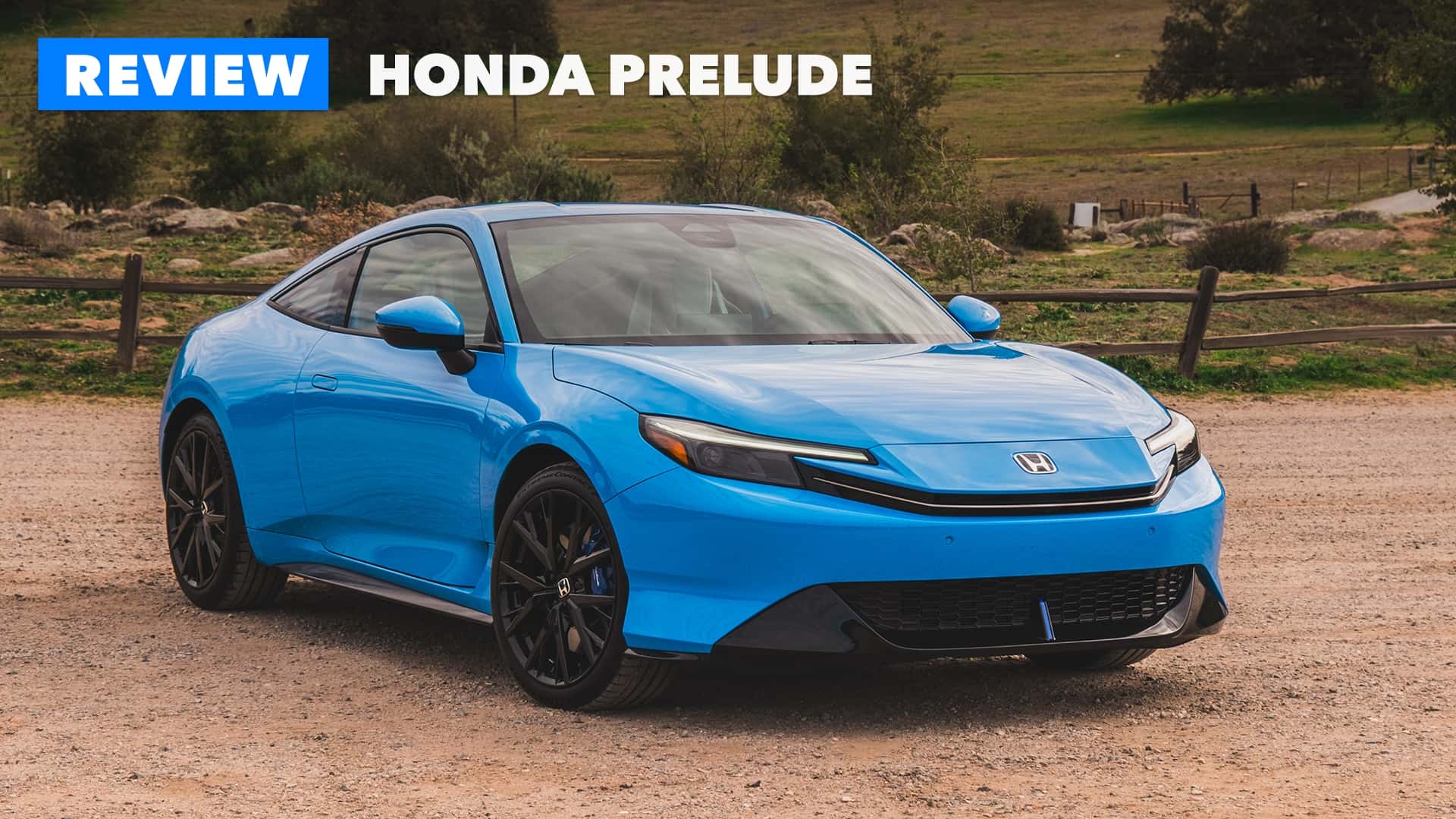
I was really rooting for the new Prelude. I wanted to be absolutely flabbergasted by its performance and marveled at its clever engineering—blown away by the fact that Honda was able to get this much out of what is, essentially, just a Civic Hybrid in a new suit.
Instead, I walked away from my first stint in the Prelude perfectly… whelmed. It’s a good car, don’t get me wrong. The design is beautiful, the cabin is comfy, and the dynamics are more than sporty enough for the majority of people shopping in this class.
But for a car that starts north of $43,000, I’m not sure that "good" is good enough.
| Quick Specs | 2026 Honda Prelude |
| Engine | 2.0-Liter Four-Cylinder Hybrid |
| Output | 200 Horsepower / 232 Pound-Feet |
| 0-60 MPH | 6.5 Seconds (est.) |
| Fuel Economy | 46 City / 41 Highway / 44 Combined |
| Base Price / As Tested | $43,195 / $44,000 (est.) |
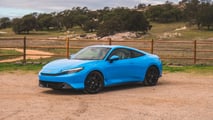
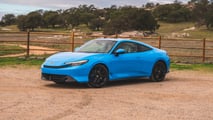
But let’s start with the good stuff: The new Prelude sure is pretty—prettier than any Toyota GR86 or Subaru BRZ has ever been. Instead of aggro, angry elements designed to let onlookers know that this is, indeed, a sporty car, Honda opted for a sleeker, softer aesthetic that’s far too uncommon these days.
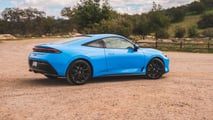
The halo-like upturned headlights give the Prelude a softer face, while the rakish windshield flows over the roof and into a stylish fastback-style rear. The shape is lovely. The light bar in the rear gives off shades of the Porsche Taycan (no bad thing), while the new lowercase "honda" wordmark sits just below it. It doesn’t really look like Preludes past, but then again, that car’s design was pretty idiosyncratic across its first five generations, too.
Buyers can pick from any color, so long as it's Rallye Red or Boost Blue Pearl ($455)—such as the car pictured here. A set of 19-inch Berlina black wheels comes standard, but directional 19-inch, two-tone wheels are available for an extra $2,156.

Pros: Beautiful Design, Peppy Powertrain, Smart Gearbox
The interior comes with the choice of standard jet black leather or a combo of blue and white. The latter adds light accents to the lower portion of the dash and the center console, giving the otherwise understated cabin a nice pop of brightness.
Honda’s signature egg-crate air vent design carries over from models like the Civic, as do the ultra clicky knobs for things like the temperature controls. In a world of touchscreen overload, these features are very nice to have.
The Prelude’s standard 9.0-inch touchscreen is bigger than what alternatives like the GR86 and BRZ offer (8.0 inches), but that’s about where the accolades end. The screen is undersized and of unreasonably low quality for a touchscreen here and now in 2025. The backup camera is way blurrier than it should be, too.
The 10.2-inch digital instrument cluster is ripped straight from other Honda models like the Accord, CR-V, and Pilot. It projects a ton of information and is highly configurable, but it’s a bit too cluttered. Some simplification of the UX would go a long way here.
Cons: Loud On The Road, Already Outdated Technology, Overpriced
The driver’s seat is well bolstered but not uncomfortable. Your butt and back won’t ache over hours of driving—like they probably might in the Civic Type R’s chairs. Getting comfortable does require a bit of finagling, but once you find that sweet spot, there’s really no issue.
Don’t even bother trying to get into the back seat, though. Much like the GR86 and BRZ, the rear bench is mostly useless; I tried to squeeze my six-foot-tall self behind the driver's seat and couldn’t even sit entirely upright, as this video shows:

Driving through the twisty mountain roads that connect Oceanside, California, with the inland towns of Julian and Santa Ysabel, one thing is immediately clear: The Prelude is loud. Not loud in a good way, either—road, wind, and tire noise echo throughout the cabin. Trying to talk to your passenger takes a bit of voice-raising.
The ride isn’t exactly cushy, either. Even though Honda touts the Prelude as its "Grand Tourer," the two-door crashes down hard on broken pavement. The 19-inch wheels and lower-profile tires—while they certainly look cool—definitely don’t help the Prelude’s ride quality.
In a surprising twist, though, the otherwise understated hybrid powertrain does actually sound pretty good. I know—most of what I’m hearing is sound pumped in through the speakers, but it’s a nice note nonetheless, that’s far more engaging than in any traditional hybrid. Even from the outside, the exhaust has a subtle burble similar to something like a BRZ.
Unwinding through mountain roads, the Prelude’s 2.0-liter hybrid powertrain has similar pep to something like the Civic Si. It sends 200 horsepower and 232 pound-feet of torque to the front wheels through what Honda calls a "direct-drive hybrid system," which acts in place of a conventional transmission. More on that in a second.
Admittedly, the Prelude won’t blow you away on its way to 60 miles per hour, which some estimates suggest could take around 6.5 seconds. But off-the-line acceleration is better than you think; there’s a generous amount of instant torque from the electric motor before the gas engine kicks in. That throttle is snappy and instantaneously responsive; not a hint of lag to note.
Point the Prelude’s nose into a corner, and it absolutely glides through turns. While not as scalpel-sharp as the Type R or even as tight as an Si—even with the dual-axis strut front suspension adapted from the Type R—the Prelude has excellent body control and a tight steering rack. It’s fun and easy to weave this car through mountainous roads.
But back to the transmission. It’s not a CVT by definition, but it certainly has shades of a CVT in its DNA. For the most part, the direct-drive system is perfectly unremarkable, anonymously doling out power when you need it. But press the “S+” button to the right of the shifter and flick the paddles on the back of the steering wheel to activate the faux gear shift function.
The “gear changes” are quick, delivering an extra jolt of power on downshift or pulling the car along on upshift, as you’d expect in any traditional automatic. But it’s not quite convincing enough to feel like a “real” gearbox—it’s closer to a video game.
Even without S+ Shift activated, do make sure you’re ticked over to Sport mode for the most engaging experience. In the standard GT mode and Eco driving modes, there’s a dramatic difference in steering feel and acceleration; Eco mode is really only good for the thriftiest of driving conditions (ie, bumper-to-bumper traffic).
Maybe most impressively, the Prelude still somehow manages an impressive 44 miles per gallon combined. That’s not as good as the Civic Hybrid—49 mpg combined—but it’s still a pretty ridiculous return for something this sporty.
Verdict
When taken at face value, the new Prelude certainly does a lot of things right. It’s stylish, efficient, and genuinely nice to drive. Honda calls it its "halo car"—a showcase of what’s possible with the brand’s current hybrid powertrain. And I’ll buy that, sort of.
The problem is that it also commands halo car money (relative to the rest of the Honda lineup): $43,195, including destination. Even if Honda insists it isn’t chasing the BRZ, GR86, or Miata, it’s hard to ignore that this Prelude costs at least $10,000 more than each of them.
Ultimately, the Prelude does deliver on its premise: a stylish, sporty hybrid coupe that showcases Honda’s best and brightest hybrid tech. If only it delivered on price, too.
Honda Prelude Competitors

2026 Hond Prelude