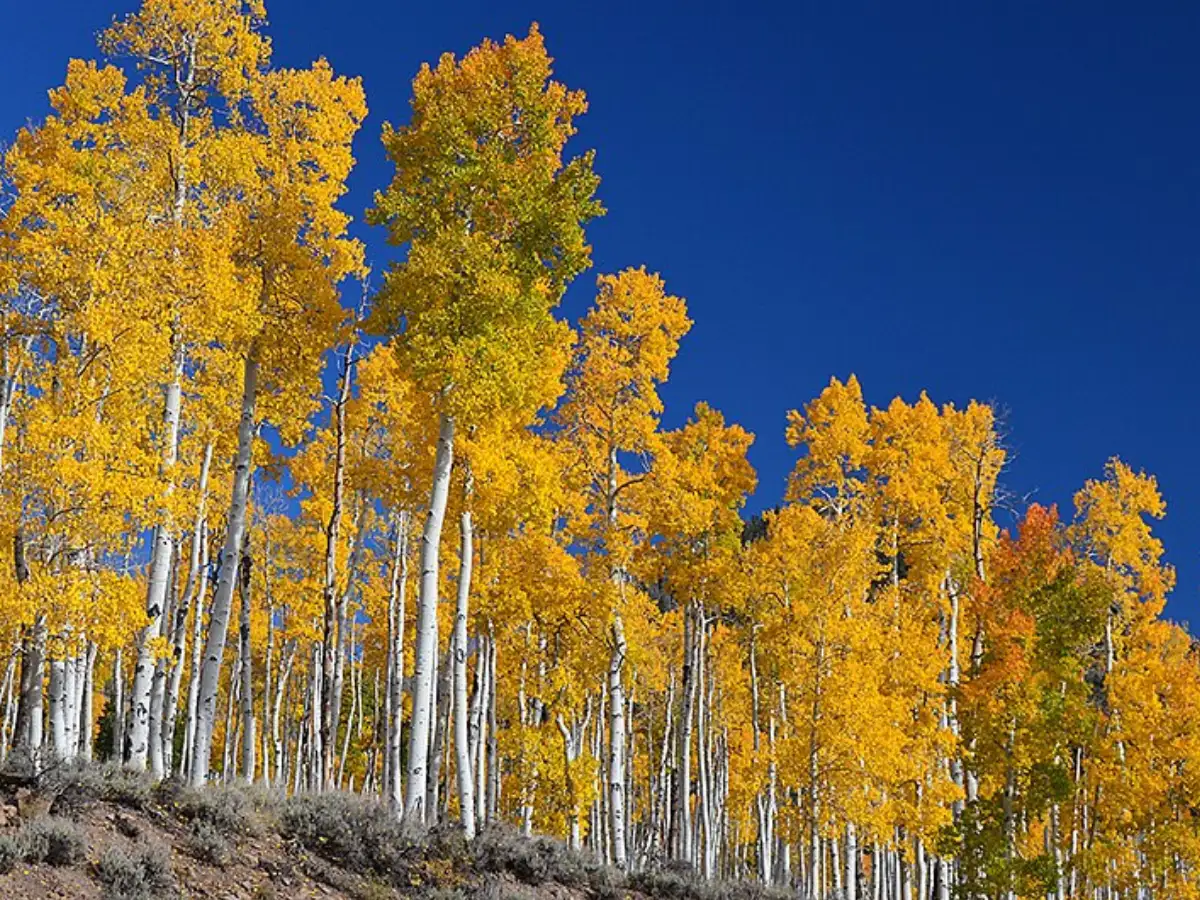
Somewhere in south-central Utah, there's a forest that isn't really a forest. It looks like thousands of individual aspen trees swaying in the wind. But underground, they're all a single living organism, sharing a single root system. Scientists call it Pando, Latin for “I spread.” The molecular genetic study, ‘“Pando” lives: molecular genetic evidence of a giant aspen clone in central Utah,’ published in the Western North American Naturalist, notes that Pando is one giant clone, not a normal forest. The whole story is built on the science of genetic testing.
If you grew up thinking the largest living things on Earth were blue whales or giant sequoias, Pando may change that impression. Pando beats them both in pure weight. It is a striking example of how a single organism can spread over a vast area.
What exactly is Pando
Pando is a colony of quaking aspen trees in Utah’s Fishlake National Forest, a three-hour drive south of Salt Lake City. It is estimated to contain some 47,000 stems, the parts that look like individual trees. But they are all genetically identical. All of them are connected underground by one root system spanning approximately 106 acres, larger than 80 football fields.
The genetic study in the Western North American Naturalist found that samples taken from the entire grove had matching DNA, confirming the entire grove is one organism, not thousands of trees that just happen to grow close together. The same research helped confirm the scale of the underground root system.