Major Thai energy firms have divested their power plant assets to divert money to clean energy.
Industry analysts say while the asset sales by Electricity Generating Plc (Egco), Banpu Power Plc and BCPG Plc, the power generation arm of Bangchak Corporation, may superficially resemble a withdrawal of Thai capital from Western markets, each transaction is underpinned by distinct strategic, corporate and legal motivations aimed at optimising portfolios for a low-carbon future or higher renewable exposure.
PORTFOLIO ADJUSTMENT
Over the last few years, major Thai energy companies have optimised their portfolios through asset monetisation and recycling, leading to significant sales of power plant shares.
They have sold all or part of their stakes in power plants not because they are abandoning those markets, but rather reshaping portfolios during the global energy transition, said analysts.
The strategies for power plant sales have shifted from a need for cash, debt reduction, or because a project's high‑return phase had run its course. Many companies now sell to reallocate funds for faster-growing businesses, in preparation for high interest rates, to reduce portfolios with excessive fossil fuel power plants, and to capitalise on the artificial intelligence data centre market with high demand for both electricity and water.
Power plant investors are also preparing to become renewable power suppliers, entering the first phase of the direct power purchase agreement (PPA) scheme to directly supply clean power to data centres.
According to the Energy Regulatory Commission, authorities are preparing to pilot the direct PPA scheme, which bypasses Thailand's restrictions on peer-to-peer power trade to facilitate clean electricity purchases for data centre operators.
These energy companies expect many more phases of direct PPA development, as the digital business extends beyond data centres to include semiconductors and other related sectors, noted analysts.
In addition, businesses want to participate in greenhouse gas emission reduction projects under the EU's Carbon Border Adjustment Mechanism, which is already being enforced.
ASSET SALES
So far BCPG, Banpu Power and Egco have all shifted their investment strategies, signalling notable changes in direction in the energy sector.
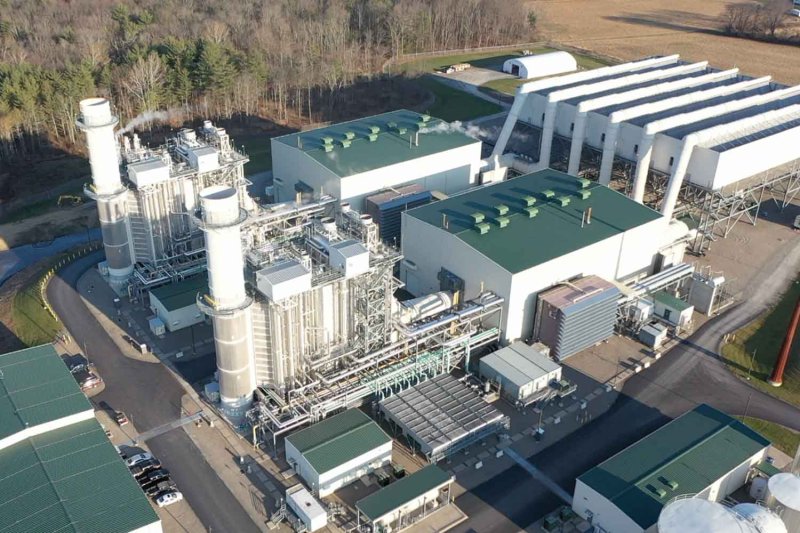
On May 28, BCPG announced it changed its investment plan in the Hamilton gas-fired power generation facilities in Pennsylvania, the US. BCPG said other shareholders, who own a 75% share, made a legal agreement that forces it to sell its shares if they decide to sell theirs.
This rule is called "drag‑along rights" under Delaware law, and obliged BCPG to sell its shareholding to a third-party buyer alongside the majority owners.
The sale yielded substantial cash that BCPG intends to reallocate towards its Asian smart energy and technology portfolio.
Rawee Boonsinsukh, president and chief executive of BCPG, said the proceeds from the transaction will be used to support the company's strategic investments in clean energy and related infrastructure businesses, to repay part of our loans, and to strengthen working capital to support sustainable long-term growth.
In February, Banpu Power, which is merging with its parent firm, finalised the divestment of a 25% stake in the Temple I and Temple II gas-fired power plants in Texas. The stake was sold for roughly US$230 million.
Issara Niropas, chief executive of Banpu Power, said the transaction aimed to elevate the company to a leader in utility‑scale power and integrated businesses to support the energy transition.
Banpu Power did not specify its clean energy project investment, but industry observers say clean energy development aligns with the company's vision.
Early last year, Egco turned asset recycling into green infrastructure by selling its 49% stake in the Rhode Island State Energy Center, the operator of a 609-megawatt gas-fired facility in the US, to Shell Energy North America.
The divestment came when the stock price was high, coinciding with peak electricity demand, when power generation was running at full capacity to keep up, securing Egco substantial profits.
Egco used the money to fund its "Power 4" corporate strategy, which eschews fossil fuel infrastructure and channels money into high-growth, low-carbon technologies.
The company is interested in utility-scale battery energy storage systems, small modular reactor technology, and advanced renewable developments spearheaded by its US clean energy subsidiary Apex Clean Energy.