*Content warning: this article discusses themes of sexual assault*
Koro is one of the hundreds of homeless people living on the street of Wellington. What can the populace learn from his story? Federico Magrin spends some time with him.
It’s dusk of an autumnal day in Wellington. The harbour rests peacefully and the wind is unusually absent. Overhead, seagulls fly in a light coloured sky – it will be a calm night.
My eyes avoid the gigantic ads tempting my innermost desires, as I walk past a building site of the umpteenth hotel and shiny shopping windows.
Most of the Wellington’s workers are heading home, parking their cars in the driveway. University students return to their houses with boxes of beers and pre-mixed drinks under their arms. The streets are bursting with people. Young and less-young skaters avoid the scooters dominating the pavement. Some are happily enjoying a dinner out. But not everyone has a place to go to.
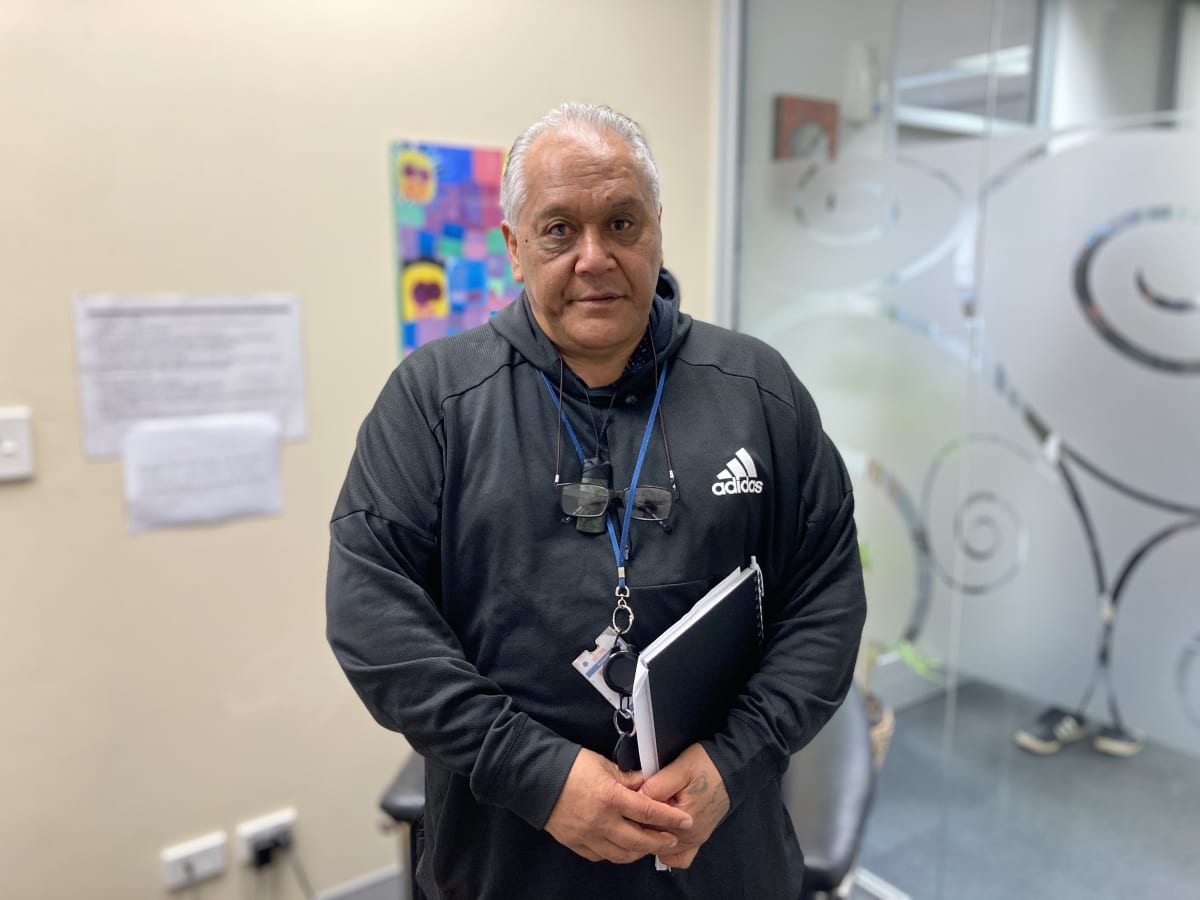
I’m on my way to meet ‘Koro’, Trevor Paul. I find him on his usual corner, carrying with him two guitars and a bass. His newest guitar was gifted to him by Joe, he tells me, one of his many friends on the street. Joe works as a Māori patrol and, during our conversation, stops by to say hello.
Koro has a favourite spot on the streets of Wellington: it’s a sheltered hide-out on Courtenay Place, formed by a construction sign propped up against the outside wall of a TAB shop. He lays down his picnic rug and sits on a makeshift throne. From there, he can see who is coming, his blindside facing the wall. Koro has one beautiful blue eye. The other, his left eye, was lost in a brawl in 1978.
The first time Koro went to prison he was 15. Now he is 60. Downtown Community Ministry (DCM) helped him to get out of jail 10 years ago, and instilled in him a sense of gratitude and gracefulness; they taught him honesty, integrity and respect. DCM is an organisation that looks after homeless people in Wellington. Unexpectedly, Koro found he felt safer in jail than in the outer world. In jail, he says, you can lock your cell and no one can bother you.
When he was only eight years old, Koro was found by the police in a garage, chained to a dog kennel. He grew up in what he calls the “family home for boys”, where he experienced cruelty and a culture of rape. The wicked environment in which he grew made him avoid human contact in his early years. After he was taken away by police, Koro was sent to a Government home, a ward managed by the Social Services.
Homeless people risk being marginalised, rather than being included in society. In the fight between marginalisation and inclusion, Koro plays on the latter side. He runs a ‘Music Appreciation Program’. From his safe corner, he welcomes in whomever wants to join.
Wellington does provide some facilities for people experiencing homelessness, such as free public showers on Lambton Quay, and several men’s shelters. The city offers the possibility to have free food daily. Thanks to initiatives like Soup Kitchen, or the free food program of the Salvation Army, people like Koro, who can’t afford to buy food regularly, can still avoid the scourge of hunger.
Koro was particularly impressed by the quality of the food provided by a company that recovers food waste and distributes three-course meals on a pay-as-you-feel basis. Everybody Eats is a New Zealand company that operates three days per week at the LTD joint on Dixon Street. Founded by Nick Loosley, it aims at ending malnutrition and hunger in Aotearoa.
New Zealand is facing a homelessness crisis. There is a shortage of affordable housing and the public housing waiting list is skyrocketing. Koro thinks that we need education about homeless people. “It’s time for people in a bad position, to go and teach people.” To change society, people who have had a tough life and experienced the hardship of living without a house need to speak up. Aotearoa must learn from this crisis because homelessness is not about Māori or Pākehā, he tells me, it’s about humanity.
Being homeless is a psychological issue too. Thousands of homeless New Zealanders face mental health problems, yet they continue to spend their days and nights on the street. People need to collaborate to solve this crisis. “If people don’t talk, they can’t heal”, Koro sighs, “I believe that if people can’t talk, they won’t get better – because they are scared of something”. The phantoms of the past are still lingering over his words, his tone, his memories — his life. He says the Wellington Council is not listening or doing enough to fight this social plague.
Koro rattles off pearls of wisdom in his discourse. “If you can make a difference in other people lives, you can make a difference in your life.” Even though he doesn’t feel at home anywhere, Koro still manages to smile at bystanders and shake their hands happily. He is not afraid of talking to people, but doesn’t actively seek conversation - he just lets them come to him instead.
Social Services provided him a house in Berhampore, but thieves have broken in three times since he moved in and took some of his precious instruments. Koro doesn’t own that house, it belongs to Housing New Zealand, and he would like to have a safe place of his own.
Uncertainty and instability are problems Koro faces every day. To have a house is to have a place to go back to, somewhere to rest. Can one truly rest on the street? Where are the homeless people able to rest? Feeling comfortable sitting on the pavement and perceived safety is not enough. Koro might feel at home on the street, but can the street represent his stable house?
On the street, people look after him, they know him. Being one of the eldest of those living on the streets of Wellington, he is respected and younger people look up to him. “People talk more honestly on the street”, he tells me. Koro has spent most of his life in institutions. But he doesn’t want to be institutionalised anymore.
“Koro is the grandfather of the homeless of Wellington”, as Moses, his caseworker at the DCM, tells me. Koro knows most of the people who live on the street and, according to him, a lot of people without a house are stuck here. He shows sincere gratitude and kindness toward every person who gets close to him. Just like a selfless grandad would. “I am the only street person who comes back to the street to help others”.
According to Moses, Koro has a positive effect on the people he interacts with and can influence the community. DCM relieves people of the burden of being homeless and helps those in need. “He is a busker”, Moses tells me. Koro has a ‘street talk’ and profound street knowledge, a product of traumatic experiences in his past.
You can see the hardness of life reflected in Koro’s remaining eye. He has developed a cynical philosophy encased in a cynical exterior. He presents a thought-provoking concept: homeless people should remember where they come from – they come from the street.
At the end of the fable ‘The Man Bitten by an Ant, and Hermes’, Aesop concludes “When misfortune befalls you, considers your own faults”. Koro embraces this philosophy and says that when things get bad, you should examine your actions; if you don’t believe in yourself, you can give up – life is not worth living, unless you believe in yourself. “You got to remember! It’s you who made it bad and it must be you who can make it better”.
Being abandoned when he was only a few months old, he has missed out on having a father and a mother. He finds solace in a dream of another life, a life he could have had. It’s meaningful, for him, what he could have achieved.
Koro thinks that life can only get better when you want it to. Sometimes, it seems like his words are taken straight out of a self-help book. “You can’t find your way in life, if you haven’t found yourself first”. He sits as a metropolitan oracle on his chair, blind on one side.
As the light disappears and the cold night begins, Koro wraps up in his coat. A sea of anonymous faces, illuminated by the blue light of a screen, floods the streets of Wellington.
Where to get help:
1737, Need to talk? Free call or text 1737 any time for support from a trained counsellor
Lifeline – 0800 543 354 or (09) 5222 999 within Auckland
Samaritans – 0800 726 666
Suicide Crisis Helpline – 0508 828 865 (0508 TAUTOKO)
thelowdown.co.nz – or email team@thelowdown.co.nz or free text 5626
Anxiety New Zealand - 0800 ANXIETY (0800 269 4389)
Supporting Families in Mental Illness - 0800 732 825