
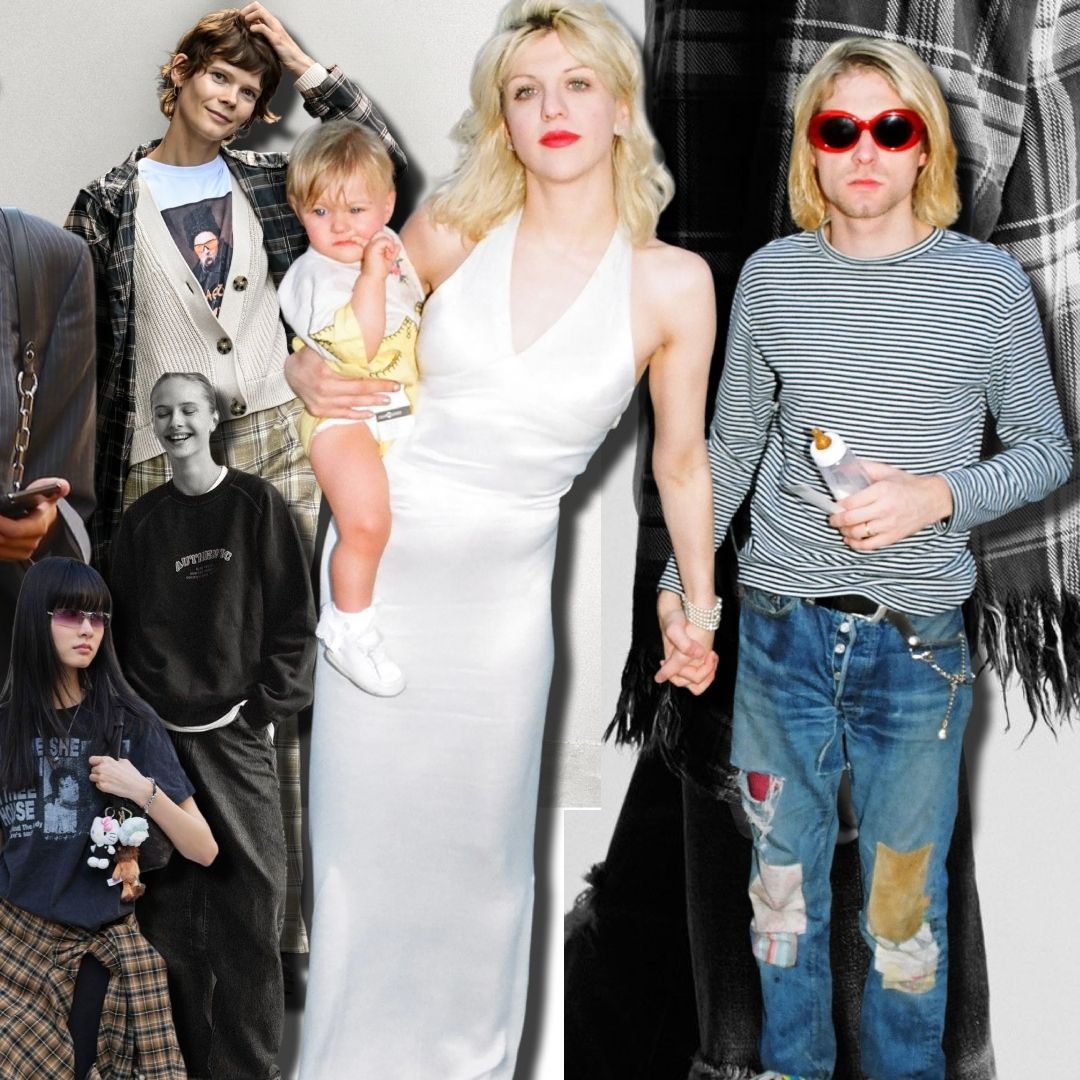
On a recent stroll through downtown New York, I started noticing a very specific outfit with uncanny frequency. Ripped jeans. Slim, slightly battered sneakers. A shrunken T-shirt layered over a thin white long sleeve, the cuffs peeking out past the wrists. Sometimes, a cardigan that looks like it might have lived several lives before this one. It’s a vibe that registers instantly if you grew up in the ’90s—even if the wearer didn’t. Which is to say: We’ve arrived at the era of girls accidentally paying homage to the late, great Kurt Cobain.
The formula is simple enough to dissect and recreate: destroyed denim, thrift-store layers, the slim, scuffed sneaker. But the effect is unmistakably Cobain-coded, with a little bit of Courtney Love chaos mixed in. What once read as rebel anti-fashion—cheap-looking cardigans, stretched and hole-laden tees, things worn slightly oversized, low, and askew—is no longer reserved for the kid who spends his afternoons in detention.
The aesthetic may seem spontaneous, but it isn’t accidental. Fashion has been laying the groundwork for years. Labels like R13 built an entire identity around designer grunge long before the current wave, turning distressed denim, oversized flannels, and beat-up boots into a luxury products. What was once anti-establishment has, for some time now, been a very viable business model.
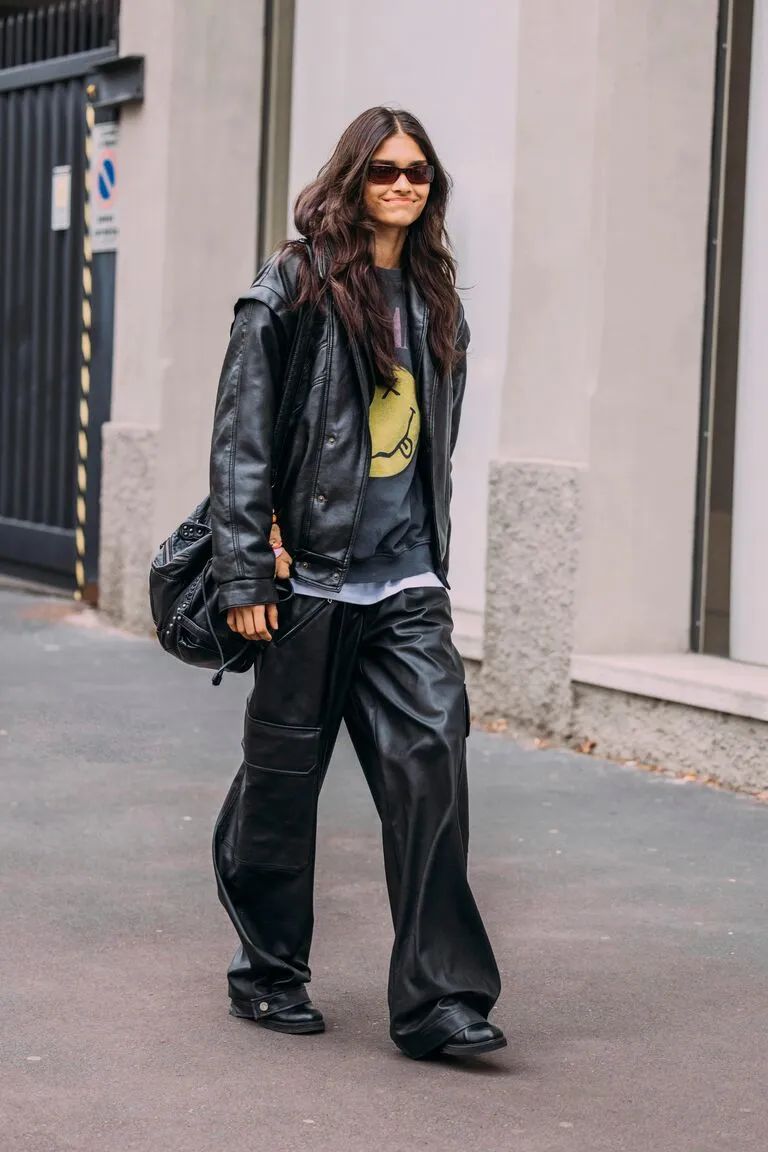
Cobain dressing also makes a lot of sense as a retail story. It is, after all, a look built on pieces meant to feel found. That maps neatly onto the way people shop now. ThredUp projects the global resale market will reach $367 billion by 2029, and platforms like Depop and eBay have trained a generation of shoppers to value clothes that read as discovered rather than bought new. In other words, the uniform of the early ’90s now fits into a secondhand economy that prizes backstory, patina, and the thrill of the find.
For Spring 2026, downtown designers offered a slightly softer, more edited version of the same mood. At Kallmeyer, striped tees and easy separates lean into that same spirit of studied nonchalance. They don't scream "grunge," exactly, but they understand the appeal of an instinctive-looking piece. At The Row, the effect is more rarefied but not entirely unrelated: oversized flannel shirting that conveys its own kind of indifference, albeit at $1,450. Celine has its version. Prada does too. Rohé, likewise. There are entry-level riffs at J.Crew and Urban Outfitters, which may be the clearest retail signal of all. When both luxury labels and mass retailers are circling the same silhouette, it is no longer just a vibe.
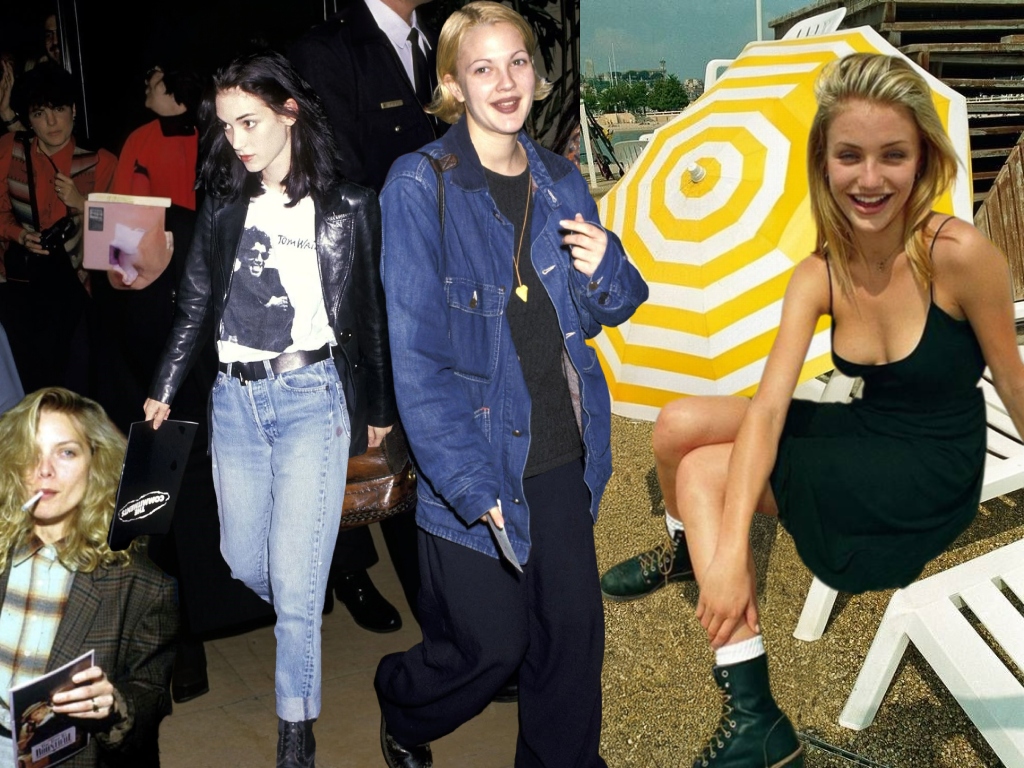
That's also what separates the here-and-now from earlier grunge revivals. It's not quite the blown-out, Winona Ryder-cosplay version of the ’90s that fashion periodically trots out. The cardigan is still a little unraveled, the denim is still wrecked, but the styling is more intentional: a slimmer sneaker, a better jean, a striped tee that feels more Kallmeyer than rummaged out of the attic. The girls know exactly what they’re doing, even if the point is to look like they don’t.
All signs point to traction with the celebrity set, too. Kendall Jenner has been wearing some version of the formula for a while now: vintage-adjacent tees, worn-in denim, sensible flats or sneakers, the occasional jacket that looks as though it has been around the block. Zoë Kravitz has long been fluent in the same language, making beat-up basics and low-key grunge look like a permanent state of being. Bella Hadid, Billie Eilish, and Jenna Ortega have each, in different ways, helped normalize a softer grunge vocabulary built around woolly cardigans, layered tees, heavy boots, and a general refusal to look too polished.
The timing also aligns with a broader cultural shift. A new crop of guitar-driven bands, including the Brooklyn group Geese, fronted by Cameron Winter, has helped bring a little scrappy rock energy back into the conversation. And historically, when the music gets messier, the clothes tend to follow. The same mood is evident in the renewed fascination with the indie-sleaze trend—the messy, downtown aesthetic that dominated early blog-era fashion.
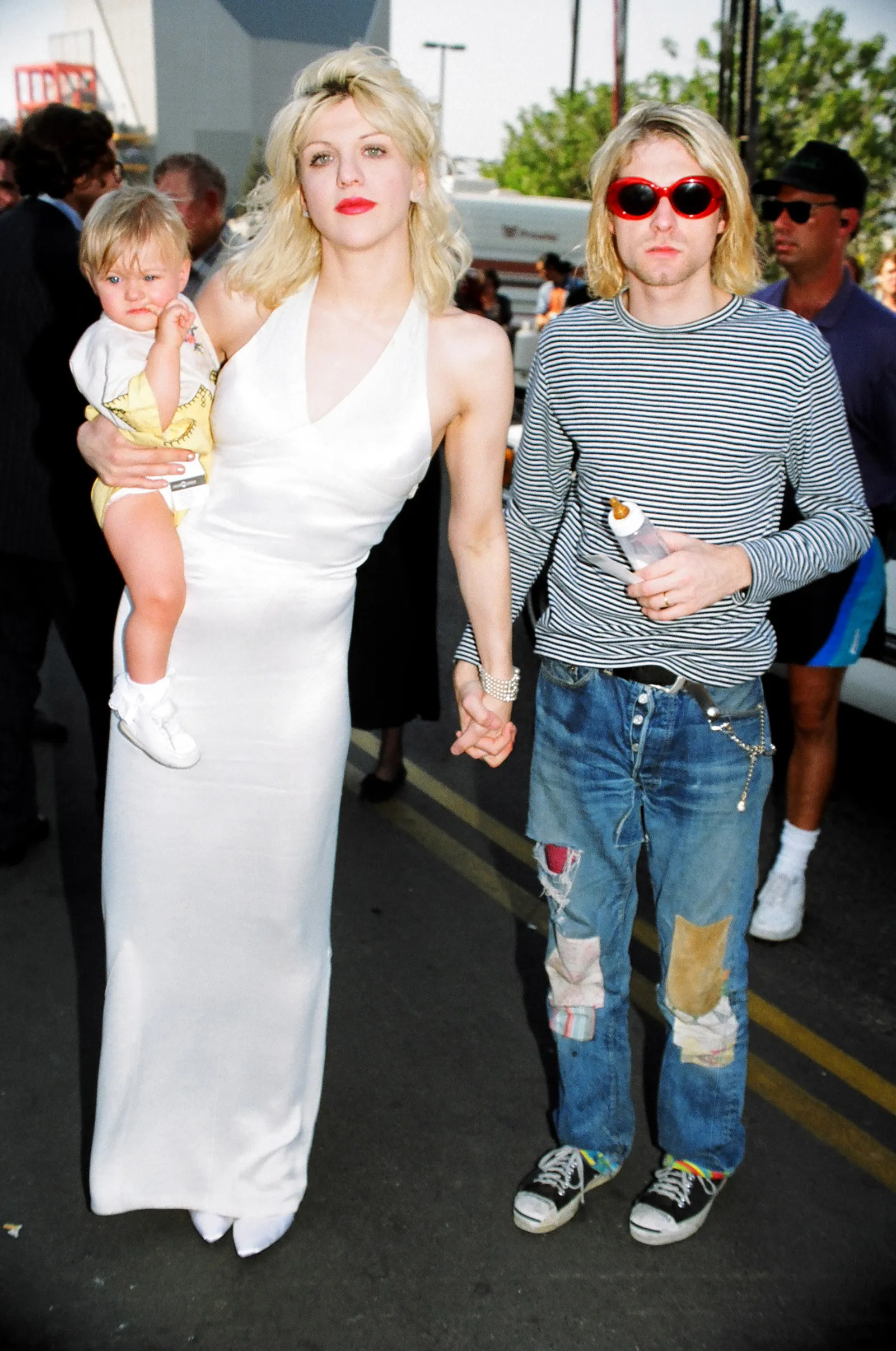
Of course, the ’90s revival is not limited to grunge. In many ways, the decade is resurfacing through two parallel style archetypes. On one end was Cobain’s thrift-store dishevelment. On the other hand, the Calvin Klein '90s of Carolyn Bessette-Kennedy and Kelly Klein, whose sleek coats, bootcut jeans, and slinky slip dresses defined a different but equally instinctive kind of dressing. At first glance, the aesthetics could not be more different. But the appeal was surprisingly similar. Neither looked overworked nor assembled for an audience.
That, more than nostalgia, is why the Cobain uniform is landing now. Lately, fashion has felt a little overexplained: clothes chosen because they read well in pictures, trends designed to be recognized on sight, outfits assembled knowing they’ll likely be seen first through a phone. Dressing like Kurt Cobain offers the opposite fantasy. Not sloppiness exactly, but indifference—or at least a very persuasive illusion of it. Nothing is too polished or too eager to identify itself. After years of clothes engineered to send a signal, there's something newly appealing about a look that at least seems not to give a shit.