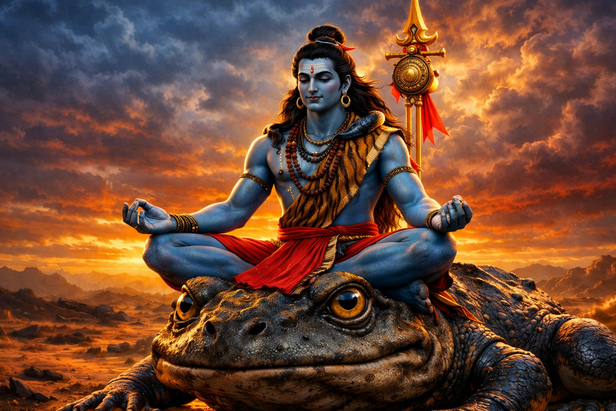
In India, Shiva is usually seen riding Nandi, the bull. But in Lakhimpur Kheri, Uttar Pradesh, he sits atop a giant frog. Around 200 years ago, a devastating drought struck the kingdom of Raja Bakhtawar Singh. With no heir and a parched land, hope seemed lost. A mystic advised the king to build a temple on a frog an unusual idea that promised rain. When the temple was completed and the Narmadeshwar Shiva Lingam installed, rain poured down, ending the famine. Soon after, the king was blessed with a son. This miraculous story blends faith, devotion, and the mysterious power of nature.
The King’s Crisis: Land, Legacy, and Drought

Raja Bakhtawar Singh faced a triple crisis parched rivers, starving subjects, and no heir to continue his lineage. Traditional rituals and remedies offered no relief. Desperate, he turned to a revered tantric sage for guidance. The sage revealed that the problem wasn’t just drought it was a cosmic imbalance requiring an extraordinary remedy. Ordinary prayers wouldn’t suffice; the kingdom needed an act of faith that challenged convention. Following the sage’s advice, the king embarked on a remarkable mission: constructing a temple atop a giant frog. This unconventional act, blending devotion with ingenuity, would ultimately restore nature’s balance, bring rain, and bless him with an heir.
The Mystic’s Revelation: Manduk Tantra

The tantric revealed a startling solution: only the frog, a symbol of fertility and rain, could revive the drought-stricken kingdom. He instructed Raja Bakhtawar Singh to construct a temple resting on a giant frog’s back a radical vision of Shiva riding not Nandi, but nature itself. Though unconventional, the idea merged devotion with the hidden forces of the natural world. Desperate yet willing to try anything, the king embraced this unthinkable plan. Every stone and ritual carried hope, faith, and reverence. Soon, the impossible began to unfold, showing that belief, when combined with courage, can summon miracles even from the most unexpected sources.
Building the Temple: Stones, Dal, and Jaggery

The temple was built without cement or lime. Stones were bound with a paste of dal and jaggery, ensuring longevity. A colossal stone frog, 100 feet above the ground, became the base. This unconventional method symbolized devotion, patience, and trust in divine instructions. Each stone and paste represented the kingdom’s hope for renewal and prosperity.
The Divine Installation: Narmadeshwar Lingam
For the prana pratishta (installation), Raja Bakhtawar Singh personally brought the sacred Narmadeshwar Lingam from the holy Narmada River, carrying it with deep devotion. As the ritual began, the sky darkened with heavy clouds, and rain poured down, drenching the drought-stricken fields. Villagers watched in awe as their land, once dry and barren, transformed into fertile soil ready to nourish crops. The miraculous downpour was seen as a divine response to unwavering faith and the king’s sincere devotion. This event restored hope, saved the kingdom from famine, and became a legendary testament to the power of belief and devotion in overcoming even nature’s harshest trials.
The Blessing of a Son: Faith Rewarded
Beyond the rain, the temple brought another blessing the king was finally blessed with a son. The Mandukeshwar Temple became a symbol of faith, devotion, and the intertwining of human courage and divine will. Today, the temple stands serene in Lakhimpur Kheri, reminding visitors that miracles often come through the unexpected and the extraordinary.
Unlock insightful tips and inspiration on personal growth, productivity, and well-being. Stay motivated and updated with the latest at My Life XP.
Frequently Asked Questions (FAQs)
It is situated in Lakhimpur Kheri, Uttar Pradesh, India.
According to legend, the frog was part of a tantric ritual to bring rain during a severe drought.
Raja Bakhtawar Singh constructed the temple following the guidance of a great tantric.
Stones were bound using a paste of lentils and jaggery, without cement or lime.
Yes, during the prana pratishta ritual, heavy rain is said to have fallen, ending the drought.