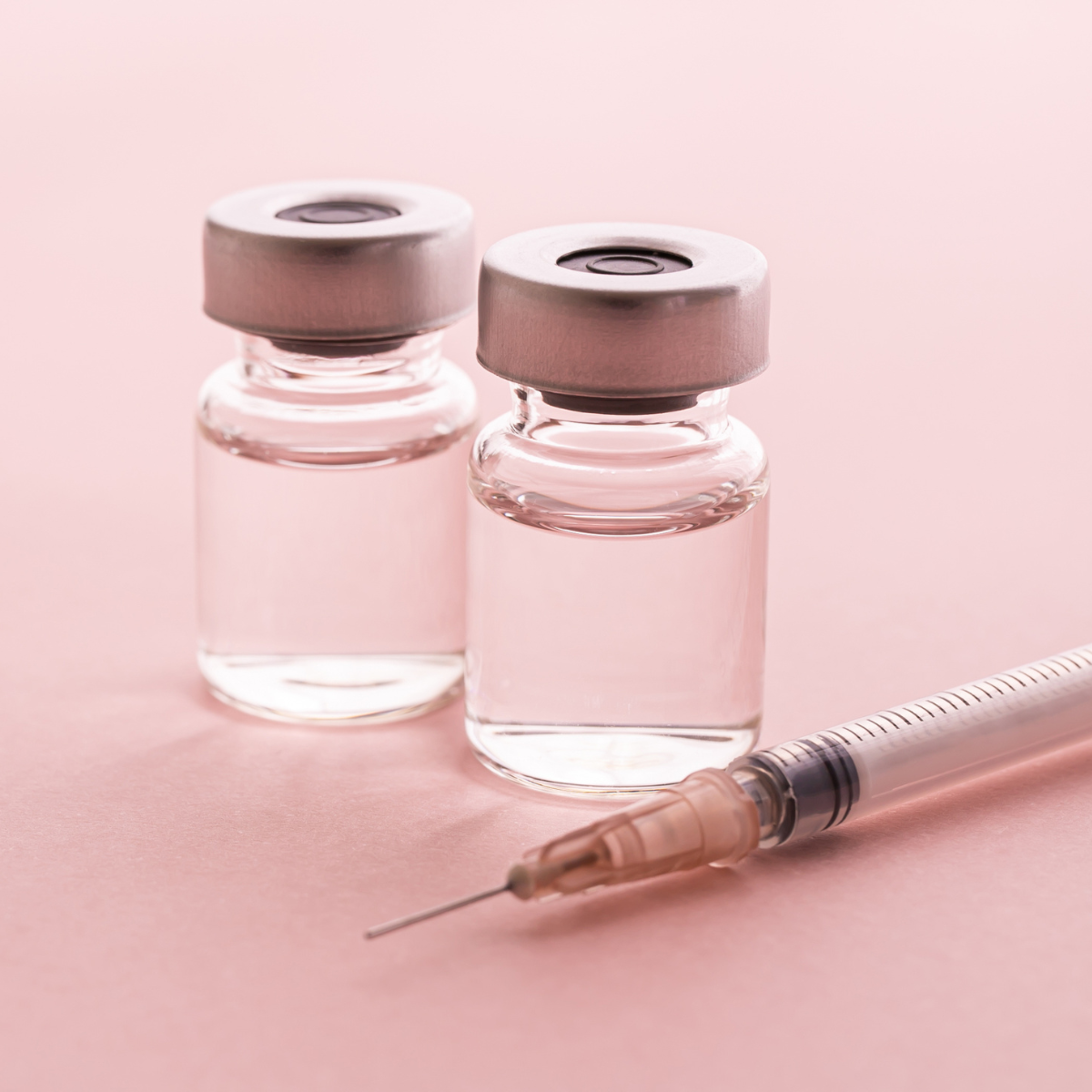
Botox has been a regular part of my beauty routine for the best part of a decade now. A few units for my genetically prominent frown muscles, a couple to freeze my forehead (I like the poker-faced look) and, not forgetting, a generous helping in my masseters to help with teeth grinding. But over the years, it feels as though the effects have started wearing off faster. Whereas I once waited the best part of a year to notice significant movement returning, I’m now scrabbling to book my next appointment after just a few months. Could I be becoming increasingly tolerant to Botox? And, if so, could it eventually stop working altogether?
I’m not the only one noticing this. Reddit is awash with users claiming the effects of Botox—or, more accurately, botulinum toxin—now last just two months, while others report that it has stopped working altogether after years of successful treatment. So, what’s going on? Has the formula itself changed? Are practitioners injecting less liberally than they did a decade ago? Have our expectations simply surpassed Botox’s performance parameters? Or could some of us actually be developing resistance to it? I called upon the experts to explain.
Is Botox resistance actually a thing?
First things first: yes, technically, it is possible to become resistant to botulinum toxin—but actual resistance is far less common than the conversations online might have you believe.
“True resistance to botulinum toxin is a recognised phenomenon, but it is much rarer than social media might suggest,” says Dr Ahmed El Muntasar, NHS GP, aesthetic doctor and founder of The Aesthetics Doctor. In some cases, he explains, the immune system can develop neutralising antibodies against botulinum toxin, which can reduce—or even prevent—its effects.
Dr Vishnu Nathan, aesthetics doctor at the Taktouk Clinic, agrees, describing true toxin resistance as “relatively uncommon in aesthetic medicine”. Instead, he says, what is sometimes labelled resistance may actually be “pseudo-resistance”, caused by factors such as underdosing, suboptimal placement, compensatory muscle recruitment or unrealistic expectations.
That means if your usual Botox suddenly doesn’t seem to be doing quite as much as it once did, antibody resistance probably shouldn’t be your first assumption. As Dr Ahmed explains, differences in dose, injection technique and placement, particularly strong muscles and even the toxin formulation being used can all influence the result.
There is also an important distinction between Botox genuinely no longer working and simply not lasting as long as you remember it lasting. “In my experience, complete loss of response is uncommon,” says Dr Ahmed. “What I see much more frequently is patients feeling that their treatment isn’t lasting as long as it used to.”
The key is what you mean by not working. If you see little or no reduction in movement after treatment, that is very different from getting a good initial result and noticing movement creeping back in a few months later. Botox isn’t designed to permanently switch off a muscle; its effects gradually wear off as communication between the nerve and muscle recovers. Movement returning after a few months is therefore normal and doesn’t, in itself, mean you’ve developed resistance.
Does the way Botox is injected affect how long it lasts?
Yes, according to both doctors, this can matter enormously. Botox is the product going into the syringe, but dose, placement and treatment frequency all contribute to the final result.
“The dose, the muscles selected, the exact placement and the patient’s individual anatomy can all influence both the quality and longevity of the result,” says Dr Ahmed. Someone with particularly strong facial muscles, for example, may require a different dose from someone with relatively little movement.
Dr Nathan agrees that technique plays a major role, pointing to injection depth, muscle selection, product handling and treatment intervals alongside dose and placement.
More toxin isn’t necessarily better, either. Both doctors caution against repeatedly topping up at very short intervals. Dr Nathan says frequent top-ups and unnecessarily aggressive dosing may increase immunogenic risk, while Dr Ahmed says unnecessary exposure to higher cumulative doses and very frequent treatments is generally something practitioners try to avoid.
Dr Nathan also raises a potential issue within unregulated practice: inappropriate treatment intervals and, in some cases, the use of unlicensed or potentially more immunogenic toxins, which he says may theoretically increase the risk of treatment failure over time.
All of which is why your Botox prescription arguably shouldn't remain exactly the same forever. “I don’t believe Botox should be approached as a fixed prescription where exactly the same number of units are injected into exactly the same places indefinitely,” says Dr Ahmed.
Could your face be changing instead?
Resistance isn’t the only reason Botox can seem less effective over time. Our faces aren’t static, and after a decade of treatment, changes in muscle movement, skin quality and facial structure can all alter both how Botox works and, importantly, how we perceive the results.
“Generally, repeatedly treating the same muscle tends to reduce its activity rather than make it stronger,” explains Dr Ahmed. In some people, results can actually last well because that muscle becomes less dominant over time.
What can change, however, is the way the rest of your face moves. Both doctors point out that when movement is reduced in one area, we can begin recruiting surrounding or untreated muscles differently to compensate. “The face is incredibly dynamic,” says Dr Ahmed. What looks like Botox becoming less effective may therefore actually be a change in the balance of movement across your face.
What should you do if your Botox starts wearing off faster?
It's tempting to book an emergency top-up at the first signs of movement (at least, it is for me), but both doctors give essentially the same advice: reassess before injecting more.
“The first thing I would do is re-examine rather than automatically inject more,” says Dr Ahmed. That means looking at how quickly the treatment started working, how good the initial response was, which areas are moving again, the previous dose and how frequently you've been treated.
If you had an excellent initial response that simply wore off earlier than expected, adjusting the dose or placement next time may be enough to make it last sufficiently. If there has been very little response despite appropriate treatment, however, then it may be reasonable to consider other explanations, including reduced responsiveness.
Sometimes changing the treatment strategy or considering a different botulinum toxin formulation may be appropriate. For people who have been having particularly frequent treatments, Dr Ahmed says allowing a longer interval before treating again may also be worth considering.
Dr Nathan similarly advocates for a more flexible approach rather than simply escalating the amount of toxin, assessing everything from muscle activity and facial balance to skin quality and structural ageing to work out what has actually changed.
Ultimately, though, the takeaway isn't that anyone who has been having Botox for years is destined to become immune to it. “Genuine resistance exists, but it is relatively uncommon,” says Dr Ahmed. “If something has changed, the most important thing is to work out why rather than simply chasing the result with more and more toxin.”
This content is for informational and educational purposes only and does not constitute medical advice - always consult with a qualified healthcare professional before treatment decisions.