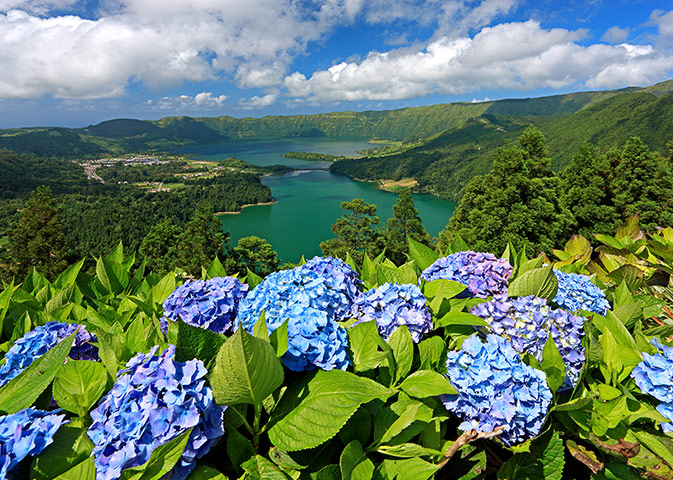
There are two lakes in this crater to the west of the island, one blue and the other green. Legend has it that the colours come from the tears of a princess, who had green eyes, and a blue-eyed shepherd, who fell in love but were forbidden to see each other.
Photograph: Günter Gräfenhain/Huber
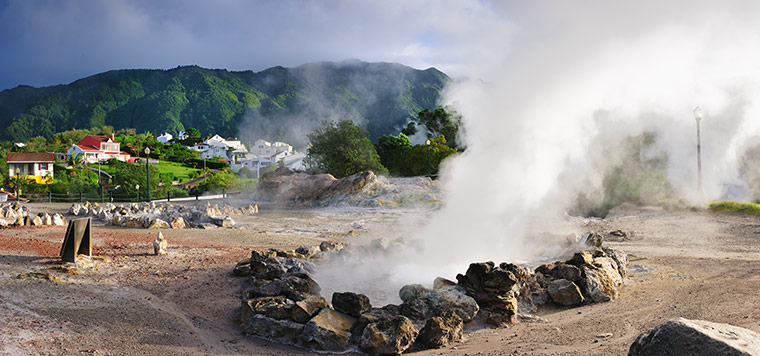
The thermal town of Furnas is like no other. Not only does it have more than 20 thermal springs, sulphurous fumaroles and geysers shooting hot water into the air, but the locals use the earth’s heat to slow-cook stews by burying their casserole dishes in the earth.
Photograph: Mauricio Abreu
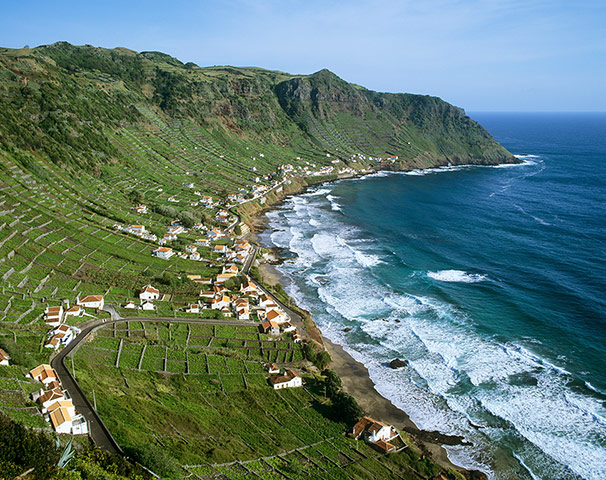
Santa Maria is the only island of the archipelago to have a white sand beach – everywhere else, they are a rich volcanic shade of black, red or brown. São Lourenço bay and nature reserve has rows of terraced vineyards leading down to the sea.
Photograph: Mauricio Abreu
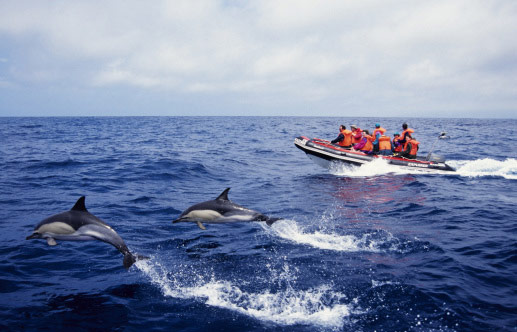
Whale watching around the Azores is among the best in the world, with plenty of resident and migratory species. Trips from Sao Miguel and Faial on Zodiac boats depart daily in search of these spectacular cetaceans. Learn how islanders converted from harpooning whales to protecting them. Photograph: Gerard Soury/Oxford Scientific RM

Moss-covered lava rocks lead out to sea on this island. The volcanic makeup of each of the Azores islands is different and equally dramatic: where one island has lava tubes and deep cave systems, another has fumaroles, hot springs and geysers.
Photograph: Mauricio Abreu
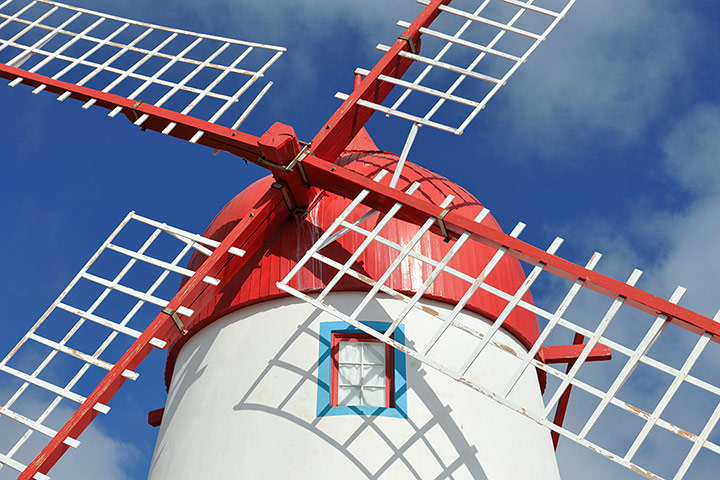
Graciosa’s squat, red-topped windmills are a symbol of the island, a Unesco-designated biosphere reserve. It is the Azores' most northerly island and is known as the White Island for the volcanic rock that turns white over time.
Photograph: Mauricio Abreu
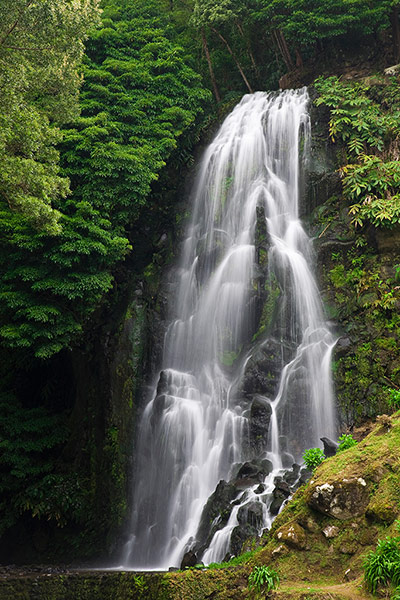
Dramatic waterfalls are found plunging from sheer cliffs all over the Azores thanks to their volcanic topography. This waterfall on São Miguel is in the island’s national park on the slopes of the Serra da Tronqueira. Photograph: Joel Santos/Aurora Creative
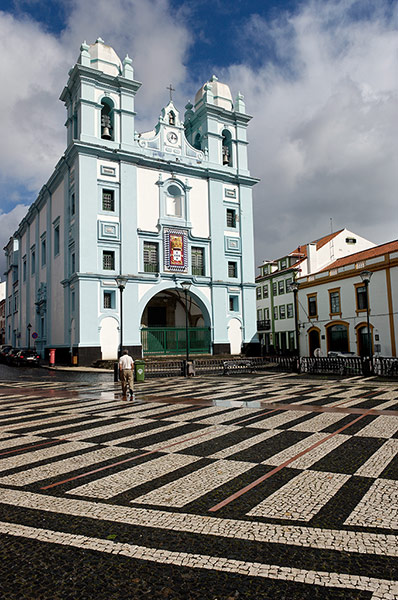
The town of Angra do Heroísmo dates back to the 15th century and is designated a Unesco world heritage site for its architecture. Rua da Se, which runs along this town square to the cathedral, is its most historic street, where mansions hint at the town’s mercantile past. Photograph: Bruno Barbier/Robert Harding World Imagery
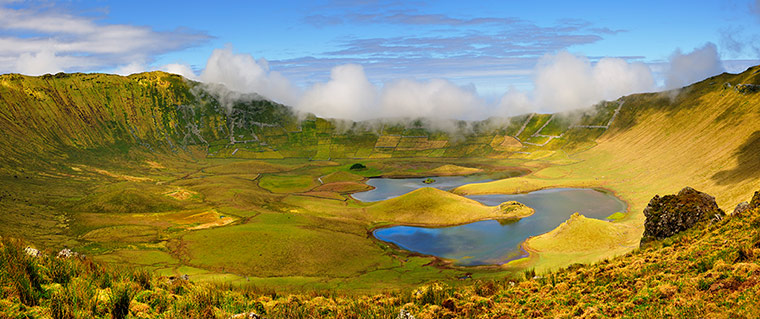
When the island's central volcano collapsed, it created this caldera – or crater – with several shallow lakes. Many people claim these form an outline of the Azores islands. The nature reserve is a popular bird-watching area, and you can hike around the edge of the crater.
Photograph: Mauricio Abreu

These incredible ancient lava tubes are packed with colourful stalactites and stalagmites, overgrown with moss and look otherworldly. Visitors can descend 100 metres into the earth to discover the cave’s hidden crater lake.
Photograph: Alamy
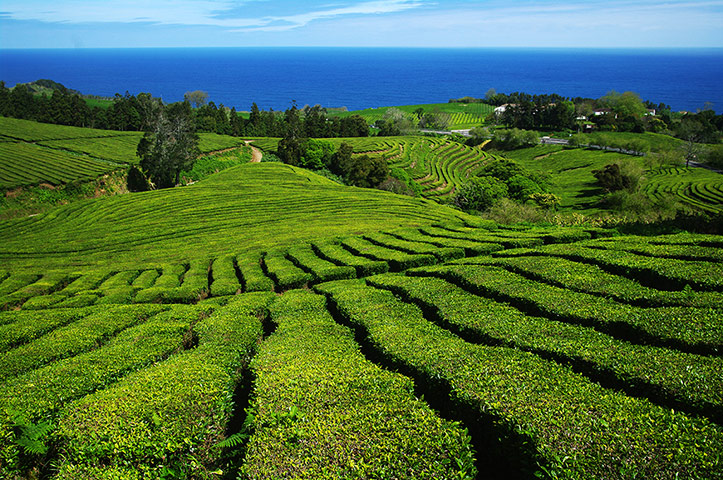
Gorreana tea estate is Europe’s oldest tea plantation, near Ribeira Grande in the north of the island. Taste a cup of freshly picked organic tea at the estate's visitor centre. Photograph: Created by Tomas Zrna/Flickr Open
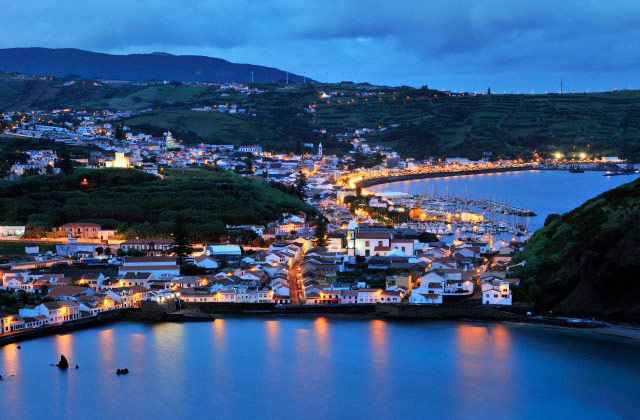
This five-sided island has become the resting place for many a transatlantic sailor. Horta's main port has a cosmopolitan feel and in bars and restaurants you can often hear snippets of sailing stories from around the world. Photograph: Mauricio Abreu/Corbis