

Avenging angels, deplorable demons, grim gods, world religion is rife with horror. Subjected to floods, famines, and fires, humanity has spent thousands of years coming up with divine explanations for the natural terrors of the earth. While most modern-day people don’t live in constant terror of thunderbolts hurled from heaven, religious horror remains an effective vehicle for exploring lingering shame, desire for absolution, and the search for meaning in a chaotic world. Prepare to beg for mercy, because these are the 10 best religious horror movies of all time.
The Witch
Roger Eggers’ The Witch is a puritanical take on horror, a film about the cost of repressing one’s inner desire for freedom and pleasure. Exiled from their 17th-century community over a religious dispute, settler William and his family are forced to strike out on their own in the brutal New England wilderness. With their spirits low, winter looming, and cabin fever setting in, the family becomes increasingly fearful of devilish meddling. After their youngest child goes missing, the family begins to suspect their eldest daughter to be a consort of Satan—the biggest no-no in the Puritan world. The Witch is a perfect example of how religious intolerance can create self-fulfilling prophecies: the more young Thomasin is demonized by her family, the more ready she is to greet real demons with open arms. When the demons are tempting you with the promise to “live deliciously,” it’s hard to say no.
Hellraiser
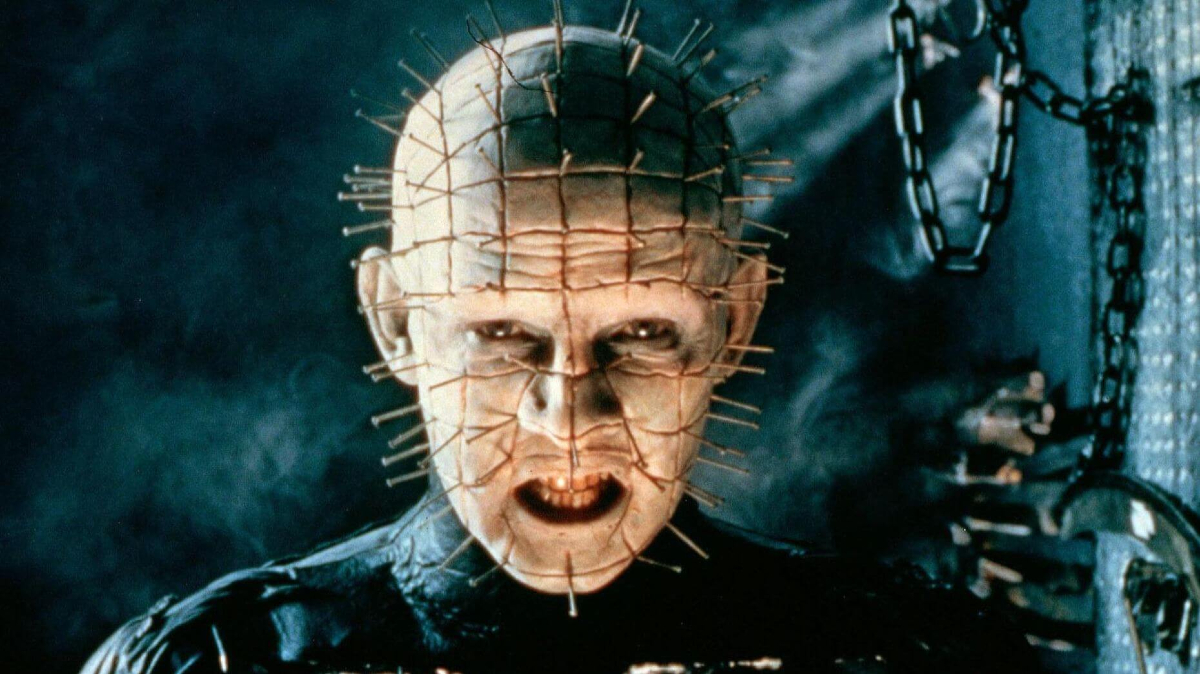
Directed by Clive Baker, Hellraiser combines Catholic and BDSM imagery into one of the most subversive explorations of religion ever put on film. The story begins with hedonist Frank Cotton, who purchases a mysterious puzzlebox said to open doorways to new realms of sensation. After solving the puzzle, he comes face to face with The Cenobites—supernatural beings who can no longer tell the difference between pleasure and pain. Torn apart by the spiritual sadomasochists, Frank’s spirit haunts his relatives and hopes to subject them to the same euphoric torture. One look at Bernini’s Ecstasy of Saint Teresa or Il Sodoma’s Martyrdom of Saint Sebastian is all it takes to see how easily Catholic art can be interpreted through a kinky lens. Baker continues this tradition with nail-pierced, leather-clad angel-demons that subject his protagonists to agonies that blur into ecstasy. According to Hellraiser, eternal punishment is the eternal reward.
The Exorcist

The Gold Standard, the Baphometic GOAT, William Friedkin’s The Exorcist is arguably the most sophisticated religious horror film ever conceived. Adapted from an equally profound book by William Blatty (who also wrote the screenplay), The Exorcist is the story of a famous actress whose daughter begins showing signs of demonic possession. You know, levitation, vomiting pea soup, spinning her head around so far she gives owls a run for their money—standard demon stuff. A seminal work that inspired countless homages and imitators; it’s impossible to tackle demonic possession without giving a head-nod to this film. The best part about it? It’s one of the most lore-accurate depictions of an Abrahamic demon ever created. Intelligent, conniving, malicious, these beings are delighted to snap your bones, but they’d much rather break your spirit. How? In the demon Pazuzu’s case, it makes its would-be exorciser Father Karras doubt his courage, his sanity, and his faith.
Carrie

Adapted from Stephen King’s breakout novel, Brian De Palma’s Carrie is a parable about intolerance and abuse. Raised by her fanatical mother, high schooler Carrie White is told that her puberty process is the result of her sins against God. Punished and bullied for the changes in her body, Carrie’s mind begins to alter as well. After developing uncontrolled telekinetic powers, she uses her abilities to seek revenge against all of those who wronged her—with bloody, burnt, and tragic results. A psychosexual coming-of-age horror, Carrie is the story of a young woman pushed too far by the demands of belief, who re-channels that faith into her own god-like powers. Go for it, Carrie. You’re not just a Prom Queen, you’re a Prom Goddess.
Saint Maud

Directed by Rose Glass, Saint Maud is a tale of toxic repentance. After failing to save the life of a patient, an ICU nurse takes on a new name and a new Roman Catholic identity. Assigned to care for an ailing atheist named Amanda, the newly re-christened Maud believes that she has found a soul to save. As it turns out, a religious ascetic and an aging hedonist are a match made in Hell, and Maud’s failure to convert Amanda causes a crisis of faith—with explosively violent results. Saint Maud is a parable about a woman attempting outsource the forgiveness she isn’t able to give herself. The more Maud turns to God, the more God seems to turn away, and the more self-destructive she becomes.
A Dark Song
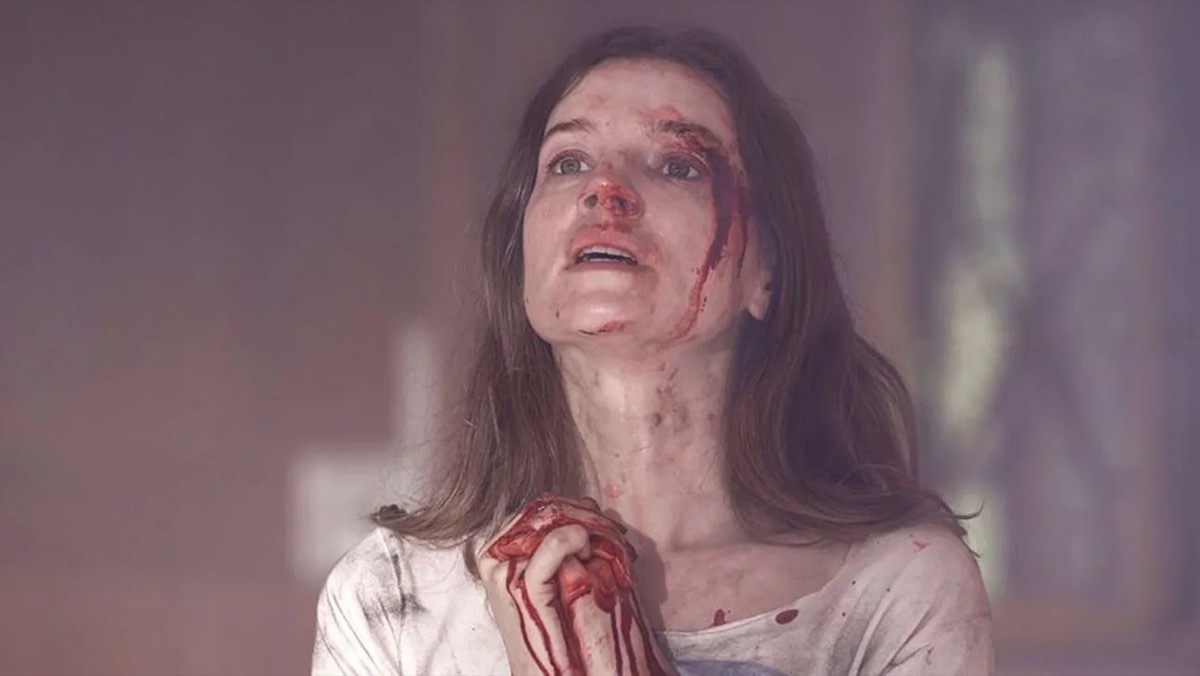
Directed by Liam Gavin, A Dark Song is the story of the grieving Sophia, who convinces occultist Joseph to help her complete a ritual that will allow her to communicate with her murdered son. Joseph tells her that she will need to connect with her guardian angel, but that the months-long process will be arduous and dangerous. As the days bleed into weeks, Joseph’s demands of Sophia become increasingly disturbing and sexual, and her manipulates her spiritual needs to serve his physical ones. A Dark Song is a parable about abuse, how real-life religious figures sometimes use their power to sate perverse desires. Though as the film goes on, the viewer realizes that Sophia has dark designs of her own. The angel she hopes to summon isn’t one of mercy, but one of terrible vengeance.
The Ritual

Directed by David Bruckner, The Ritual is the story of four besties who go on a hiking trip in the Swedish wilderness to honor their fallen friend Rob. Well, not so much besties anymore, Rob’s tragic death caused some serious tension among the survivors—and this wilderness getaway isn’t gonna do anything to improve it. Stalked by something unseen in the forest, the group attempts to escape the wrath of an ancient god, but their mortal efforts are futile in the face of the divine. A paganistic exploration of grief, The Ritual oscillates between terrible and the terribly sad. Your eyes will well up at the human suffering, but you’ll sob with terror after a glimpse of this movie’s antagonist. A nightmarish hybrid of human and animal, the jötunn Moder is one of the top five scariest horror movie monsters in history.
Jacob’s Ladder

Directed by Adrian Lyne, Jacob’s Ladder takes its title from Biblical imagery: a ladder that angels use to ascend into heaven, seen by the prophet Jacob. It’s transition into the afterlife that serves as this film’s main theme, its central character on a spiritual journey of his own. After being bayoneted in battle, Vietnam veteran Jacob Singer wakes up on an NYC subway train, confused but unharmed. As he attempts to find normalcy in his new life, his psyche is shattered by demonic visions around every turn. While these demons may in fact be angelic messengers in disguise, they sure have a funny way of showing it. Split-second glimpses of tentacled horrors aren’t exactly calming to the soul, but these angels seem to be the “Biblically accurate” kind. This is a profoundly disturbing study of Purgatory, seen from the point of view of one of its newest residents.
The Omen
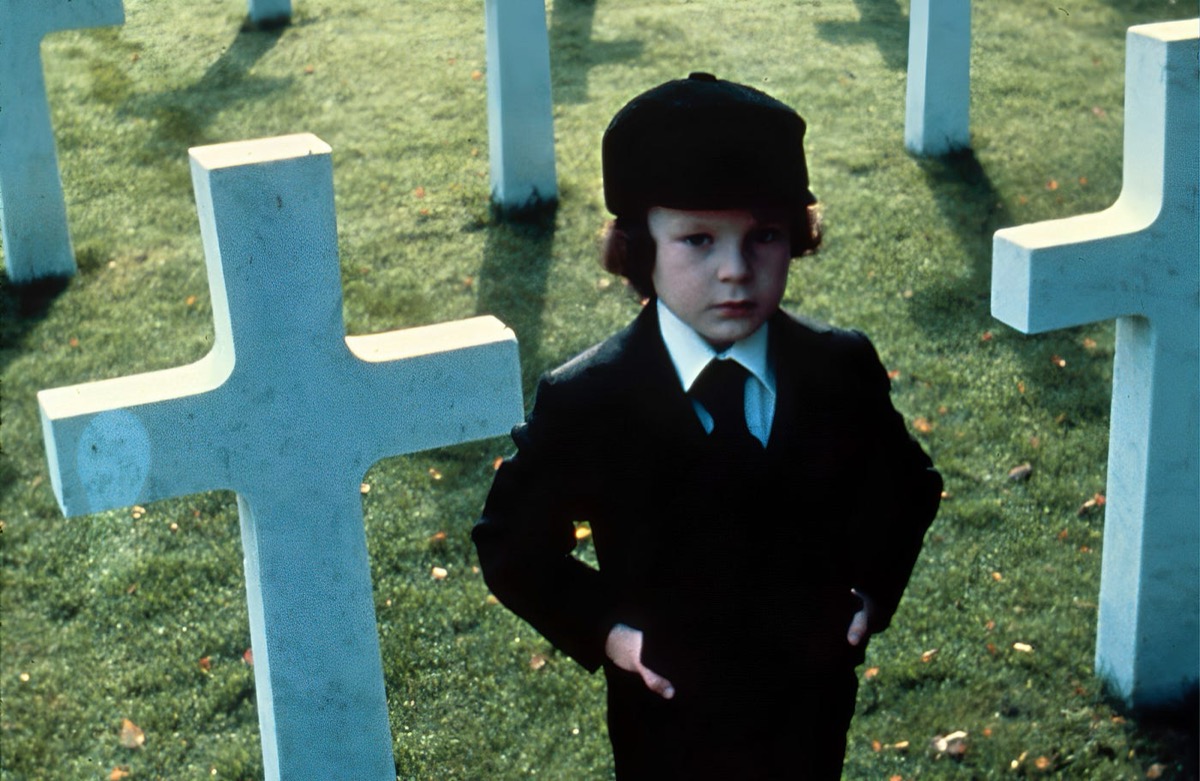
Directed by Richard Donner, The Omen joins The Exorcist as one of the all-time religious horror greats. A modern twist on the biblical Book of Revelation, the film follows Robert and Katherine Thorn, who believe their adopted son Damien might be the Antichrist. Why? Well, animals can’t stand him, churches enrage him, and the people around him keep turning up dead. As their parental love erodes into revulsion, the Thorns attempt to rid the world of the evil that they inadvertently raised. Elevated by some phenomenal acting from Gregory Peck and Lee Remick, The Omen is a legendary entry that inspired a franchise of rock-solid follow-ups. The prequel film The First Omen deserves an honorable mention, to be sure.
Thelma

Directed by Joachim Trier, Thelma is religious horror viewed through a queer lens. Raised in a fundamentalist family, the teenage Thelma’s attempt at a college escape is thwarted by a series of seizures. As her symptoms evolve into full-blown telekenisis, she realizes that her powers are activated by her romantic feelings towards a female classmate. Ashamed of her attraction, she wishes her beloved Anja would just disappear—and that’s exactly what happens. Thelma is a film about the lingering effects of religious trauma, how a shame-based upbringing can bring out intense feelings of guilt in adults. Despite being an all-powerful telepath, Thelma is victimized by her internal feelings of self-loathing and must learn to control those before they deprive her of all that she loves. A queer coming of age, a portrait of abuse, and a parable of self-acceptance, Thelma is a religious horror holy trinity.
Have a tip we should know? [email protected]