Gerard Manley Hopkins
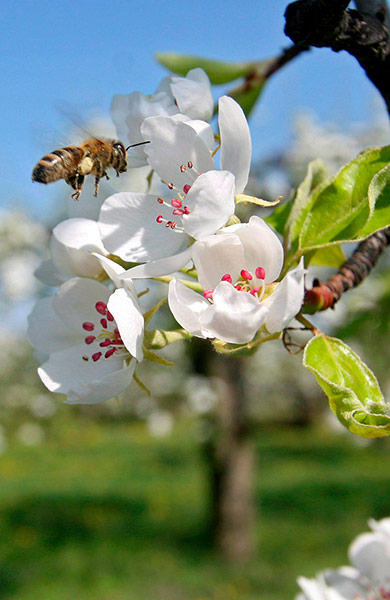
Gerard Manley Hopkins begins, “Nothing is so beautiful as spring.” If there is anything more beautiful, it is this poem. It has a heightened, rapturous and intoxicated quality: “The glassy pear tree leaves and blooms, they brush / the descending blue; that blue is all in a rush / with richness; the racing lambs too have fair their fling.” On a spring morning it is a poem one can recite that makes spring seem more intensely itself: even the lambs have been partying, and how that hallucinogenic “glassy” carries the line forward, unexpectedly filling it with light Photograph: EPA/Alamy
Elizabeth Bishop
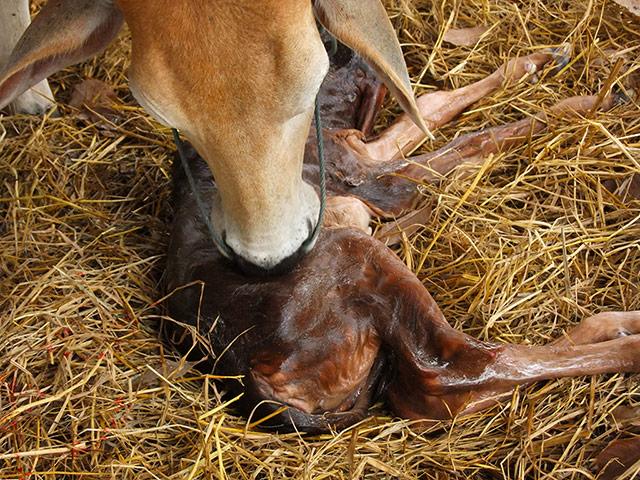
Elizabeth Bishop’s poem is a homage to Hopkins (whom she quotes at the top). But she starts out as sober as Hopkins was ecstatic: “A cold spring: / the violet was flawed on the lawn.” As if cautiously note-taking, she describes the birth of a calf and its mother eating the afterbirth. She seems to warn against unguarded jubilation, to insist on a reality check. The poem advances experimentally, like the newborn calf described in its first half. Eventually, however, she relents into a spring toast, comparing the flight of fireflies to “bubbles in champagne” Photograph: Horst Dammer/Alamy
TS Eliot
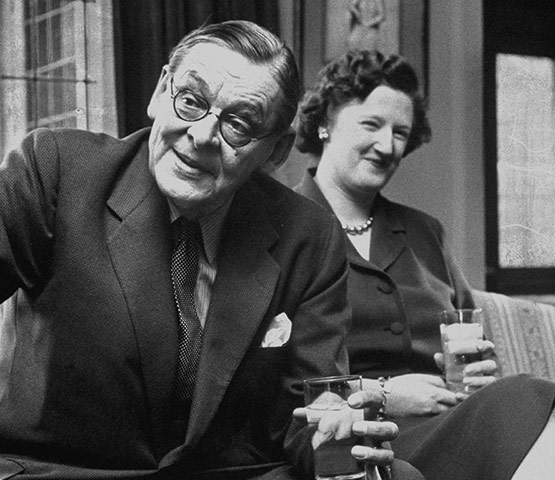
“April is the cruellest month, breeding / Lilacs out of the dead land, mixing / Memory and desire, stirring / Dull roots with spring rain.” TS Eliot provides an even sterner corrective than Bishop to the merry-makers in the spring chorus. “April is the cruellest month” is one of the most quoted lines from The Waste Land, and this is because, although boldly disconcerting, we suspect it of being true: the acknowledgement that starting afresh might be a revival of pain. Suicide rates are, after all, highest in late spring. Let sleeping roots lie? Photograph: Myron Davis/Time Life Pictures/Getty Images

Billy Collins
Collins’s poem is a single sentence, like a sigh of pleasure. It begins: “If ever there were a spring day so perfect…” He imagines taking “a hammer to the glass paperweight / on the living-room end table / releasing the inhabitants / from their snow-covered cottage.” There is a delightful playfulness here – a sense of being, in spring, a mini-God within the kingdom of one’s own front room. Captive figures from the snow dome now venture out: “holding hands and squinting / into this larger dome of blue and white” as this witty, carefree poem completes what it started Photograph: James Leynse/Corbis

Philip Larkin
Larkin’s spring also involves renewal as pain: “The trees are coming into leaf / Like something almost being said; / The recent buds relax and spread, / Their greenness is a kind of grief.” What makes one read this poem with a pang is the impossibility of the gap between what the trees are doing and what we, as human beings, can manage. It is that crucial “almost” upon which so much hangs, the difficulty of going along with spring’s annual optimism, though the trees – you can hear the wind blowing through them – seem to say: “Begin afresh, afresh, afresh” Photograph: Jane Bown
Robert Burns
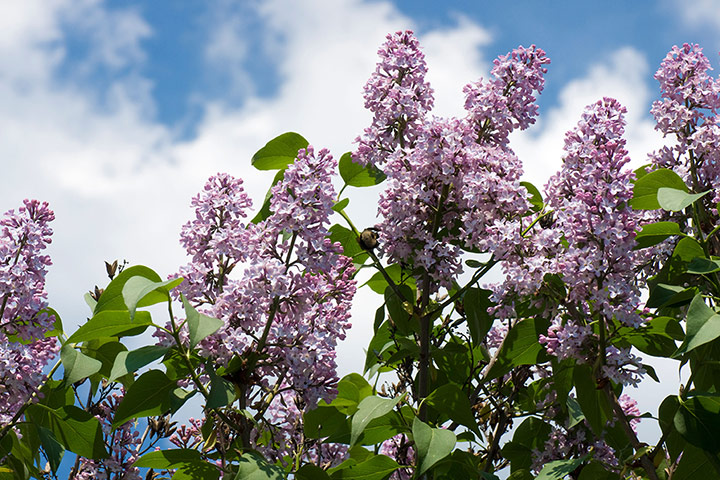
For those not battling with grief or gloom about renewal, spring is – and always has been – the season of love. In Rabbie Burns’s poem about spring, the beloved woman is imagined as a lilac (and, in due course, a rose) and he, somewhat cheekily, projects the idea of himself as a bird sheltering in her petals and singing once the calendar turns to May. I find the image of himself as fatigued suitor “wearied on my little wing” charming, and it is worth noting that the wing is on its way to becoming “wanton”. Who could resist the man in spring, or any season? From you have I been absent in the spring Photograph: Marek Kosmal /Alamy
William Shakespeare
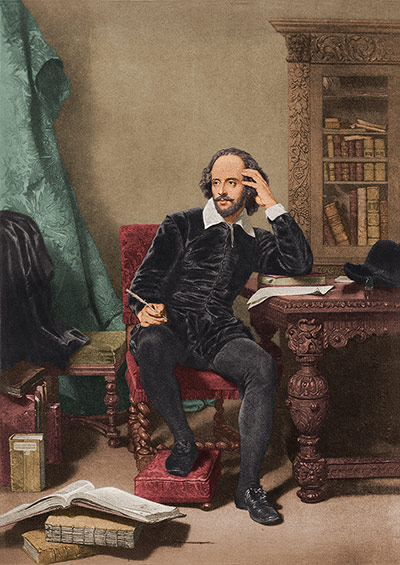
In Shakespeare’s sonnet, spring spells out the feelings of a pining lover, but – being Shakespeare – he also makes sure to sum up spring in two dancing lines: “When proud-pied April, dress’d in all his trim, / Hath put a spirit of youth in every thing.” He is determined that spring serve as a sort of understudy (the main role is to go to his beloved), and gallantly demotes rose and lily in his mistress’s absence: “They were but sweet, but figures of delight. / Drawn after you, you pattern of all those” Photograph: Getty Images

Amy Gerstler
I like the way this poem starts in the middle of a conversation: “Gardens are also good places / to sulk. You pass beds of / spiky voodoo lilies…” Spring does not encourage her to prolong the sulk – she is overtaken by a sudden sense of unity in nature. It is a bordering-on-perverse coming together, in which she allows a thistle (“queen of weeds”) to contribute to the harmony exercise. She also cracks a joke about the lion cuddling up with the lamb, and yet is serious; her poem works like a curative, modern psalm: “your secret belief / in perpetual spring, / your faith that for every hurt / there is a leaf to cure it” Photograph: Chris Felver/Getty Images
John Clare
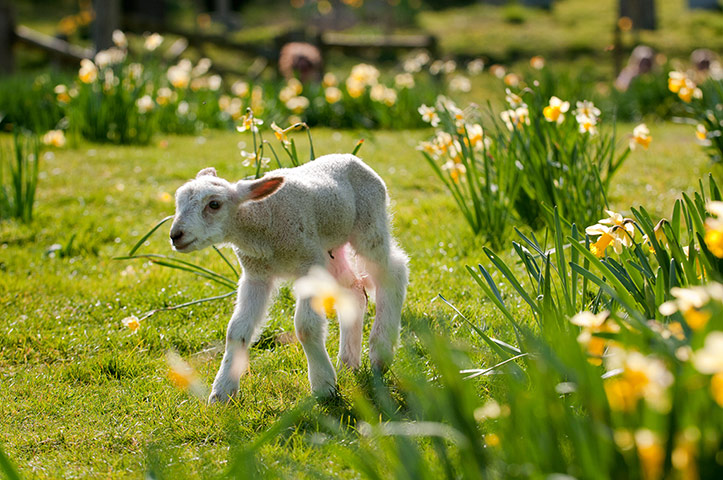
John Clare was steeped in nature. There is no literary sightseeing here: he writes from inside the landscape. “Young Lambs” could almost be a farmer talking: “The spring is coming by a many signs.” He notices hedges and emergent buttercups and, with his naturalist’s eye, records that the early flowers grow in the most sheltered spots. The newborn lamb seems more dead than alive (spring’s joke) but it makes the poem. Clare writes exactly as he sees: “Lies all his length as dead – and lets me go / Close bye and never stirs but baking lies, / With legs stretched out as though he could not rise” Photograph: Andrew Hasson/Alamy

Geoffrey Chaucer
“Whan that Aprille with his shoures soote / The droghte of Marche hath perced to the roote…” (When April with his sweet showers, has pierced the drought of March to the root). Chaucer’s spring, more than 600 years later, is as fresh as ever – his verses have a spring in their step. “And smale fowles maken melodye, / That slepen al the night with open ye /” (And small birds make melody, that sleep all night with open eyes). In this restless season “Than longen folk to goon on pilgrimages…” Chaucer’s words encourage us if not to pack for a pilgrimage, at least to wake up and be cheerful Photograph: Bettmann/Corbis