
In Thai culture, certain ceremonies are regarded as extremely important because they are carried out once in a lifetime. These ceremonies usually have set patterns to be carried on properly from one generation to the next.
Such ceremonies include ordinations, weddings and housewarmings.
In today's world where society and environment have greatly changed, somehow these ceremonies have considerably been adapted, if not forgotten. But it won't hurt here if we look back and see how people in the old days thought and carried out these meaningful rituals.
First of all, Thai traditional ceremonies usually incorporate religious elements to make them auspicious and to boost the morale of local people. Second, relatives and acquaintances are brought to help not just to honour them and but to let them know something is taking place. Third, ceremonies must be carried out in order to preserve traditions.
Food is the centre of many ceremonies. Certain types of food are used in rites and rituals due to three good reasons: the name, the meaning and the colour.
Housewarming, ordination and wedding ceremonies usually use similar kinds of food although there are some exceptions about some dishes in housewarming and ordinations that must not be used at a wedding.
Khanom jeen (rice noodle) served with fish curry or sweet peanut curry is a must. Eating long, sticky noodles is believed to be associated with length and being not easily torn apart. When it comes to a wedding, it means long marriage. Khanom jeen is also a work of collaboration because it involves multiple complicated processes that require the workforce to get it done -- from rice fermentation and grinding to the making of noodle from flour.
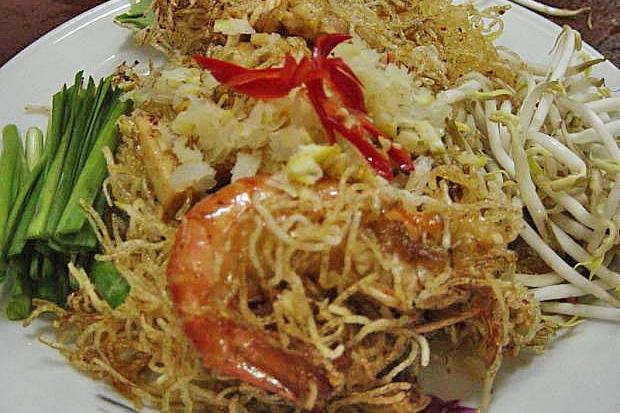
Mee grob (Thai sweet and sour fried noodles) is made from rice noodles, which share the same meaning as khanom jeen. It also signifies strength. The food is also flavourful and colourful.
The famous massaman curry also carries a good meaning because the word man in Thai means determination and perseverance. Cooking massaman is not easy. It requires perfect timing, careful hands and moderation.
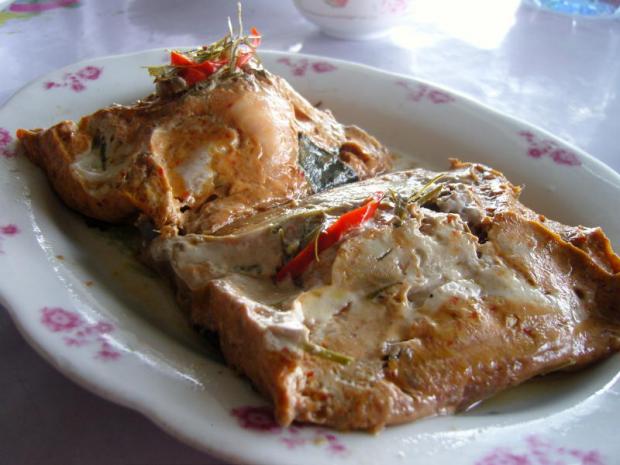
As for hor mok (steamed fish custard), hor means wrap or bringing stuff together. When it comes to a family matters, the food symbolises unity and bonding.
Dried fish dip served with watermelon can mean happiness because the red colour from watermelon is the colour of happiness. The sweet fruit when served with dried snakehead fish dip creates the right balance of flavours.
Pork sausage and pla nam (pounded fish) are always served as a combination. They are inseparable. The sausage is made from minced pork fried with rice and roughly pounded peanut, seasoned before stuff in pork intestine. After that the sausage is grilled. As for pla nam, snakehead fish is grilled before being pounded and fried with pork skin, roasted rice powder, shallots, sliced pickled garlic and citrus skin, seasoned with fish sauce, lemon juice and sugar.
Some food are considered taboo at wedding ceremonies such as all spicy salads and clear soup. The word yam -- meaning spicy salad in Thai -- derives from rayam, which is an impolite word and should thus be banned from weddings. The same goes for clear soup or tom chued because chued means bland. Marriage life is not supposed to be bland.
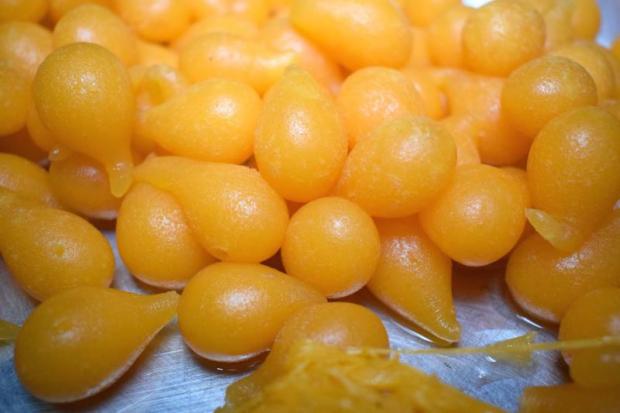
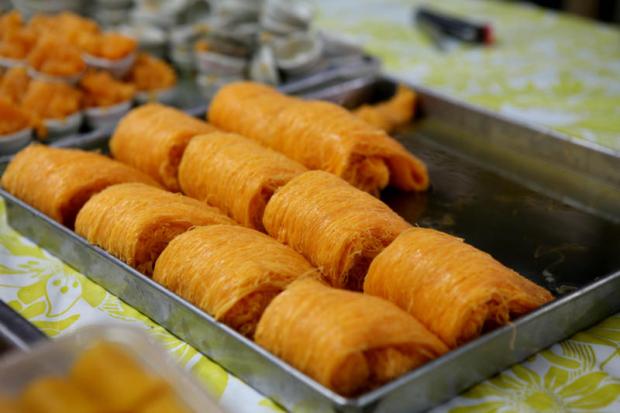
In housewarming, ordination and wedding ceremonies, Thai traditional sweets like foi thong (egg yolk threads), thong yip (egg yolk cups) and thong yod (egg yolk drops) are a must because the word thong carries an auspicious meaning. These Thai traditional desserts are difficult to make and require dexterous hands.
Another important ceremonial dessert is khanom chan (layered coconut). The word chan means layer. When it comes to money, it suggests piling up. Also we need maprao kaew (sweet crunchy shredded coconut) where kaew signifies clearness and purity.
These kinds of food and dessert have been used in housewarming, ordination and wedding ceremonies since the old days. But as society evolves, many people consider it superstitious and outdated. People have no time to get themselves involved to help out at the ceremonies like before.
Today when it comes to a wedding, many people prioritise convenience. To save time and energy, wedding organisers are hired.
Ordination ceremonies, even in provinces, also have organisers. Party choices include Chinese-style round-table dining or Thai-style. Housewarming ceremonies of today no longer see a ritual where monks and many guests are invited and various foods are prepared and offered. In a 26m² condominium studio, the idea of having a housewarming ceremony is almost impossible.
That's today's necessity, which needs no old beliefs and reasoning that have been passed on from old generations. In the future, no one knows if these ceremonies will be a once-in-a-lifetime event.












