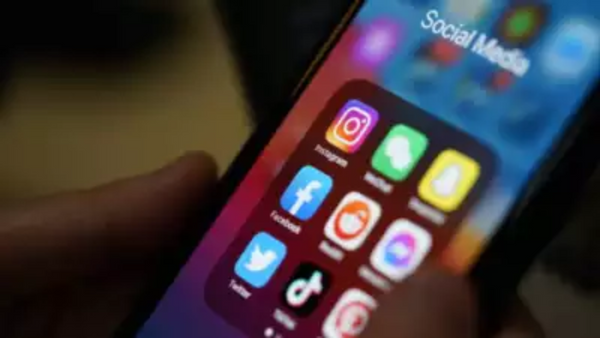
A Texas federal judge blocked a new state law, albeit temporarily. The App Store Accountability Act, or Texas SB2420, which is meant to protect children by requiring mobile app stores to verify users' ages, was set to take effect on 1 January.
According to a Reuters report, US District Judge Robert Pitman in Austin issued a preliminary injunction against the state law, otherwise known as the App Store Accountability Act, finding that it violates the First Amendment. The state law mandates age verification for both minors and adults before they can download apps or make in-app purchases.
In this order that grants Computer & Communications Industry Association (CCIA)'s motion for preliminary injunction shared by The Verge, Judge Pitman wrote, 'the statute is akin to a law that would require every bookstore to verify the age of every customer at the door and, for minors, require parental consent before the child or teen could enter and again when they try to purchase a book.'
A federal court has blocked Texas SB 2420, the App Store Accountability Act, agreeing that it likely violates the #FirstAmendment. As CCIA’s Stephanie Joyce noted, the injunction protects the free speech rights of app stores, developers, parents, and young users, and preserves… pic.twitter.com/WncPtMzx8D
— Computer & Communications Industry Association (@ccianet) December 23, 2025
Legal Challenges
CCIA Senior Vice President and Chief of Staff and Litigation Center for the Connected Economy Director Stephanie Joyce said in a press release by CCIA, 'This Order stops the Texas App Store Accountability Act from taking effect in order to preserve the First Amendment rights of app stores, app developers, parents, and younger internet users.'
'It also protects parents' inviolate right to use their own judgment in safeguarding their children online using the myriad tools our members provide,' she continued.
CCIA members include Apple, Meta, and Google, who have since expressed concern over the App Store Accountability Act.
CCIA sued the state of Texas in October of this year, alleging a violation of the United States Constitution. A separate lawsuit was filed by two Texas minors, along with Students Engaged in Advancing Texas (SEAT), a student advocacy group, stating that the law attempts to substitute state control for parental discretion.
🚨🚨BREAKING! - COURT RULES AGE VERIFICATION VIOLATES THE FIRST AMENDMENT - TEXAS!
— ZeeeMediaOfficial (@zeeemedia) December 23, 2025
In a historic win, the U.S. District Court Western District of Texas Austin Division has found age verification Bill SB2420 is a violation of the First Amendment!
More in comments. pic.twitter.com/WNPYzdTt8A
The Texas Tribune shares SEAT attorney Adam Sieff's statement on Tuesday: 'App stores allow anyone with a smartphone and an internet connection to access the accumulated sum of virtually all recorded human knowledge and expression.'
'Banning students like SEAT's members, M.F., and Z.B., from accessing these massive libraries without parental consent, just because the government thinks that's what their parents ought to want, has never been a constitutionally permissible way to protect kids or support families,' he goes on to say.
The Broader Context
The App Store Accountability Act can be seen as part of a debate in balancing children's online safety and their rights, including privacy. TechRadar explains how the bill, with Missouri recently echoing Utah, California, and Texas in enforcing the age verification law, shifts accountability to app store providers, such as Google and Apple.
The injunction does not settle any legal issues surrounding the Texas App Store Accountability Act. Instead, it allows for a temporary pause as the law moves through courts. The battle is expected to go on until late 2026, or possibly towards 2027, with Texas' attorney general has revealed his plans to appeal.
Safeguarding young users of technology and protecting their free speech can entail complex trade-offs, particularly when the government is involved. This incident in Texas underscores the effects of the ever-evolving technology in our lives, whether practical or constitutional.